
Throughout National Mentoring Month in January, KU Alumni is spotlighting the strength of the Jayhawk professional network and the mutual rewards of mentorship through profiles of some of the Jayhawks who’ve joined KU Mentoring+, the University’s platform for mentoring, networking and community building.
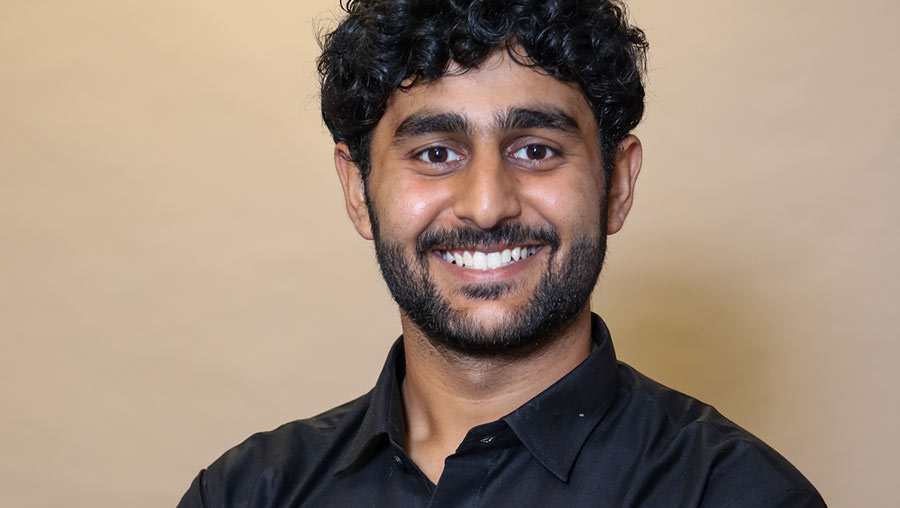
Below, meet KU student Jay Patel, a senior in computer science who connected with his mentor, alumna Jeannine Watanabe, j’91, g’98, through KU Mentoring+.
Visit KU Mentoring+ to join the more than 16,000 alumni, students, faculty and staff on the platform and support fellow Jayhawks through career advice and connections.
What motivated you to seek mentorship?
Patel: I had never really had a mentor. What helped me understand that I needed a mentor was (experiencing) two back-to-back failures. The act of failing and then someone coming up to me and saying, ‘Here’s where you went wrong’—I thought having that (insight) before a failure could really help me understand my approach better.
I did not have a mentor throughout high school or through my first three years of college, and that was not a good thing. I missed out on a lot of opportunities, things that I could’ve done better or in a different setting that would’ve helped me. I missed out on having a mentor say, ‘Here’s something that might help.’ Your mentor doesn’t even have to be in the same field to have an understanding of your life.
What does mentorship look like to you?
Having a mentor who can help you understand the stuff you’re going through, how to approach it and how to learn from it—that is what mentorship means to me. A mentor is a person or an entity who can help sculpt the way you think. It all boils down to having a better thought process, learning how to find a better opportunity and how to make the best out of something. That is mentorship.
How have your mentor and your mentorship experience changed your perspective?
My mentor, Jeannine, is really smart and just an amazing person. She helped me apply for the (KU Alumni) Jennifer Alderdice Homecoming Award and actually helped me become a finalist. The night before (the award interview), she asked me a couple of mock interview questions. The way she understood what the award is, what the questions could be, and told me how I could answer them better—it helped me change my perspective. That is what I do now with my own mentees in KU Alumni’s Student Alumni Ambassador program, which I’m a leader in.
For me, (Jeannine’s guidance) helps me anticipate something before it even happens. It is genuinely amazing the difference between when you have a perspective of something rather than a perception of something. Now, when I’m in an interview, I can put myself into the interviewer’s perspective. I can approach things according to how the other person sees things too.
What has been a surprise to you in your experience as a mentee?
A surprise to me was how shallow I used to think about any matter before I would immediately approach it with a solution, a suggestion or a statement. The way I used to think was, ‘Here’s a problem, and here’s what can be done.’ My mentor told me how she approaches problems that exist in the real world. That really helped me with deep and critical thinking. The need for that skill and understanding was a real surprise to me.