


Jayhawks hold leadership positions across diverse industries and professions, and many connect with KU students and fellow alumni through the Jayhawk Career Network. In “Copy the Leader,” KU Alumni, in partnership with SumnerOne, spotlights Jayhawk leaders who are models for others in their fields.
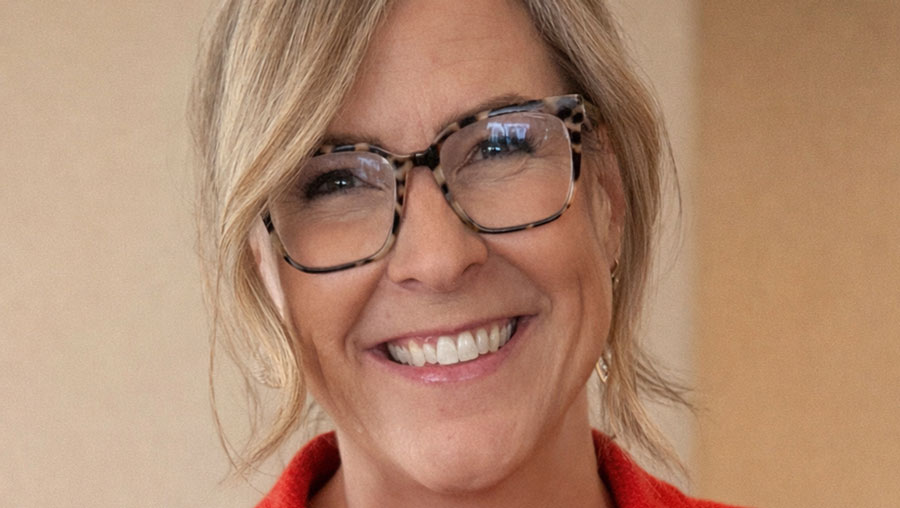
Christa K. Dubill, c’01, is vice president and chief communications officer at Blue Cross and Blue Shield of Kansas City.
What do you do in your work?
Dubill: I lead corporate communications at one of the top employers in Kansas City. This includes overseeing internal employee communications, external communications, public relations, executive and board communications, brand protection, media relations, social media, and community investments and engagement.
What are the qualities of a good leader?
A good leader is someone who encourages people to show up as themselves and creates a safe space for mistakes. People do their best work when they are confident and feel safe.
Good leaders model authenticity and lead with self-awareness, humility and consistency. They admit mistakes, own them, and act to correct and improve. They set high standards and clearly define expectations and directions. And, maybe most important, they clearly define roles. Clarity is too often missed, and when that happens, it impacts a team member’s success and confidence.
A good leader trusts, empowers and encourages the team. They listen to learn, not just to respond.
A good leader is able to be decisive, think on their feet, and trust their gut and experience. They are someone who is curious and continues learning and evolving while staying true to their values and morals.
How do you practice leadership at your job?
Model the way. Think big. Stay positive. Have a willingness and ability to do the work—especially for new projects, when the likelihood of misses might be higher—and a willingness to carry the burden of the imperfection as the team develops new products and processes.
What makes a team or group successful?
A successful team is built in an environment where trust is strong—trust is the foundation; without it, the rest isn’t stable—where expectations are clear, and where people are encouraged to show up as their authentic, whole self, meaning that the home and personal parts of their lives are welcome as well.
Team members know they are respected and supported. The group shares a common purpose, understands what excellence looks like, and knows what’s expected of them. Leaders and team members both model accountability, integrity and collaboration. Patience is high, especially for others in the organization, with respect being shown for different personality types and work styles.
When people are trusted to do their jobs, developed along the way and recognized for their contributions, the team builds momentum and resilience. They grow together, and they reach high achievements with stronger results together.
How can leaders in your industry help their organizations adapt to change?
Listen. Learn as much as possible. Take time to think about how to best explain to provide clarity early and often. Be hyper-alert about unintentional gaps or the unasked questions that could be the final piece of the big picture that would help everyone understand and more clearly communicate. Put others first. Model calm, honest leadership. Be transparent, sharing just enough personal insight to model authenticity and humility, which will in turn encourage others to be their authentic self.