
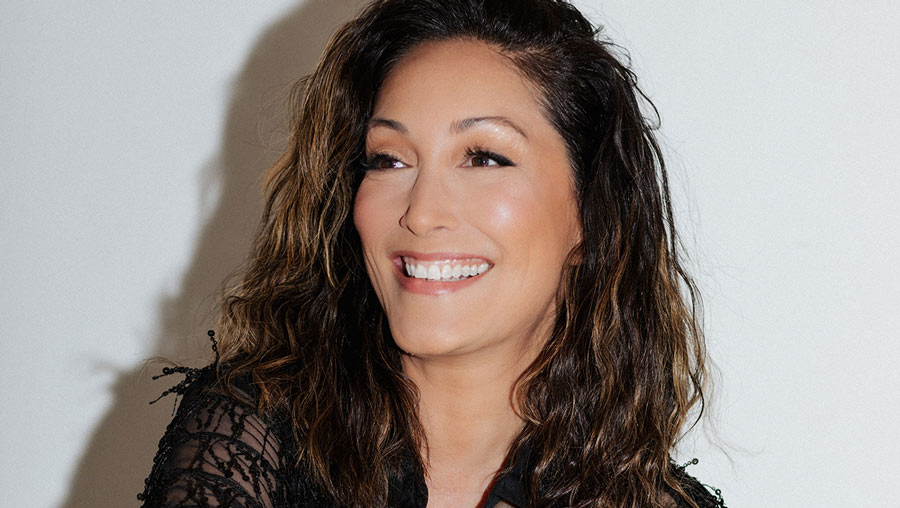
Before millions knew her as Shane Hollander’s mom, Yuna, in HBO Max’s colossal hit show “Heated Rivalry,” Christina Chang was a regular onstage at KU, performing in University Theatre productions throughout her four years on Mount Oread.
“The very first KU production I was in was my freshman year, and I got to play one of the Weird Sisters in ‘Macbeth,’” says Chang, c’93, whose résumé includes seven seasons as Dr. Audrey Lim on ABC’s “The Good Doctor,” which aired from 2017 to 2024. “In the theater department at the time, getting into a production your freshman year was considered pretty tough, so that was a cool thing to get. I think that also helped hook me on pursuing theater. If I had tried out and not gotten in, maybe it would have discouraged me. But because I got in, it cemented my space there in a way.”
In her 30 years as a professional actor, Chang has cemented a foothold in the TV industry, recurring in popular shows like “24,” “CSI: Miami” and “Nashville.” Her film credits include 2007’s “Live Free or Die Hard” alongside Bruce Willis. She will return as Yuna Hollander for the forthcoming second season of “Heated Rivalry.” The series follows a yearslong secret romance between two professional hockey players and shot to feverish mainstream success after its November premiere.
Chang was born and raised in Taipei, Taiwan, and attended Taipei American School. Trips to visit family in her mother’s hometown of Neodesha, Kansas, throughout childhood laid the groundwork for her eventual arrival at KU. “My mom was a teacher, so she would have the summers off, and many of our summers were spent in Kansas,” Chang says. “Kansas felt like home in the United States, and that was a large part of why I chose KU. If I was going to be thousands of miles away from my home in terms of where I grew up, then Kansas was like my second home.”
Reflecting on her time at KU, where she earned her degree in theater, Chang treasures the personal growth and lasting friendships cultivated against a backdrop of the joyful rites of student life: sledding down Daisy Hill on dining hall trays, celebrating her 21st birthday on Mass Street, walking down the Hill for Commencement.
“I think KU was a good spot for me to be during such a paramount time, when you’re on your own, you’re independent for the first time, you’re discovering your identity,” says Chang, who today lives in Vancouver, British Columbia, with her husband and daughter. “At a time when I felt so untethered, KU was a good tethering spot. And also just seeing, how far away I was from home, how alike human beings can be—that experience was also formative and important.”
Chang recently chatted with Crimson & Blue about her fondest college memories, forging a career in entertainment, and the most fulfilling part of her turn in “Heated Rivalry.”
What are some of your favorite KU memories?
Chang: I lived in Corbin my freshman year, and I met one of my dearest friends there who I’m still good friends with. We ended up being roommates the whole way through KU. One of my really core memories from freshman year is getting pizza at Pyramid Pizza (laughs). I’d get the pizza, and then of course the honey. And then I lived in Hashinger Hall my second year. I have good memories of Corbin, but I think Hash was a way more formative experience. We just did so much there, and I made even more friends that I’m still friends with today.
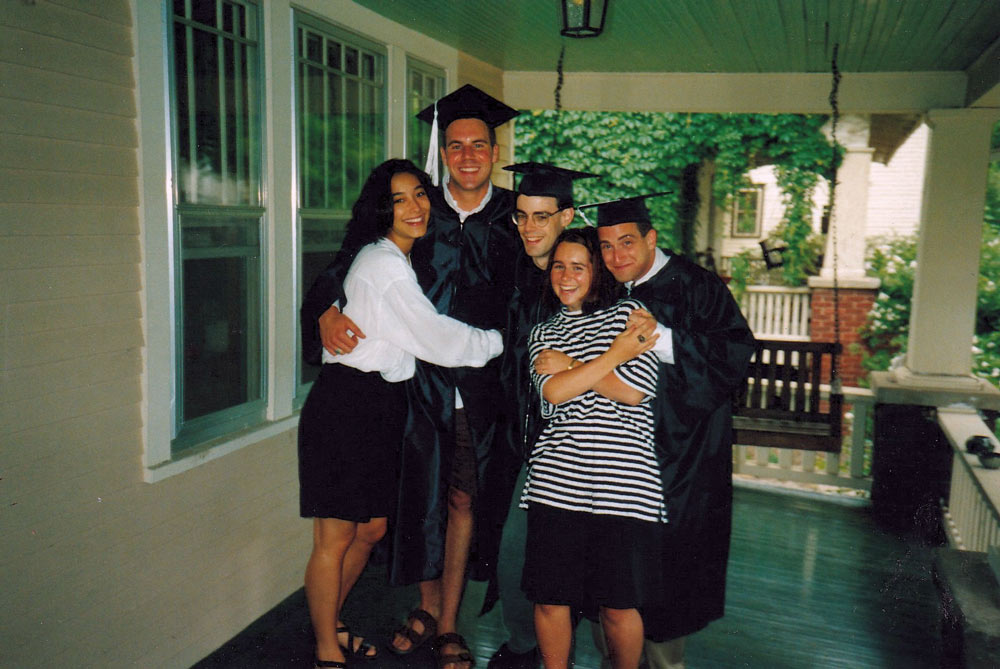
I remember The Crossing (a bar once located where The Oread now stands) was the place to be back then. I lament that it’s gone! Before I was old enough to be there, I would stand on the sidewalk and talk to my friends who were allowed to be on the deck with a beer. And then finally my senior year, I was allowed to stand on that deck and go into the bar.
That group from Hash, we all lived in a house together on Kentucky Street my third year. I kind of stayed with the same group of friends all through school, and that core group, we’re still friends. We’re all on a text chain and still in touch.
Which of your KU professors had the biggest impact on you?
Ron Willis, who has since passed away, was the director of “Macbeth,” and he was my favorite professor there, hands down. He also had my heart because he had a grandchild who would call him “yéye,” which is “grandfather” in Mandarin. That was really sweet to have that connection. It seems funny to call it a connection, but because I was so far from home, and this was pre-cellphones and pre-internet, communication was so limited with family that something as little as his knowing how to say “grandpa” in Mandarin was really heartening. I think he also saw that I was homesick and that I was a little insecure, being a freshman and not knowing where my place was in this department that had a lot of talent. He took me under his wing as a freshman, and I really cherish that.
And also Jack Wright, who was head of the University Theatre for years and years. He encouraged me to go down the graduate school path, and he was instrumental in helping me figure out which school to go to. One program was more about film and television, and they were offering me a stipend, but that’s not really where my instinct was telling me to go. I was interested in theater. So Jack basically reflected back to me that it was the University of Washington that I seemed the most excited about when I heard I’d gotten in. And he was right.
What eventually led you to working in TV and film?
There’s a Broadway director named Tina Landau, and when I was in grad school at the University of Washington, Tina was workshopping an off-Broadway play called “The Trojan Women” by Chuck Mee. She and the head of our program connected, and our class’s thesis project was to do that play with her. We workshopped it in Washington, and then when Tina was going into rehearsals in New York, she asked me to be a part of that production. That allowed me to get my Actors’ Equity card and took me to New York the summer I turned 25.
I did a couple of off-Broadway shows, never making it to Broadway, and it was really tough to make ends meet. It was four years of slogging in the restaurant business and temp jobs, so that’s why I started auditioning for commercials. My first TV experience was on “As the World Turns.” I played an FBI agent, running through a barn in heels with a gun in my hand (laughs). When I was 29, I ended up auditioning for (TV producer) Dick Wolf’s show called “Deadline,” and I got that part as a series regular. I credit Dick with pulling me up into becoming a working actor. I’ve been really blessed and very grateful that I’ve been able to make my living acting since.
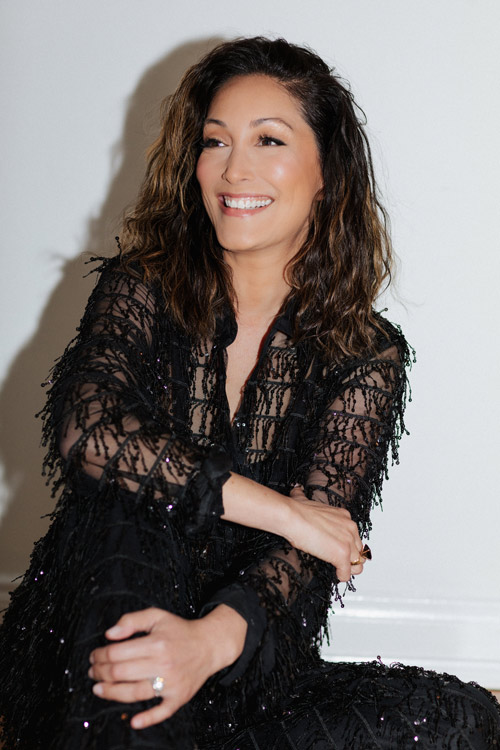
In this career, everybody has a different path. There is no one way to go. So when people ask, “Will you tell us how to do this?” I say, “I can tell you my story, but that’s unique to me.” Talent of course is important, but it’s also timing, it’s who you know, it’s persistence and resilience. I think persistence is the No. 1 thing.
What career advice would you most emphasize for current KU students or recent graduates?
Given my own experience, I would say: It’s OK if your first plan isn’t your final plan. I think back on when I was in school and how much pressure there was to pick the right path. You better go to the right school, and then you better get into the right school within that school, and you better stick to it and not mess it up, and then you better do this, this and this. Now, with a teenage daughter who’s thinking about university, I look back at how young we were then and how undeveloped our brains were still, and I think it’s wild we have this expectation that teenagers have to make a decision that the 40-year-old or 50-year-old in them has to live with. So, I have to remember this when I talk to my daughter—that your first plan doesn’t have to be your final plan.
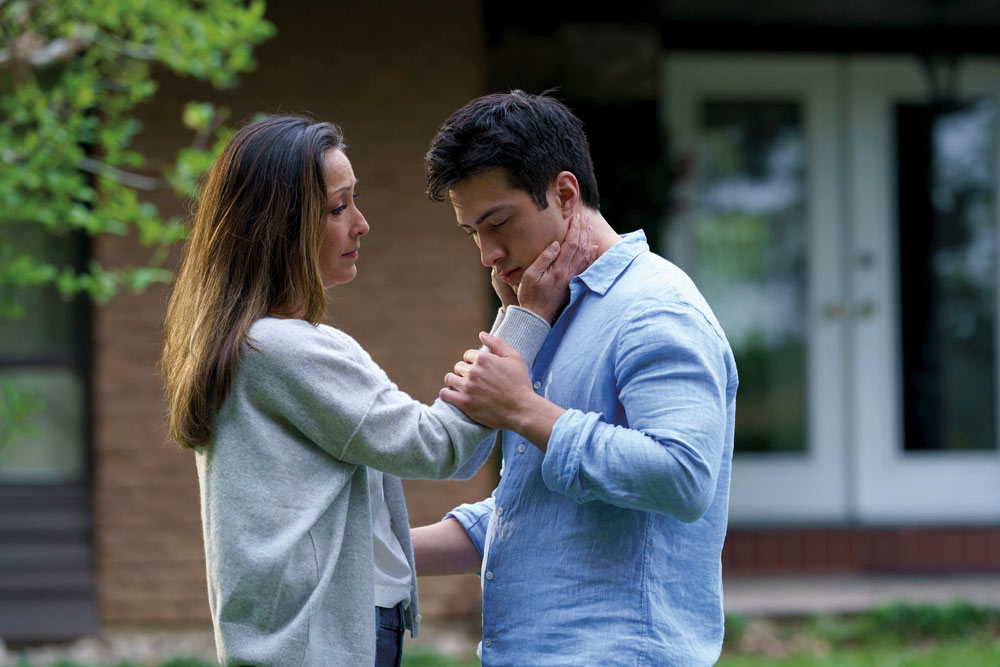
“Heated Rivalry” has been a phenomenon, and your character has a really moving scene in the season finale that has resonated with a lot of viewers. What has being a part of this show meant to you?
It’s funny, because when we were filming it, nobody had any idea that it would have the number of eyeballs on it—the original intent was for the show to only air in Canada, on Crave (a Canadian streaming service). Working on that scene with Hudson (Williams) was a delight. The day we shot it, Jacob (Tierney, the show’s writer and director) told us in the morning that he was rewriting it. The outcome was the same, of course; he was just tinkering with the words. He made it better with the rewrite.
The most fulfilling part of being on this show has been getting to hear about or read about the experiences of people who’ve been touched by it very personally, whether that’s been through conversations that are sparked that are healing, or conversations that they’re about to have, and they’re hoping this show provides a good template for that. Or, also, people who aren’t able to have those conversations and are grieving that, but the show gave them a cathartic place to begin the healing process. I’d say that’s been the best part, and all the rest is gravy.
Megan Hirt, c’08, j’08, is managing editor of Crimson & Blue.