

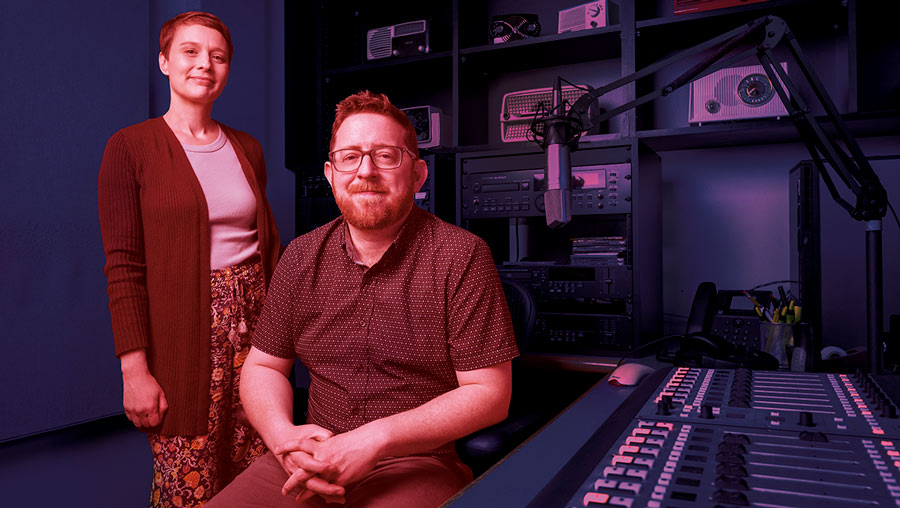
When Feloniz Lovato-Winston became director of Kansas Public Radio and Audio-Reader, in September 2023, she came to the job with a clear goal: to boost KPR’s local content and strengthen its connection with the community.
Although it has been headquartered on KU’s Lawrence campus since it began broadcasting as KANU 91.5 FM in 1952 (two decades before National Public Radio launched, with the station as a charter member, in 1971), KPR has steadily expanded its broadcast reach—and how it defines “local” and “community.”
The expansion kicked off in 2000, when KANU’s Lawrence signal was augmented by a transmitter in Atchison, K210CR 89.9 FM. In 2002 the Emporia transmitter, KANH 89.7 FM, came online. That was followed by one in Olsburg-Junction City (KANV 91.3), two in Manhattan (99.5 and 97.9 KPR2) and another in Chanute (KANQ 90.3).
In 2003, the station changed its name to Kansas Public Radio to reflect its broader geographic range. A second Lawrence frequency, 96.1 KPR2, in 2016 began broadcasting news and talk shows, many from NPR. The addition of livestreaming via the website and app, along with on-demand podcasts, has further spread programming to the rest of the state.
So, when Lovato-Winston’s strategy to turn up the volume on local, community- focused programs attracted a pitch from Audio-Reader program manager Nick Carswell, she could tell he was on to something, just based on the new show’s proposed title: “105 Live.”
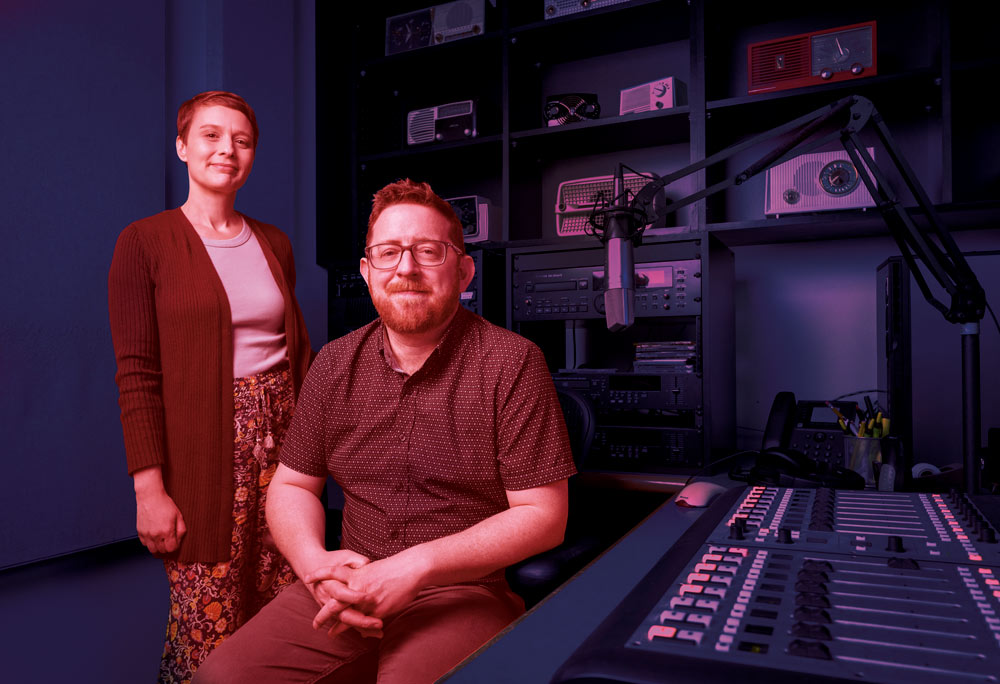
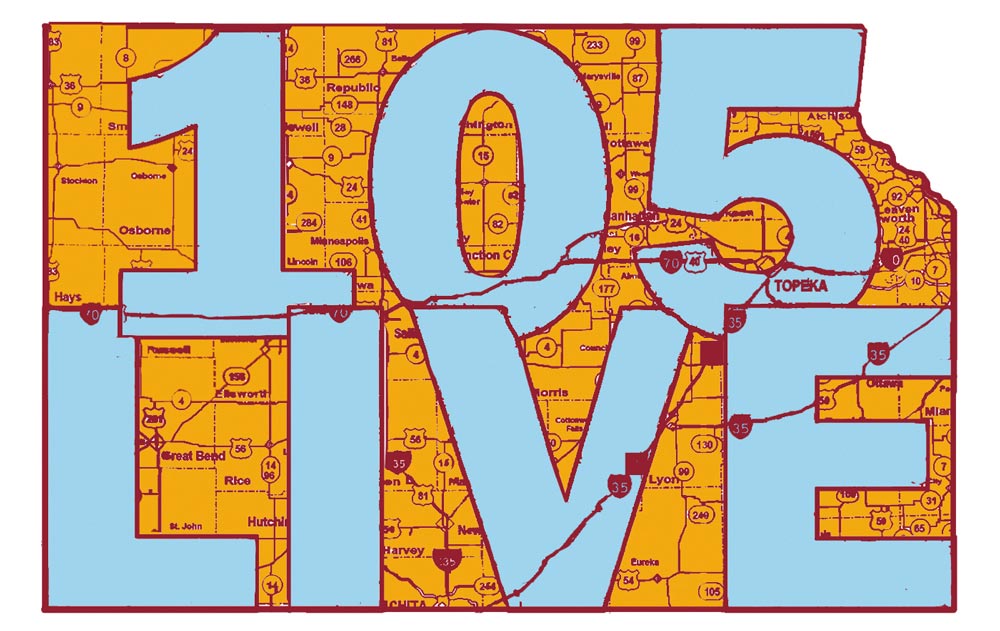
The idea, Carswell explains, was to produce an hourlong weekly radio program that showcases the best “new, original and noteworthy” music made all across the state of Kansas. The show would rely on musicians to submit their work via an online form, adding an element of serendipity to the selection process: Who knew what might come in over the virtual transom Monday morning and end up on the radio Saturday at 5 p.m.? The program’s explicit goal—and the inspiration for its name—would be to feature music made by artists from all 105 Kansas counties.
“It seemed like the perfect show to me,” Lovato-Winston says from her office in Broadcasting Hall, the building at 1120 E. 11th St., next door to the Baehr Audio-Reader Center that has been KPR’s home since 2003. “I thought it was a great idea, and I couldn’t think of any downside to having this show on the air.”
Promoting and supporting the local music community and providing high-quality arts entertainment has been part of KPR’s mission since the beginning, she explains. The current program lineup, with the folk-focused “Trail Mix” and the newer, jazz-oriented “Live at Green Lady Lounge,” devotes airtime to local music. “105 Live” is a different animal.
“We’ve always had a strong music component, and we’ve always been very committed to having a strong connection with our community,” says Lovato- Winston, c’09. “But I feel like we were due for something just a little bit new and a little bit different. We were at that point in our history where we needed to try something new that wouldn’t detract from the great things we’re already doing. And this show was the perfect fit for that, because when I applied for the job, I was really thinking, ‘Well, how can we create more local content? And what would that be and how can we introduce more people to public media and how it can improve their lives, broaden their horizons, but also make them feel more connected to their community?’ This show accomplishes all of those goals.”
And if counting on chance and happenstance to fill out the program roster each week seemed like a perfect way to chase that goal, then Carswell, himself a musician and an advocate for local music in Lawrence and beyond, seemed like the perfect host.
“He kind of has it all,” Lovato-Winston explains. “He has the connections in the arts community. He has the experience as a musician, so he can really empathize with the musicians and ask them really good questions during the interviews. And then he also has a wonderful radio presence. I feel like I just got very lucky. I definitely wanted to do more local community content, and talk about serendipitous: The most serendipitous thing is that he proposed the show and felt comfortable doing it, and I think it’s been so great for KPR already.”
“Everybody here comes from somewhere,” as the R.E.M. song goes. Carswell came to Lawrence in 2011 from Dublin, Ireland, where he and his wife had just completed graduate school. “We finished master’s degrees in May and were here by July, wondering how it was 40 degrees Celsius at 11 o’clock at night,” he says, chuckling. “We never looked back.”
He brought with him a deep affection for music and radio that started early, in the pre-streaming days of his youth.
“I’m of the generation that used cassette tapes to record songs off the radio. If there was a song that you liked and you wanted to hear it again on demand, that’s how you got it,” he recalls. “The idea of making mixtapes and that love of radio goes all the way back to there.”
In Ireland, he also gained experience working full time as a musician and part time as a radio host.
“I had local music shows in Ireland on a couple of community radio stations. It’s a different model than public radio, but community radio is where I found a spot. I trained as a sound engineer, so that piece was in place, and I did some training for radio production. I just always loved radio as a medium. I find it super engaging. So, the idea to create my own radio show always just made a lot of sense.”
After arriving in Lawrence, Carswell went job hunting. One stop was KPR. He didn’t land a position, but he did get his name in front of the staff, including Jason Slote, KPR’s production manager. Their paths crossed again when Carswell was playing jazz outside a local restaurant. “I went up to introduce myself, and since he had seen my name because I’d been banging on the door at KPR, he said, ‘Oh, you’re the Irish guy looking for radio work.’” The two eventually wound up playing together in a band, Carswell & Hope. When Carswell eventually joined Audio-Reader in 2015, they became colleagues. Now Slote produces and mixes the live session performances that are an integral part of “105 Live.”
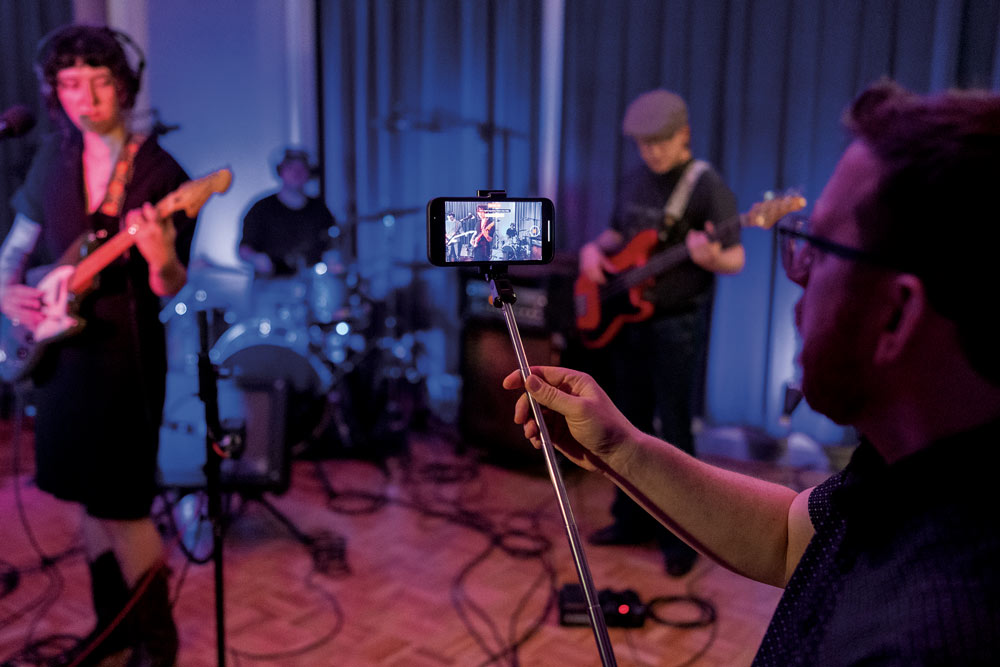
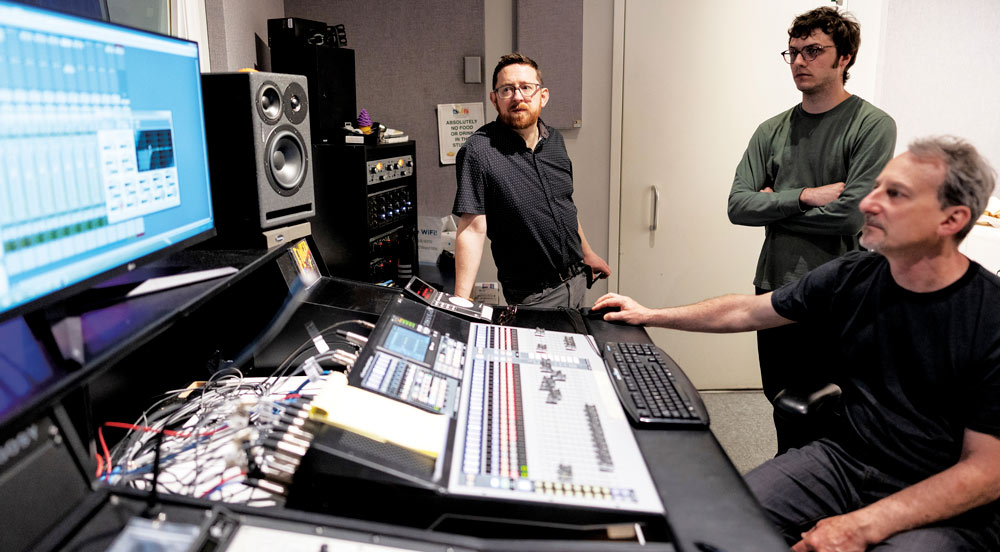
The program features a lively mix of lineups and genres. Recent shows have included The Band That Saved the World, an eight-piece funk, soul and dance ensemble from Lawrence; Lauren Lovelle and the Midnight Spliffs, who weld modern roots influences to a traditional country sound; the Wichita “math rock” duo Yae; The Matchsellers, a four-piece bluegrass band from Kansas City; hip-hop artist Anthemous T Rocknrolla; and singer-songwriters such as John Depew of Arlington, in Reno County. There are even occasional forays into classical (the chamber music quartet Opus 76 made a January appearance), but the show’s eclectic offerings generally fall well outside KPR’s usual programming focus, which leans heavily on classical music during the day and evening and jazz overnight.
It’s not hard to imagine a distracted listener tuning in on a Saturday evening expecting to hear Rachmaninoff and instead encountering a blast of metal, techno or the trippy ambient sounds of Overland Park steel guitarist Nate Hofer, f’02, whose six-track EP—recorded in a decommissioned Atlas missile silo near Wilson—is among Carswell’s favorite finds.
The unexpected jolt is part of the point. And listeners seem to get it.
“It could be that somebody might hear some heavier music than they are anticipating,” Lovato-Winston says, “but so far the feedback has been that people understand: They like that it’s Kansas music, so even if the genre is a little bit different, that’s OK.
“It is a bit risky, but we were at a good place to take a risk like that. One of the things that we can offer is programming that brings our community together. Supporting talent from Kansas, I think, is one of the most important things that we can bring to our community. And there’s a generation of folks who maybe are more apt to listen to alternative music or rock music, and this is a way that we can serve those listeners and also maybe introduce them to some of our legacy programming like classical music. So, I feel like it was a risk worth taking, and I don’t think it’s the only time that KPR or KANU has taken a risk like this. If you look at our history way before I was here, there were times when there were big pivots in programming, and typically it’s turned out well.”
Carswell casts a wide net and is willing to bend his own rules by including bands from Kansas City, Missouri, or by playing music that isn’t strictly “new,” like a recent live session that featured Manhattan rockers Ultimate Fakebook performing their seminal, 25-year-old album, “This Will Be Laughing Week,” at The Bottleneck. His programming mix echoes his involvement with music statewide. He works with the Kansas Arts Commission on music ecosystem development, a concept that looks at the economic benefits local music can bring to communities, which can include revenue generated by live shows and the flourishing of a “nighttime economy” of restaurants, bars and free public concerts that contributes to quality of life.
In Lawrence, where a vibrant local music scene has thrived for decades, Carswell founded and directs the Lawrence Music Alliance, a nonprofit organization that uses the framework of music ecosystem development to engage the music community, advocate for musicians and other artists, and act as an intermediary between the creative economy and city government. The alliance offers training and workshops that cover topics such as music production, marketing, copyright, booking and touring, and it helped conduct the 2024 Lawrence Music Census to gather data to generate policy solutions to bolster the Lawrence music scene. The survey confirms that live, local music is an economic engine, producing $13 million in income annually for 826 respondents—likely a mere fraction of the true economic impact of local music on the Lawrence economy. Conducted with the support and help of some 20 community partners, including the KU School of Music and KJHK, KU’s student-run radio station, the census is a good example of Carswell’s inclusive approach to promoting local music. Like a bandleader calling out onstage the contributions of his fellow players, he’s only too happy to share the spotlight. Many hands make light work—and livelier music.
“KPR and ‘105 Live’ don’t have to do all of this alone,” he says of the efforts to support musicians while also making the case that an investment in local music is an investment in the Kansas economy. “If other entities want to ask that same question, ‘How do we support the music that’s happening in these places?’, then that becomes a conversation for the wider ecosystem to address.” And if “105 Live” helps move that conversation along, Carswell adds, “That would be fantastic.”
The notion that local music can be good for the economy is not fringe; in fact, it’s central to the economic development approach favored by Gov. Laura Kelly and Lt. Gov. and Secretary of Commerce David Toland.
“I think it is a commonly held belief that economic development and the arts are somehow at cross-purposes, that you can’t do business development in a traditional sense, bringing a factory to town and so forth, in a way other than by looking at infrastructure and real estate and tax policy and incentives,” Toland says. “The entire approach that Gov. Kelly and I have taken to economic development has been built around the idea that you have to have quality of life. And if you don’t have places that are attractive for people to live and invest and raise a family, then it won’t work. Companies will choose to go other places where they can more easily recruit and retain workers and their families. So you have to have a place to get a cup of coffee in the morning. You have to have a place to have a nice dinner that evening, a glass of wine with your friends. You have to have things to do as a family, as an individual. And I think live music is a key part of that.”
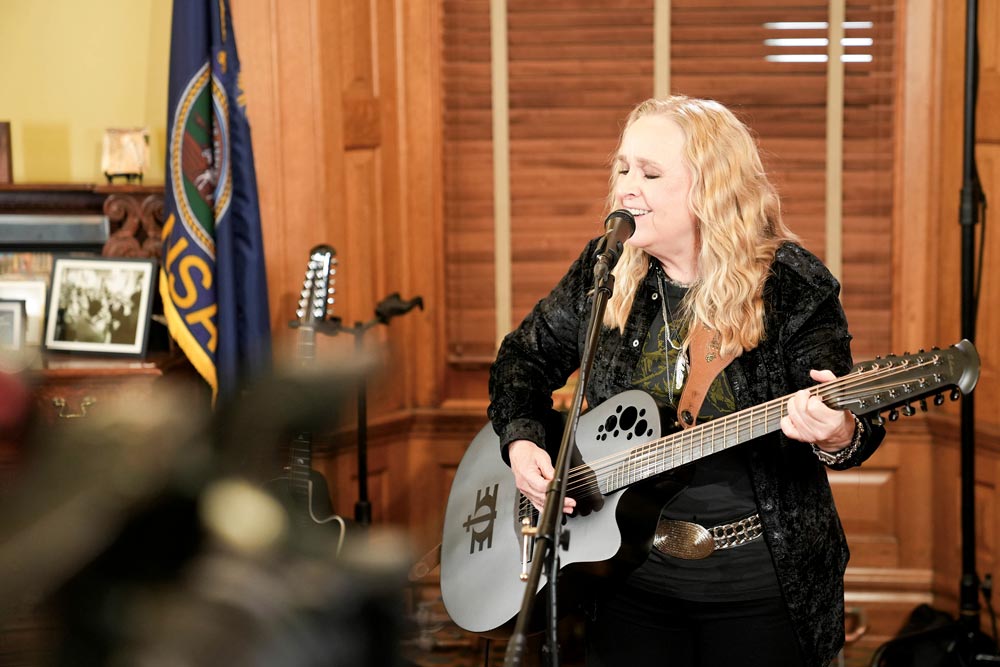
Toland, c’99, g’01, was the brains behind “LG Desk Concerts,” a series of performances presented in the lieutenant governor’s office on the second floor of the Statehouse. The series, which showcases Kansas musicians, started in 2024 with a performance by Freedy Johnston, ’85, and also included episodes with Leavenworth native Melissa Etheridge; Kelley Hunt, ’79; and Maria the Mexican, the mariachi- inspired band led by sisters Maria Elena Cuevas, c’10, and Tess Cuevas, c’07. Plans are underway for season two.
“I love NPR’s ‘Tiny Desk Concerts,’” Toland says of the wildly popular series that brings major musical acts (looking at you, Taylor Swift) to National Public Radio headquarters for intimate live performances. “I’ve listened to them for years. They’re kind of a staple of my getting ready in the morning and winding down in the evening, and especially when I’m working in here on a Saturday or Sunday afternoon. So, I was listening to an NPR ‘Tiny Desk Concert’ and thinking a little bit about the format and also pondering what a great room this lieutenant governor’s office is and how good the music sounded playing through my phone, even, with these high ceilings and great acoustics. And it just started to mushroom in my mind, the idea of, ‘OK, well the opposite of tiny is large. The abbreviation for large is LG. This is the LG’s office. I wonder if we could do concerts in here?’”
They could. Aides tidied up Toland’s desk, brought in extra chairs and shifted furniture to make room for TV cameras from KTWU, Topeka’s PBS affiliate, which records the shows for broadcast. A standing-room audience crowded in to watch Freedy kick off the series last fall.
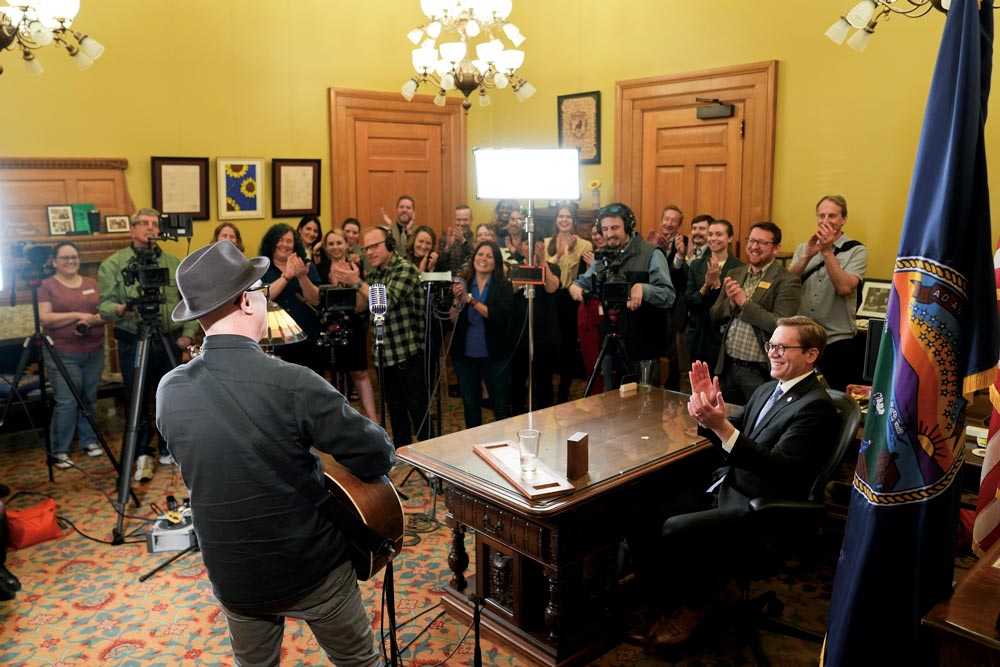
“I did not know that Freedy Johnston, who is someone that I’d listened to since he was popular in the 1990s, was from Kinsley, Kansas, until a friend of mine from New Jersey told me that he had seen Freedy play a venue somewhere outside of New York City,” Toland says. “My friend told me I should be so proud of this Kansas product, and I actually had no clue that Freedy was from Kinsley or a Kansan at all, and I figured that probably most Kansans don’t, and that that’s something that we can and we should fix. Because for me, it’s a source of pride, as a Kansan. As we look at the diversity of musical talent that has come out of this state, we have an opportunity to help instill that pride among Kansans that are here, but also Kansans that are around the country.”
Home state pride is certainly among the spirits energizing “105 Live.” “LG Desk Concerts” is among the models for Carswell’s show (along with “Tiny Desk Concerts” and “Flew the Coop Sessions,” a metro Kansas City live music outlet that makes free video and audio recordings of local artists), and it also provided material for several of the KPR show’s early broadcasts.
“Part of the concept of ‘LG Desk Concerts’ was that it would be passed throughout any media in Kansas that wanted to air it,” Carswell says. “It’s a pretty cool way to get Melissa Etheridge on my little baby radio show.”
Toland sees the concerts as part of a broader effort to incorporate the arts among the state’s economic development goals, which also includes Gov. Kelly’s push to establish film and TV production incentives. (He commends KU emeritus professor Kevin Willmott as a key advocate for film tax credits.) More voices touting Kansas artists could change the state’s image in ways that will help improve the economy, he says, “and if we improve our economy, ultimately what we’re doing is helping people.”
Among those receiving a helping hand are the musicians—those whose songs Carswell cues up on Saturday nights and those who hear them booming out of the speakers in their car radios or computers.
“What we’re doing, really, is celebrating where people are from and the music they make,” Carswell says. “We want to show that good local music can be as good as any other music.
“And then, of course, there’s the idea that there’s some kid—it doesn’t have to be a kid, but let’s imagine it’s a teenager or somebody who’d like a music career but doesn’t have the resources—maybe it’s in a rural area, in one of the counties that we’ve yet to feature, or that doesn’t have a Freedy Johnston to look to.”
Hearing other Kansas musicians week after week might just spark the dream that they, too, could hear themselves on the radio someday. “Maybe they’re inspired to record a song and send it in to us,” Carswell says.
All music, like all politics, is local. Everybody here comes from somewhere. Why not Kansas?
The power of music
Halfway into a six-month recruitment blitz that brought the massive Panasonic electric vehicle battery plant to De Soto, a unique opportunity to impact negotiations presented itself.
“Panasonic’s executives have on the back of their business cards the seven guiding principles of the Panasonic Corporation,” says Lt. Gov. and Secretary of Commerce David Toland, whose deputy chief of staff Ryan Wills is a singer-songwriter. “Ryan comes in on a Monday morning while we’re in the middle of this heavy-duty recruitment to win the largest economic development project in Kansas history: $4 billion, 4,000 direct jobs and an additional 4,000 supplier-related jobs. And he says, ‘Hey, I don’t know if this is a good idea or not, but I wrote a song this weekend based on Panasonic’s guiding principles.’ And I was like, ‘How’d that come about?’ He says, ‘Well, I was just looking at the back of their business card and thought it was really cool, and one thing led to another.’
“He proceeds to play me this song entitled ‘Seven Things We Do.’ It was 90 seconds long, all acoustic—and it was beautiful,” Toland says, laughing.
“When the song ended, I was at a loss for words because I was so focused on, ‘OK, what do we do with this? This is gold.’ I don’t quite know how we translate this into something tangible, but I thought there was a way.”
Toland’s staff found a vintage Panasonic boom box, circa 1985, recorded the song on a cassette tape, and delivered it to Panasonic’s government affairs office in Washington, D.C. The secretary of commerce resisted the urge to walk in with the boom box on his shoulder, he says, but he did play the song for the Panasonic team, who were “just awestruck.”
“So, two, three months go by, and we finally get the phone call that Panasonic wants to meet with the governor and me. We set the time for them to come to Cedar Crest, the governor’s mansion. They come in, we sit down, we exchange niceties, and they proceed to say something to the effect of, ‘Well, Kansas has a great site. So does Oklahoma. Your transportation logistics are excellent. Theirs are also excellent. The Kansas City population is larger, so that’s good from a workforce perspective, but the Oklahoma site is significantly closer to their main customer.’”
“On the technical merits, it was pretty much a wash,” Toland says the Panasonic team told Kelly and him. “‘But Kansas wrote us a song.’”
Done deal.
“So, the more we can have ‘105 Live’ and ‘LG Desk Concerts’ and all these great venues across the state—from the Stiefel Theatre in Salina to The Bottleneck on New Hampshire Street to the little country market in Allen County where I’m from, where they have live music every weekend—the better off we’ll all be as Kansans.”
Steven Hill is associate editor of Crimson & Blue.