


The pressure for ballet dancers to conform to expectations around weight, athleticism and beauty were thrust into the public eye almost 30 years ago with the death of a 22-year-old dancer in the Boston Ballet, Heidi Guenther.
In 1997, Guenther’s heart stopped while she was vacationing with family. Guenther was not underweight, but had been strictly dieting and taking laxatives, which led to a heart attack. Performers, dance companies and the media debated whether the emphasis on conforming to body standards contributed to Guenther’s death.
And for the first time, the realization that eating disorders could be fatal came into sharp focus for another professional dancer, Kelsie Forbush.
Like Guenther, Forbush had a long résumé. She’d performed at Iowa Dance Theatre and Vine Street Ballet (now Ballet Des Moines) and trained with professionals at Milwaukee Ballet, Ballet Iowa and North Carolina School of the Arts. She was aware of the strict body standards that were part of the discipline of ballet. The drive to stay thin had always seemed harsh, even unhealthy, but never deadly. Until now.
“It really shocked me,” Forbush says.
Forbush eventually pivoted away from dance. She thought she’d never find something she could do as well: Dance had been her life. But the shock of what happened to Guenther never quite wore off, and it ended up changing the course of Forbush’s career.
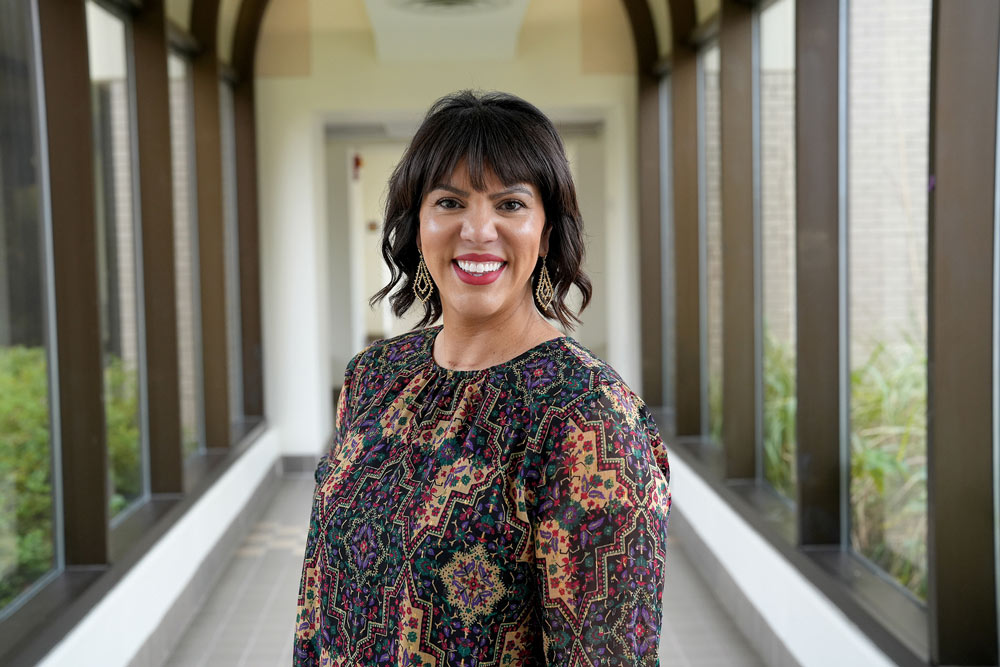
In 2014, her journey brought her to KU. Today, she is professor of clinical child psychology and senior scientist at the Life Span Institute, where she is director of the new Center for the Advancement of Research on Eating Behaviors (CARE).
In some ways, Guenther’s story typifies the misunderstanding around eating disorders that persists today: namely, the assumptions that behavioral conditions such as anorexia nervosa and bulimia nervosa are rare (and rarely fatal), and that they mainly affect young white women starving for a waifish figure. However, the truth about eating disorders is much more complex and diverse. The National Institute of Mental Health defines eating disorders as severe disturbances in a person’s eating behaviors. Although many people may be concerned about their health, weight or appearance on occasion, some become fixated or obsessed with weight loss, body weight or shape, and controlling food intake. Others may struggle with binge eating, marked by episodes of overeating and a sense of losing control.
Anorexia and bulimia are fairly well known, but the Diagnostic and Statistical Manual of Mental Disorders, Fifth Edition (DSM-5)—the standard reference used by clinicians to diagnose mental health conditions—recognizes six additional categories that are less familiar. These include binge eating disorder, avoidant or restrictive food intake disorder, pica, rumination, and other specified feeding and eating disorders (such as purging disorder, night eating syndrome, atypical anorexia nervosa, subthreshold bulimia nervosa and orthorexia).
The “other specified” category can account for nearly half of all cases. Further illustrating the challenges of identification, eating disorders are known to manifest very differently across varied cultures, gender identities and ages. Lack of access to treatment, from rural areas to the military, compounds the problem.
This is partly why, as Forbush explains, recent research on the prevalence of eating disorders suggests cases are undercounted. Far from rare, these conditions may be as common as depression and anxiety.
On this complex foundation, Forbush and a team of researchers aim to build scientifically valid, effective—and inclusive—ways to identify and treat eating disorders at CARE, which in 2024 became one of nine dedicated research centers at the Life Span Institute. A key goal is to expand access to effective treatment no matter where people are, including on campus.
“One thing that breaks my heart is when I have a student who says, ‘I’ve been to treatment four times,’” Forbush says.
She has also seen students who’ve been in treatment since their preteen years who, after receiving treatment developed at CARE, show improvement in less time than it takes to complete a single semester of classes.
“This shouldn’t be what happened to them,” Forbush says. “They lost 10 years for this, and they can’t get that time back. We’ve got to bridge that gap so that people can live high-quality lives.”
Standards and stigmas
Eating disorders often peak in early adulthood—the age many people start college or join the military. Anxiety and trauma often associated with dramatic life changes such as these can worsen eating disorders. When food access becomes unpredictable, research shows, disordered behaviors around diet and extreme exercise can feel like a way to regain control.
“There’s a lot of reasons why the military environment is kind of the ‘perfect storm’ for developing an eating disorder,” Forbush says.
Service members are required to make weight twice a year, and weigh-ins are public. Intentional dehydration and extreme use of laxatives may become normalized when exceeding standards by even half a pound can trigger an email to the whole command. Failing isn’t just humiliating—it limits eligibility for orders, impacts promotions and can even end careers.
“There’s also the stigma that you’re the weakest link and that you can’t keep up or be a part of the team,” says Leah Stiles, a retired senior chief petty officer.
Stiles reached out to Forbush in her post-military role as CEO of Sea Waves, a nonprofit she founded to raise awareness of the problem of eating disorders in the military. For Stiles, it’s personal. So much so, she’s given it a name.
“I call it Lucifer. Lucifer living with us. It’s a roommate you just don’t want.”
Stiles developed an eating disorder coping with a turbulent childhood. She thought she’d left it behind when she joined the U.S. Navy, but it resurfaced as she struggled to manage the stress of deployment, stay within unforgiving weight limits and prove that she belonged.
In the military, overwork was rewarded. Her disorder adapted to fit the system, accompanying her through a 20-year career. At one point, she was purging more than five times a day. She ruptured her esophagus. As her body broke, she kept passing inspections because, from the outside, she looked fine: Stiles wasn’t underweight.
Eventually, the three highest-ranking officers on her ship confronted Stiles during a deployment. They had her medevaced to Naval Station Norfolk, the world’s largest naval base. When she arrived, she learned what many people with eating disorders have experienced: Few medical providers have specific training to treat them.
“When I got there, there was not one single eating disorder-informed provider in the entire hospital,” Stiles recalls. “Nobody had gotten more than 15 minutes of formal eating disorder education.”
Both Forbush and a 2019 Government Accountability Office study found that military screening methods fail to identify service members with eating disorders.
“The current way of screening for eating disorders within the military is to ask potential service members if they have ever had an eating disorder,” Forbush says. “That’s it.”
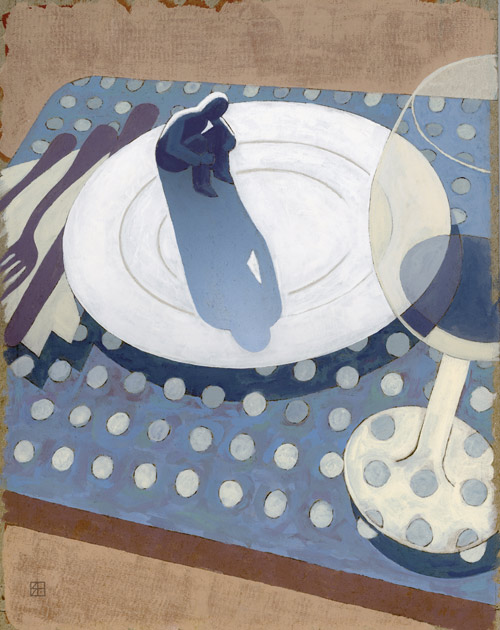
With a series of research grants, Forbush has helped define new ways to identify eating disorders, by looking first to the experiences of veterans and, now, among active-duty military.
She led research to develop the Eating Pathology Symptoms Inventory (EPSI), which improved the narrow focus of existing assessment tools. Launched in 2013, the 45-item questionnaire, tested among more than 30,000 people, assesses eating disorders among a wide range of ages, genders, body shapes, sexual orientations, socioeconomic statuses and cultures.
Building on her work on EPSI, Forbush created another screening mechanism, the Brief Assessment of Stress and Eating (BASE), 10 questions that identify eating disorders among veterans as well as other populations, such as college students.
On the heels of that success, Forbush won a $4.2 million Department of Defense grant in 2023 to address eating disorders among active-duty military by refining and scaling her screening tool.
To understand the need for more accurate screening tools in the military, where men outnumber women, one must understand the misconceptions about these conditions, says Samiya Rasheed, c’23, c’23, a project coordinator at CARE who oversees veterans and military studies with BASE.
“The biggest misconception about eating disorders is generally just around who can have an eating disorder—which is anyone,” she says.
While the rates of eating disorders are higher among women, men are less likely to receive treatment. That’s why the mortality rate for men is more than double that of women.
“Inevitably, when we ask (the mostly male service members) if they have ever talked about eating disorders within a military context, I have never gotten another answer but, ‘That’s not really something we talk about, even if we do talk about mental health generally,’” Rasheed says.
Screenings are critical because they are the first step toward treatment, a tool that can be used broadly to identify potential health risks before assessing individuals in more comprehensive evaluations.
“You want something brief and easy to give alongside depression screenings and anxiety screenings, right?” Forbush explains. “Think of the questions you’re asked when you go to a doctor.”
But it isn’t enough to ask more questions; clinicians need to ask the right questions. Failure to do so means many people remain trapped, not only putting their health at risk, but also significantly impacting their quality of life.
“We’re really learning,” says Anjali Sharma, c’21, a graduate research assistant at CARE, “that eating disorders don’t discriminate.”
A culture of collaboration
CARE’s group of two dozen clinicians, researchers and students are actively collaborating—and encouraging one another—to better understand how disordered eating develops across many different lived experiences and cultural contexts.
The team environment is something Forbush has worked to build.
“I’ve spent a lot of time thinking about best practices for hiring people, maintaining good work-life balance, and creating a sense of community and cohesion,” she says.
“It’s something I really strive for, and something I enjoy … because I get to create a culture that I want to be a part of. That does take work to cultivate and maintain.”
After her ballet career ended, Forbush found her next steps with encouragement from an undergraduate sociology professor. He had asked her to stay after class to discuss a paper on eating disorders she had written for her final project.
She was anxious that he was going to criticize her work, but he surprised her by instead suggesting she consider a career as a researcher. His words planted an idea that kept coming back to her as she went on to earn her PhD. Now, she hopes to inspire other students in the same way.
“Simple things that we can do as a professor, such as small encouragements,” she says, “can have such a big impact on people.”
The entire CARE team—undergrads and graduate students, project managers and center leaders—meets weekly during the academic year, packing a conference room in the Dole Human Development Center to share ideas for information dissemination, discuss avenues of research, and brainstorm ways to connect to communities.
“The best research, to me, is developed with communities, not on communities,” Forbush says. “So really trying to partner with various groups in the area and nationally is one of our initiatives.”
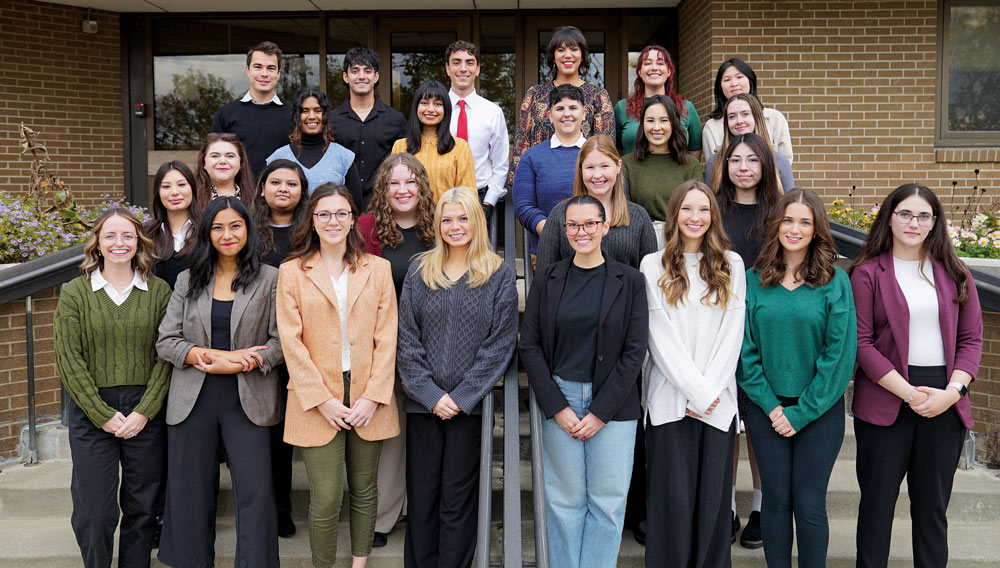
This culture of mentorship, inclusion and community-engaged research is reflected in the work of Sarah Johnson-Munguia, g’21, a doctoral student and graduate research assistant at the center. Her research explores how culture shapes relationships with food and body image, a key step in improving screening and treatment.
People with an eating disorder don’t necessarily desire the thinnest body possible. Hispanic women she interviewed often preferred thin waists but larger hips and chests. Similarly, masculine ideals may call for low body fat but large biceps and defined, six-pack abs.
These ideals of physical appearance, self-control and morality around food are passed down in both subtle and explicit ways. They serve as powerful sources of connection, but, paradoxically, can also be sources of division, isolating people from the communities that shaped them.
“I think about how ingrained food is in our culture, and how it’s such a connecting force to other people,” Johnson-Munguia says. “So, you often lose that connection as you get deeper into an eating disorder.”
The social pressures around food can lead people with eating disorders to avoid spending time with friends and family, wary of comments that they are eating too much or not enough. They may fear losing control of their eating, or they may be so busy with the rituals surrounding their disorder that they just don’t have time.
“You lose your connection to the outer world, and the things that actually matter to you as a person and your values. That can feel really isolating and hard to deal with,” Johnson-Munguia says.
While eating disorders look different across cultures and genders, there are differences in how these behaviors impact people across identities as well.
Anjali Sharma, the project coordinator, focuses much of her research on eating disorders across the gender spectrum. There’s not a lot of data on how to assess or treat eating disorders in gender-diverse people. But science is starting to catch up.
“For transgender individuals or gender-nonconforming individuals, we see there is this body ideal of being androgynous,” Sharma says. “So, of course, secondary sex characteristics, such as breasts or having hips, can be very dysphoric and can be very triggering.”
Trans individuals experiencing gender dysphoria may try to control their body by restricting food, purging or exercising excessively.
According to the National Eating Disorders Association, transgender or nonbinary people are four times more likely than cisgender peers to have an eating disorder, and LGBTQIA people experience higher rates and more severe symptoms of eating disorders on entering treatment, compared with individuals who are heterosexual or cisgender. Assessments and treatment programs often ignore these facts.
“A lot of our treatments and a lot of our assessments and all of that have been made for cisgender individuals,” Sharma says. “And we’ve found that common eating disorder questionnaires perform quite differently, to where it doesn’t detect eating disorder problems as well in transgender and gender-diverse individuals.”
A lifetime of rituals
Matty Spragens grew up being told that the size of their body must be strictly controlled.
Spragens, whose experience typifies the lifelong challenges eating disorders pose, says their mother began embracing diet culture and projecting it in the 1970s, when Spragens was a child. It was the era when Robert Atkins penned his Diet Revolution books and celebrity fruit fasts touted shedding pounds fast.
By kindergarten, Spragens had been drawn in as well. “I was told from a very young age, like the age of 5, that I had inherited ‘fat genes.’” At 6, Spragens was put on the first of many diets. The experience was taxing, but Spragens, c’96, didn’t see an alternative.
“I lived my entire life just thinking that life sucked,” Spragens says. “That was the way life was. You just had a bad relationship with food and body, and all of those things.”
Spragens came out as queer in 1991 and as trans in 2019. Their eating disorder has looked different over time, but often the behavior associated with it was praised.
“It was always like, ‘Oh, good job. You lost all this weight,’ you know? ‘You look great. Keep doing what you’re doing,’” Spragens says.
By 14, they were skipping lunch, going to basketball practice after school and eating salad for dinner.
“I lost a ton of weight, and everybody was just so proud of me, because I had these ‘fat genes’ that I had to fight. And I was doing it. I was fighting it.”
Spragens didn’t recognize they had an eating disorder until after a dietitian expressed concerns in 2019.
Always athletic, Spragens had taken up weightlifting in their 40s. They used a nutrition coach to stay competitive—and lean—in the weight-class sport. The coach had Spragens log every ounce of food and target specific percentages of protein, carbs and fat.
“I was eating 1,200 calories a day and exercising every day. And like, doing ridiculous things,” Spragens remembers. This included weighing daily, taking photos and reporting all details to the coach.
Spragens remembers questioning others in an online weightlifting forum about whether it was normal to never stop thinking about food. No one ever brought up the topic of eating disorders.
Still, Spragens knew something was wrong.
“I was miserable,” Spragens says. “Miserable. And I just, I woke up one day and I was like, ‘I know I need to stop working with this guy.’ And also, ‘I don’t know how to feed myself.’”
That’s when they went to the dietitian to find advice on a better diet—maybe paleo? Instead, “Within about 20 minutes of talking to me, they said, ‘Um, you’ve got a problem.’”
Spragens didn’t enter treatment right away, but they soon realized managing an eating disorder wasn’t something they could do on their own. A lifetime of rituals refused to disappear.
“If you have run under the radar for so long, the longer you have your eating disorder, the harder it is to reset your mind frame,” Spragens says.
They entered residential treatment for eating disorders. While beneficial, the program wasn’t set up to support someone like them.
“It really catered to young people who are worried about school and life decisions for the future,” Spragens says. “It doesn’t really take into account people who have children and are in various other decades of life.”
The community providers also lacked knowledge about gender-affirming care in the context of eating disorders, according to Spragens, who set about educating the nursing staff.
“I had to really fight to have my pronouns respected,” Spragens recalls.
The experience was beneficial, but health insurance limited the length of the stay. Overall, Spragens needed about 10 in-patient stays over the next six years.
Research gains boost treatment
Because eating disorders are considered a specialized field in psychology, providers have limited training in diagnosis and treatment.
“People are just truly slipping through the cracks, and there’s not enough providers to keep up with demand for services,” Forbush explains.
There are signs this is changing. Forbush recently co-wrote a textbook on abnormal psychology. The other authors, aware of the need for more information on the topic, were eager to include a scientist who specializes in eating disorders in their newest edition.
“In the beginning of their book, eating disorders weren’t in there at all. Then it was a section in the childhood chapter,” Forbush says. “Now it’s its own chapter.”
From 40% to 60% of eating disorders can be classified as “other specified,” Forbush says, which means a person has symptoms that cause clinically significant distress or impairment but do not meet the full criteria for an eating disorder such as anorexia nervosa, bulimia nervosa or binge eating disorder.
Until recently, large epidemiological studies of psychiatric disorders excluded this “other specified” category, which led to eating disorders being underestimated.
“If you exclude the most common eating disorder, you have a distorted idea of the scope and impact of eating disorders,” Forbush says.
She believes eating disorders should be as well understood by therapists as common health problems are understood by primary care doctors.
“If your primary care physician isn’t familiar with Type 2 diabetes,” Forbush explains, “that’s not going to work.”
Of course, eating disorders that go unrecognized also go untreated—contributing to an annual $64.7 billion economic hit from lost productivity and well-being, U.S. health system costs, and related expenses. Despite this, the National Institutes of Health funds eating disorder research at a rate of about 73 cents per person with a disorder, Forbush notes. NIH invests $58.65 per person with autism spectrum disorder and $86.97 per person with schizophrenia.
Angeline Bottera, associate director of CARE, says clinicians can be uncomfortable or unfamiliar with treating eating disorders. Few providers receive training specifically to treat eating disorders, limiting access to care.
Although providers refer individuals to specialists, there are not enough specialists to meet patient needs. As a result, people struggle to find treatment.
Bottera completed her PhD in clinical psychology at the University of Wyoming, where she observed the provider shortage firsthand. If people were unable to access treatment at the university, there were no other options in-state. People drove more than two hours to Denver for treatment.
In West Virgina for her residency, she saw much the same thing, with patients possibly driving hours for outpatient treatment—a problem that extends across much of rural Kansas as well.
Bottera was struck by the magnitude of the shortfall, and the need to develop solutions that address the gaps in treatment. She says CARE is at the forefront of disseminating treatment options to nonspecialty providers.
“That means that our work, which already involves KU students and veterans in the state, has the potential to help Kansans statewide who are in rural and isolated communities. It’s a global impact that is being developed here at KU that can meet those needs.”
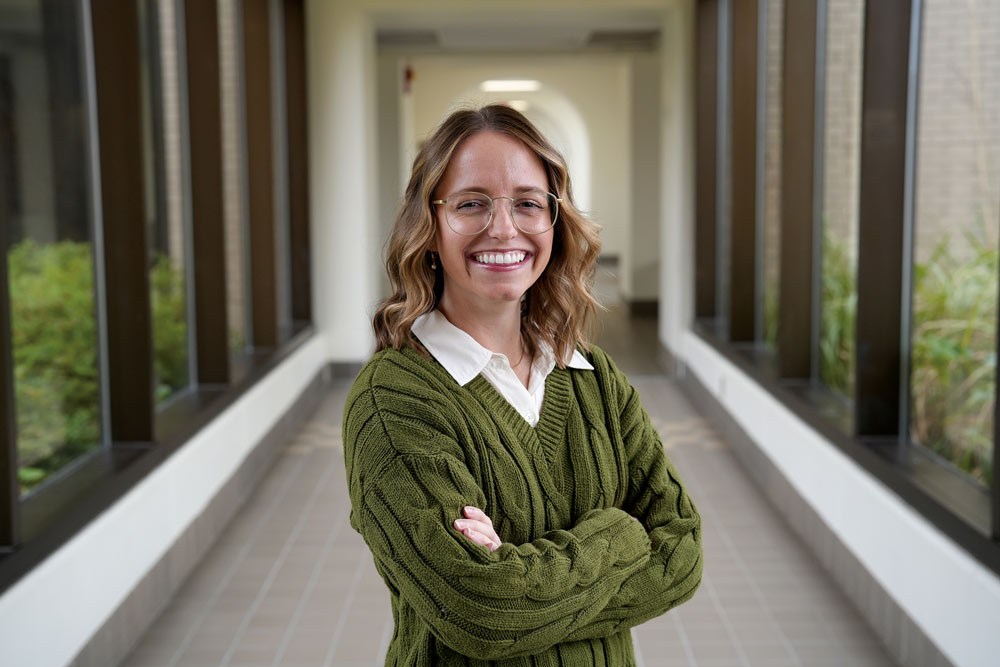
To address gaps in treatment options, CARE is developing app-based tools that pair clinicians with resources to improve eating disorder treatment. The apps provide patients with lessons and skills for recovery, along with tools to track their progress. Therapists can monitor clients’ progress through the platforms, supporting wellness and sustained recovery.
Two ongoing projects are the Smart Technology for Anorexia Nervosa Recovery (STAR) app, which supports clinicians in helping patients with anorexia nervosa maintain recovery and prevent relapse into higher levels of care, and the BEST-U (Building Healthy Eating & Self-Esteem Together for University Students) app. Forbush this year received a $715,000 grant from the National Institutes of Health to expand BEST-U’s 11-week program to reach more students and fund training for Watkins Health Center providers to serve as coaches.
Most people with eating disorders are not underweight, and screening measures aren’t capturing these types of eating disorders very well. Sometimes students volunteer thinking they’ll be part of a control group but realize throughout the course of answering questions that they have an unhealthy relationship with food and body image that should be addressed.
“I do think sometimes there might be certain aspects of eating problems that can be normalized in our society,” Forbush says. “It’s sometimes hard to know where that line is between watching your diet, worrying about your body, wanting to be fit—and when it becomes problematic.”
While research and study are the methods, Forbush says, helping people is the ultimate goal of the work.
“We’ve got to bridge that gap between what happens in traditional practice and what happens in our research labs. It cannot be separate.”
Breaking free
When eating disorders are treated successfully, people have more time to focus on friends, relationships, hobbies, school, work.
“Eating disorders take up a lot of mental real estate,” Forbush says. “When a person gets treatment, it opens up so many different aspects of life.”
Spragens still feels the frustration of living with an eating disorder for decades. While they are in a good place today, the work to stay healthy doesn’t end.
“I wish,” Spragens says, before pausing to reflect. “I wish a lot of things.”
Looking back, Spragens wishes they’d been able to access care when they were 14.
“At a time when I should have really gotten some help, people were just so amazed at how disciplined I was and how good I looked,” Spragens says. “I think my life could look a lot different than it does now.”
This is part of what has driven Spragens, at 51, to pursue a master’s degree in social work so they can help others with eating disorders.
Spragens strives to remember how far they’ve come. Even small moments feel big.
They can take their child out for ice cream. They can focus better on work and are able to realize when they’re pushing too hard. They’ve gotten into painting. And they feel pride in who they are and being part of a queer community. When Spragens applied to adopt a rescue dog, friend after friend provided references.
“It’s hard when you’re just looking forward and you’re like, ‘I’m just never going to get there, I’m never going to get there, I’m never going to get there.’
“But yet, look at all the things that have happened and changed in my life,” Spragens says. “I think it’s important for people to remember those things about their own experiences.”
Christina Knott, a KU graduate student in digital integrated marketing, is a communications specialist at the Life Span Institute.