
KU Alumni asked: Which of your KU professors had the biggest impact on you?
“Dr. Jan Roskam, in the School of Engineering, brought real-world industry experience into the classroom. My senior year, Dr. Roskam integrated a national aircraft design competition into the curriculum, and four KU students placed in the top 5.”
—Jim Hunt, e’81, g’83
“Carol Elliott, who directed the nurse anesthesia program. She saw potential in me when I doubted myself the most. My KU degree opened the door to a 35-year career as a nurse anesthetist, and I owe so much of that to Carol’s unwavering support. Sometimes you just need that one person to believe in you, and Carol was that person for me at KU.”
—Denise Sacheck, g’91
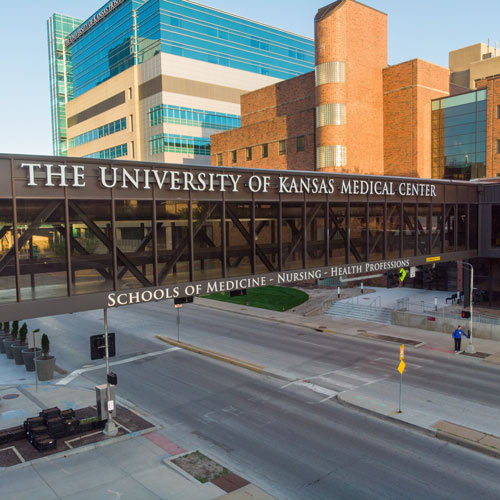
“Dr. Mahlon Delp, my first attending physician during medical school. He really personalized his approach, learning about each patient’s life and community, which shaped my own philosophy of compassionate,
holistic care.”
—Gary Beauchamp, c’66, m’70
“Professor David Besson in the physics and astronomy department was an incredible mentor who really brought me into the world of research. He guided me through those first steps of understanding what it means to truly ‘do’ science. I went on to earn my Ph.D. in physics from UC Berkeley.”
—Hannah Swift Fakhouri, c’06
“Dr. Marc Asher, a professor of orthopedics, left a lasting impression. He emphasized seeing patients as people first. His example made me a better doctor.”
—Masayo Watanabe, m’86
“Professor Edward Grier in the English department. He oversaw poetry workshops and readings, which allowed me to meet some renowned poets. I’ll never forget briefly chatting with Allen Ginsberg at one of Professor Grier’s receptions.”
—Donna Harrell Hobbs, d’67, g’68
“I was fortunate to get to come to the KU campus as a high school student as part of the science camp organized by Dr. Delbert Shankel, and that really set me on the path to my career. I am forever grateful for Dr. Shankel—he did a lot for students from small, rural Kansas high schools like mine.”
—Edith Lord, c’70
“My Ph.D. adviser, David Katzman in American studies, went above and beyond in his guidance. He often told me that the best way to repay him was to ‘be good to your students in your future teaching.’”
—Hong Cai, g’03, PhD’12
“Dick Wright was by far the KU professor who had the most meaningful impact on my life. I was a senior in the School of Pharmacy in 1976 and, thankfully, had some flex room in my schedule to take an elective course on whatever interested me most. For a couple of years, I had been eyeing Professor Wright’s “History of Jazz” course in the course catalog, and it was available at a time slot that worked for my class schedule. I was already a jazz music fan, but Professor Wright broadened and deepened my appreciation for the genre and acquainted me with many great musicians whom I really had heard little or nothing about previously. He infused his lectures with music from his amazing, huge private collection of jazz albums, bringing to light many of the distinctions that characterized jazz’s stylistic changes over the years. I’ve remained a passionate, knowledgeable jazz fan over the five decades since taking Dick’s course and have always been thankful for his enthusiasm and guidance.”
—James Utt, p’77
“Dr. Robert Harder taught one of my first classes in the Master of Public Administration program. He had experience as both a Kansas legislator and a state agency director. His knowledge and engaging teaching style kept me invested.”
—LaVerta Bostwick Greve, g’84
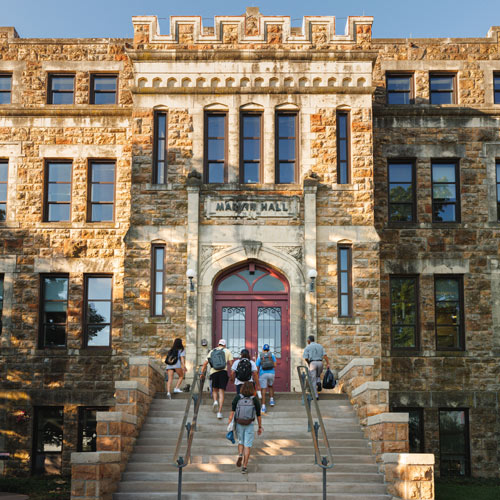
“After my first year in the School of Architecture & Design, I had doubts about whether architecture school was the right fit for me. But then I had my studio course with Curtis Besinger, who had worked with Frank Lloyd Wright. Instead of designing buildings right away, we spent the first weeks learning about proportion and movement. It opened my eyes to what design was all about.”
—Mike Sturla, a’79
“Professor Clark Bricker in the chemistry department. He really pushed us to think critically rather than just memorize facts. Bricker said we’d forget the specific details he taught, but we’d never forget how he taught us how to think.”
—Paul Hund, c’71