

“J’ai dit à Paris, ‘Tu as changé.’ Et la ville m’a dit, ‘Toi aussi, tu as changé.’”
Five decades after first participating in KU’s Summer Language Institute in Paris, Stuart Boley returned to the City of Light this summer to reignite his connections with the French language, the people, the culture and himself.
“I said to Paris, ‘You have changed,’” says Boley, c’77. “And the city said to me, ‘You also have changed.’”
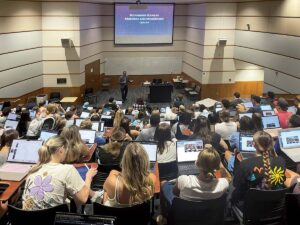
In the summer of 1975, Boley was a 20-year-old undergraduate student from Lenexa on his first overseas trip. This summer, as a 70-year-old retiree, he again participated in the Summer Language Institute after taking French 110 at KU in fall 2024 as part of a Kansas Board of Regents policy that allows Kansas residents age 60 or older to audit university courses on campus at no charge. Boley (who paid full tuition and fees to participate in the study abroad program this summer) was one of 19 KU students on the five-week trip.
The summer of ’75
In the United States in 1975, “One of These Nights” and “Love Will Keep Us Together” topped the music charts, while “Dog Day Afternoon,” “Jaws” and “French Connection II” were popular movies. That summer, Boley was across the Atlantic experiencing Parisian culture and daily life. But his raison d’être là—his reason for being there—was the language.
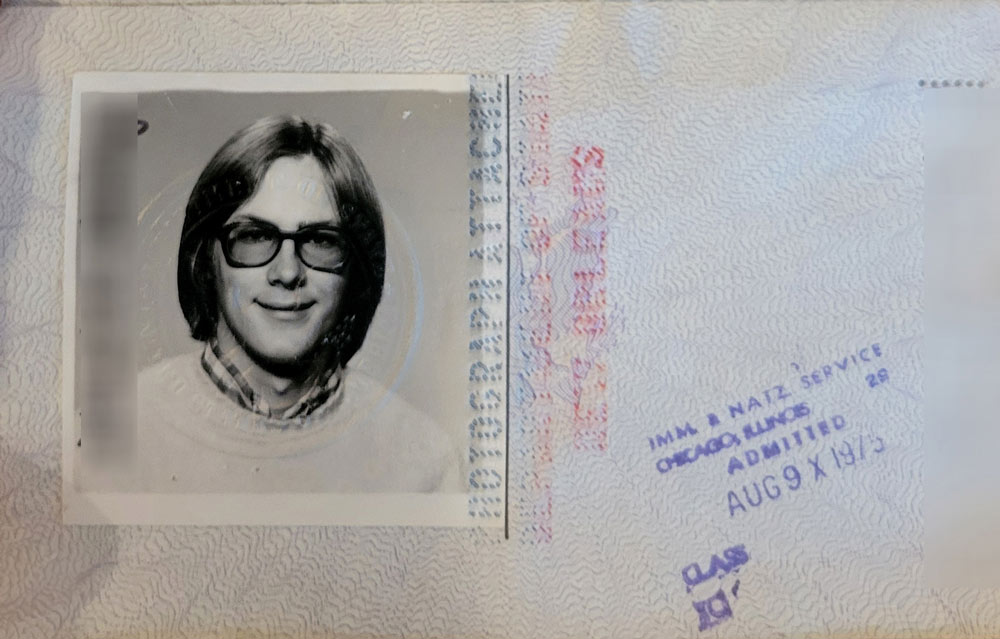
Started in 1958, KU’s Summer Language Institute in Paris is among the oldest continuously running summer academic programs offered by a U.S. university. Having studied French in junior high and high school, Boley continued at KU and saw the study abroad program as an opportunity to practice his language skills and learn about the world.
“I met other students from Nigeria, Holland and Italy,” Boley says. “It was a wonderful experience. It was fun, but tough.”
That experience in Paris and his French language skills would play an important role in a later career opportunity. After graduating from KU, Boley moved to Houston and was hired as an IRS auditor. Three years later, and partly because of his study abroad experience, Boley landed in Paris again, this time for an assignment in the U.S. Embassy. He would spend another six months living in and experiencing Paris as a local with his wife and young child.
The summer of ’25
This summer, “Ordinary” and “What I Want” were chart-toppers, and moviegoers were watching “Superman” and “F1.” Boley was in Paris again, experiencing the culture and practicing his rusty French language skills. Older and wiser, Boley was more confident and less intimidated than he was 50 years ago, particularly when speaking to Parisians.
“My skin is tougher than when I was 20. I am less worried about what other people think,” Boley says. “At 20, I was afraid of making mistakes. At 70, I’ve made so many mistakes, a few more won’t matter.”
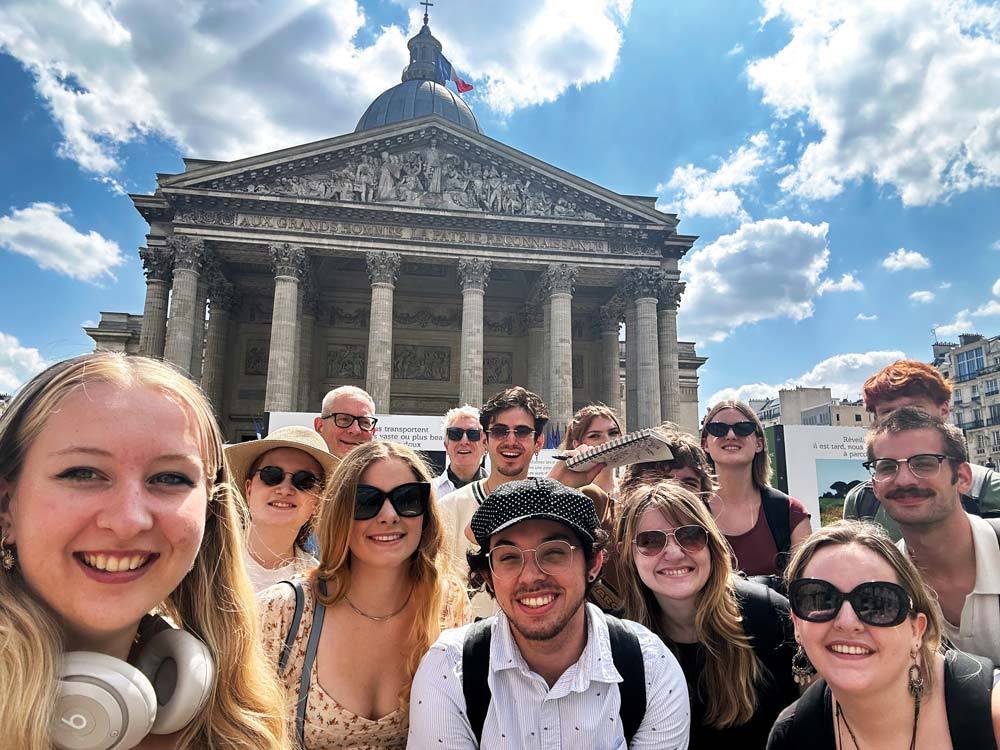
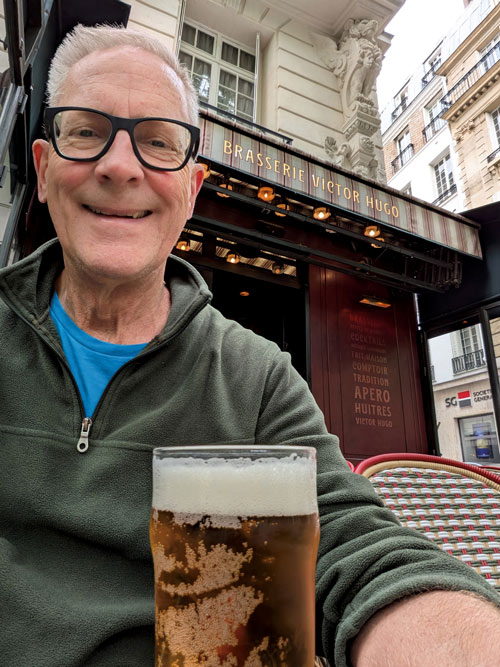
In returning to Paris, Boley wanted to have a sense of purpose and be immersed in the daily life of the city. While he could have visited as a tourist, the summer institute program helped him connect with the city and people as he had when living there in 1975 and 1980.
“I didn’t want to just see Paris; I wanted to experience it. If you’re looking at the Eiffel Tower, you’re not looking at the people,” he says.
A key part of this trip was the housing arrangement. In 1975, students in the summer institute lived in dorms. Today, students live with host families, which provides more opportunity to experience typical Parisian life. Boley was unsure whether a family would agree to host a nontraditional “senior” student, and he feared he would have to stay in a hotel. Fortunately, he was provided a home with host family Maria and Denis Laloux.
Study abroad’s enduring appeal
Experiencing day-to-day life in a foreign country and connecting with locals are among the many rewards of studying abroad. Whether lasting a few weeks, a semester or an academic year, study abroad programs provide students with the opportunity to see and experience international communities and cultures in a way that is rarely possible as a tourist.
Refining their foreign language skills and gaining a more global perspective can also help students as they enter the workforce, as Boley learned in 1980. For that reason, KU places a significant focus on experiential learning—opportunities that take students outside the classroom and enable them to have hands-on experiences. The University offers more than 165 study abroad programs in more than 70 countries, and nearly 25% of undergraduate students participate.
“It’s a chance for personal renewal,” Boley says. “It’s an amazing opportunity to step out of what you’re doing and do something challenging and wonderful.”
Bruce Hayes, professor and chair of the department of French, Francophone and Italian studies, has been co-directing KU’s Paris Summer Language Institute for more than 20 years along with his colleague, Professor Paul Scott. Hayes directs the five days of touring northwestern France, while Scott oversees a four-week stay in Paris. Both ended up as French scholars and teachers because of their time spent in France when they were younger. Some students naturally may be anxious about taking the leap to study abroad, Hayes says, but those who participate benefit immensely, including through gaining newfound confidence—une nouvelle confiance.
“Nobody ever does study abroad and says, ‘I wish I hadn’t done that,’” Hayes says.
Cost can be a barrier to studying abroad, but KU Study Abroad & Global Engagement can help students navigate the financial challenges. KU Endowment, for example, has more than 120 awards and scholarships that support study abroad in 32 academic departments.
Then and now
Family support for a study abroad experience is important, and Boley’s family looks much different today than it did in 1975. He says his wife, Lisa Boley, and his grown children gave him support and encouragement when he mentioned the idea of participating in the language institute. After nearly 50 years of marriage, Lisa understood why Boley wanted to return to Paris.
“Stuart is independent and adventurous, so the trip did not seem like a huge leap,” she says. “His first trip to Paris with KU Study Abroad was very important in his life, and he has wonderful memories of that experience.”
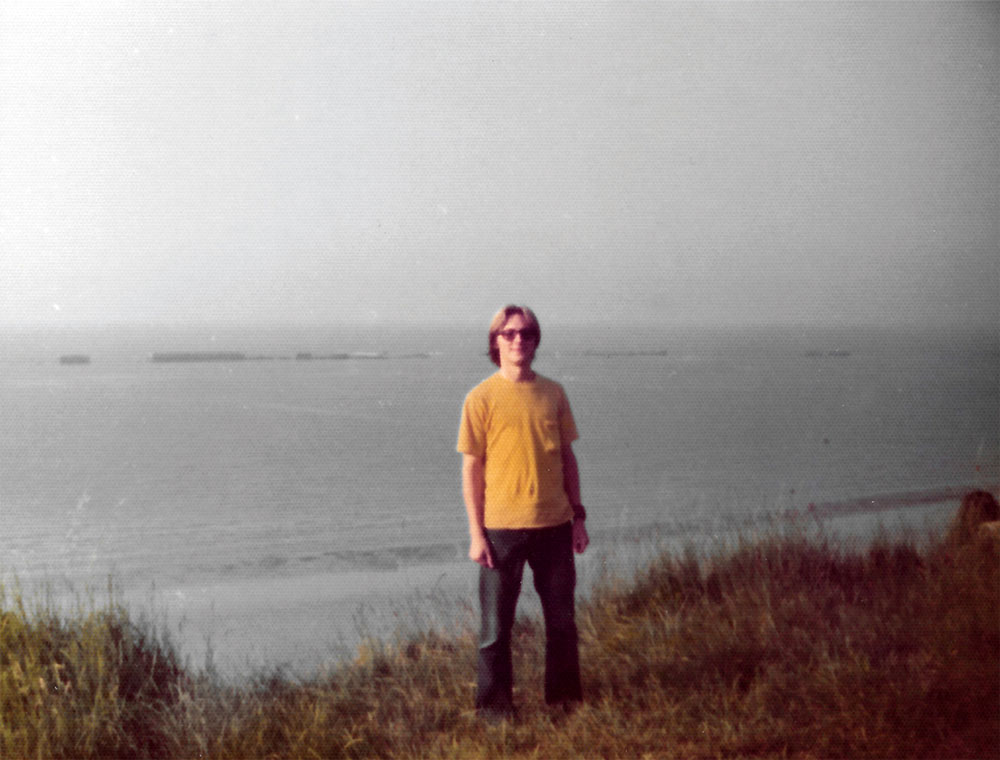
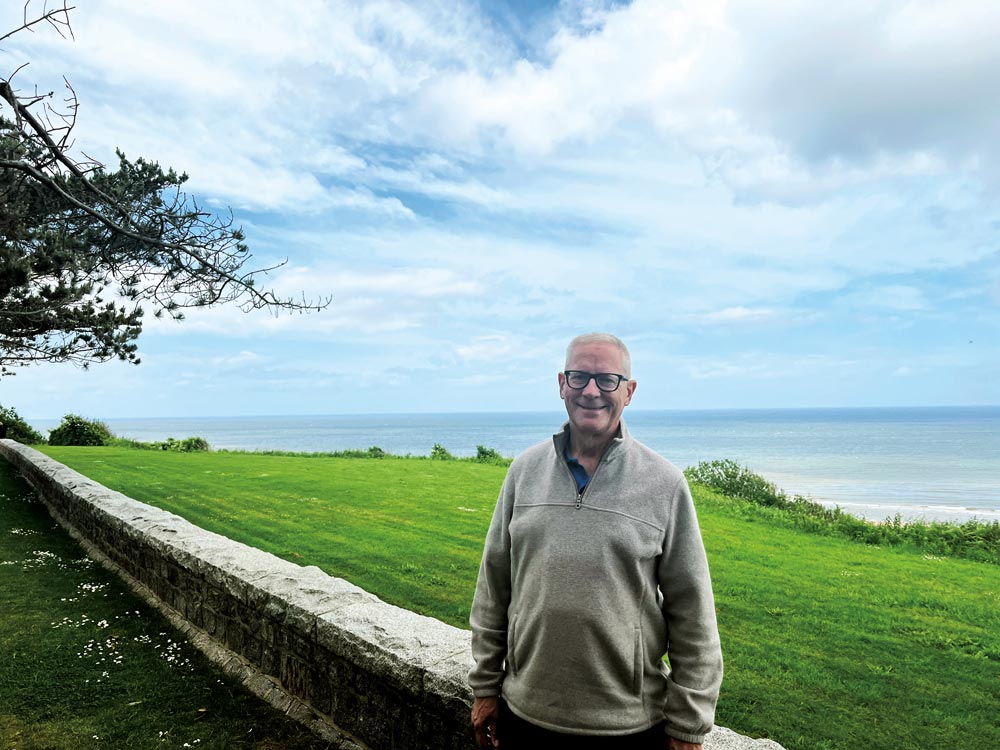
Study abroad experiences often include side trips to culturally or historically significant places, and the Summer Language Institute in Paris is no exception. Hayes says a trip to Normandy has been part of the program for at least 50 years.
“Students are typically quite moved by the experience of visiting the American Cemetery in Normandy,” Hayes says. “As World War II gets further and further from our collective memory, students have less and less awareness of what exactly happened.”
Consider that Boley’s first Normandy visit in 1975 was only 30 years after the end of WWII, while 50 years have passed since that trip. With age comes wisdom, and with time comes perspective. In visiting the Normandy American Cemetery on this trip, he reflected on his life over the past 50 years—years the soldiers laid to rest there didn’t have.
“On my first visit, I was about the same age as those who were buried there,” Boley says. “As a 70-year-old, I have a greater appreciation of tragedy and a better understanding of the significance of their sacrifice.”
With a lifetime of perspective and a desire for an authentically local experience, Boley’s approach to study abroad this summer was different from that of his younger self. This summer, he spent much of his time in the relatively quiet Gambetta district frequenting cafés, studying, and simply enjoying life as a 70-year-old college student in Paris.
“This time, I didn’t close down any bars, but I opened some cafés,” Boley says.
“Cette fois-ci, je n’ai fermé aucun bar, mais j’ai ouvert quelques cafés.”
Snapshot: KU Study Abroad
165+ study abroad programs offered, with options for every major.
70+ countries where students can study.
$500,000+ in study abroad scholarships awarded in the 2024-’25 academic year.
Nearly 25% of undergraduate students study abroad.
KU ranks in the top 6% nationally for study abroad participants.
David Day, c’90, g’97, is director of strategic communications in KU’s Office of Public Affairs.