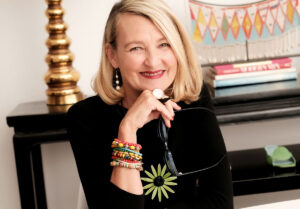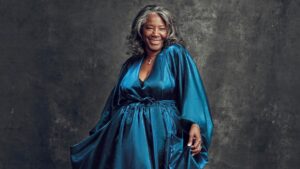

Atop her Instagram page, Loleta Robinson describes herself as “unbossed, unbothered, unapologetic,” a fitting motto for a woman who has made her mark as an entrepreneur and adventurer. “Unbossed,” Robinson explains, honors Shirley Chisholm, the first Black woman to serve in the U.S. Congress and run for president. Chisholm titled her 1970 memoir Unbought and Unbossed.
Robinson, c’93, m’99, who lives in Wilmington, North Carolina, is president and CEO of Fortis Industries LLC, a company she founded in 2014 to provide consulting services to biomedical companies on technology transfer and commercialization. Fortis in 2018 entered a new era, Robinson says, in which her “side gig has become her main gig,” selling emergency-preparedness, disaster and first-aid supplies to city, county, state and federal agencies.
Robinson traces her entrepreneurial spirit to her teenage years. She jokes that she was “the first Uber driver,” earning money by carting kids in her Wichita neighborhood to after-school activities. But science also captivated her, and she longed to be “the female Marcus Welby,” she says, alluding to the popular TV series of the early 1970s.
After Robinson earned her KU microbiology and medical degrees, she still could not shake her enterprising instincts. When she learned that the University of Colorado Denver was launching an MBA program geared toward health care administrators, she immediately enrolled. “It was the best thing that ever happened to me because it opened my eyes to the business side of health care versus strictly patient care,” she says.
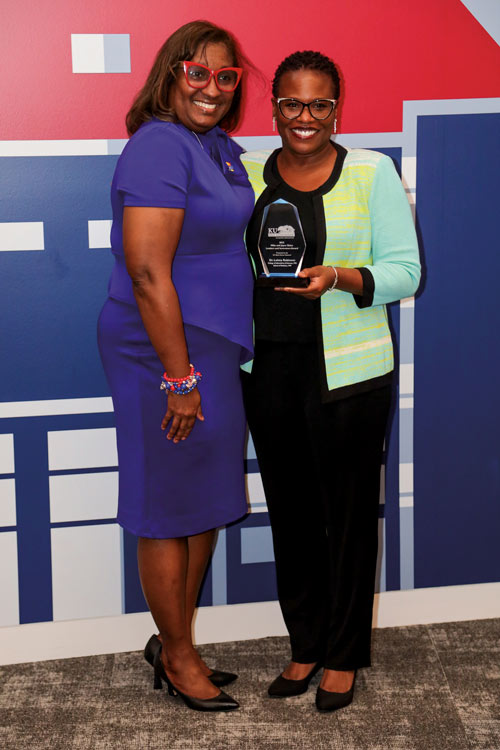
Robinson then took what she calls her first leap of faith, becoming the medical director of Thermo BioStar, a Louisville, Colorado, company that manufactured diagnostic tests for infectious diseases. She oversaw clinical studies and worked with regulatory agencies.
When the company was sold, Robinson looked for new roles and the chance to satisfy her urge to live in the Washington, D.C., area. She became director of medical sciences for Medimmune (now AstraZeneca) in Gaithersburg, Maryland, but before making her move, she reached out to the president of Women in Bio, an organization that became her enduring network.
“Those years were so instrumental for me to actually develop in my career and see for the first time what was out there and available to me,” Robinson says. “There were so many women in the biosciences—whether they were attorneys in intellectual property, pharmaceutical executives or clinical trial researchers. They were all very supportive. To this day, I’m still in contact with people I met there, and I haven’t lived in Maryland in 10 years.”
One of those lasting connections is Christine Johnson, who now lives in Miami but checks in daily with her mentor and dear friend. Johnson says their careers have mirrored each other, and she marvels at Robinson’s ability to take on new challenges. “I don’t say this lightly, and she would not like for me to say this, but she is brilliant in the way she acquires knowledge and applies it,” Johnson says. “She’s great at the business pivot, because she’s a learner.”
Among Robinson’s more memorable learning opportunities were her travels in several African nations through a grant that combined business development and health care. “I had great conversations with people on the ground about what was needed in health care,” she recalls. “We learned what their needs were and how they handle health care with limited resources. We were not there to tell them, ‘Hey, this is what you need to do,’ but to ask, ‘How do we make this work together?’”
Robinson went on to serve as an entrepreneur-in-residence for Blue Cross Blue Shield of Nebraska, the National Institutes of Health and, most recently, BioHealth Innovation Inc. In these roles, she advised young companies on taking their new products to market, and she evaluated potential investments in new ventures.
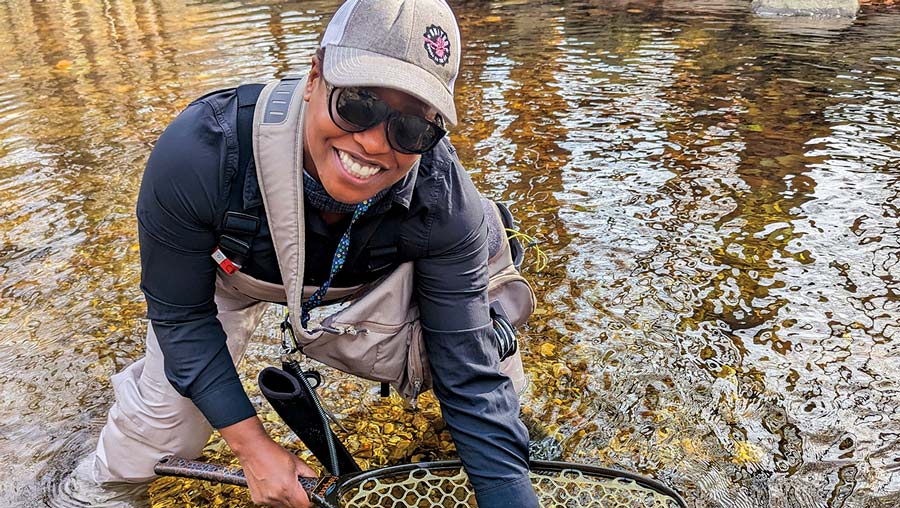
Robinson’s off-hours interests are as varied as her career. When she moved to Omaha for her role with Blue Cross Blue Shield, she took up fly fishing—and thought it would be a fun way to reach her goal of visiting all 50 states before she turned 50. She contacted a national organization, United Women on the Fly. “I only had nine more states to do, so I said, ‘I’m going to find me a female guide in each state, set up a day and a half to fish and have them teach me.’”
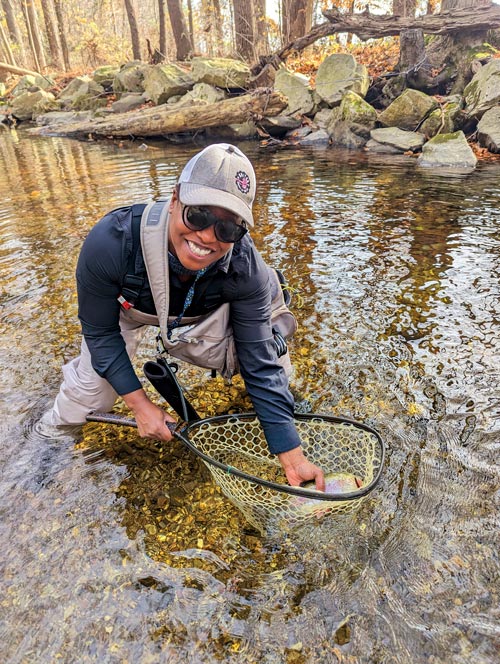
Like Women in Bio, United Women on the Fly remains an important community for Robinson. “Because I’ve moved around so much, I always try to find who I can link up with when I first get there,” she says. “I get involved very quickly. Wherever I move to, I’m going to find my tribe.”
In Wilmington, she found her people at the Cameron Arts Museum (CAM). A collector of abstracts and other works from her travels, Robinson touts CAM’s diverse exhibitions and says her new role with the museum is one of the joys in a life that has twisted and turned but landed her exactly where she wants to be: unbossed, unbothered and unapologetic. “It was rough at first, but I just kept trying to figure it out,” she says. “I’m seeing it now. This is starting to make some sense.”
Jennifer Jackson Sanner, j’81, is the former editor of Kansas Alumni magazine, the precursor to Crimson & Blue.