
From the prehistoric to the medieval, KU museums and libraries house millions of artifacts that recount the vast history of the natural world and the human experience, including fossils, biological specimens, works of art and manuscripts that originated around the globe. If to understand the present we must review the past, KU’s collections offer a multitude of elucidating vantage points. Here, a look at some of the oldest items preserved at the University.
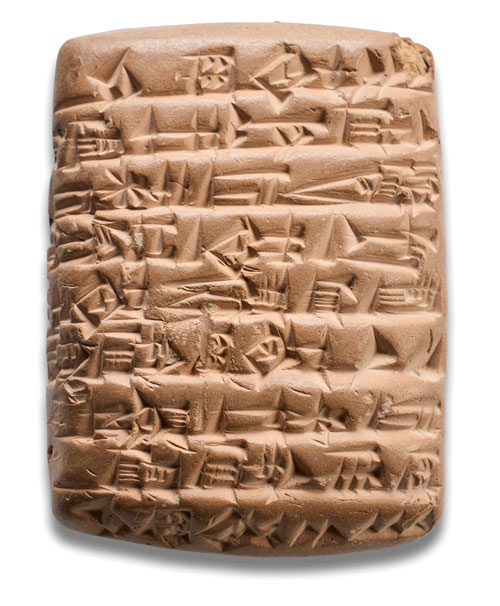
Cuneiform tablet
Circa 2053 B.C.E.
Location: Spencer Research Library
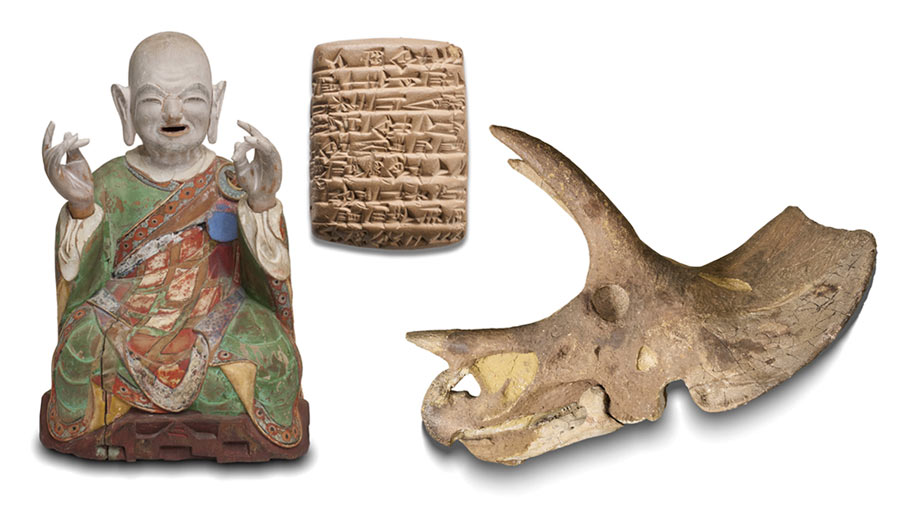
This cuneiform tablet hails from Umma in southern Mesopotamia, the location of modern-day Iraq. Like many cuneiform tablets, it is an administrative document—in this case, an inventory of materials used in caulking a ship, such as fish oil, wood and bitumen, an asphalt used in ancient times as a cement and mortar.
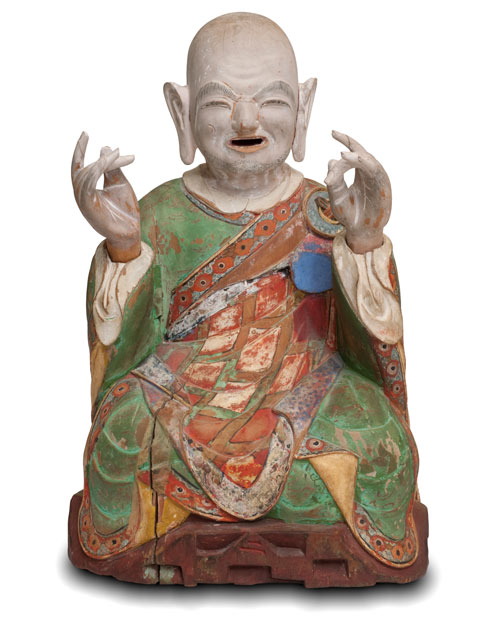
Seated Nahan Ganakgabeolcha
Late 1600s to early 1700s
Location: Spencer Museum of Art, Loo Gallery
This polychrome wood sculpture from Korea’s Joseon dynasty (1392-1910) depicts a nahan, or disciple of the historic Buddha. In 2015, the Spencer Museum took this figure to KU Medical Center for a CT scan, which revealed that pages from sacred texts placed inside a small cavity in the sculpture’s head are still intact.
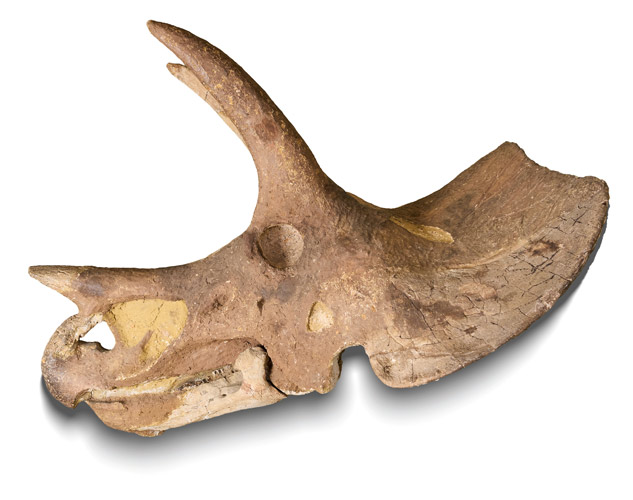
Triceratops prorsus
70 to 66 million years old
Location: KU Natural History Museum, Dyche Hall
This nearly complete Triceratops skull was unearthed during an 1895 expedition in eastern Wyoming led by Samuel Wendell Williston. The crew included KU student and future world-famous fossil hunter Barnum Brown, c1907. This iconic three-horned specimen was the first Triceratops skull placed on public display, and it continues to draw visitors to this day. It was first exhibited in Snow Hall before its current home in Dyche Hall. Look closely, and you may spot names and initials carved into the reconstructed portions of the skull, possibly left by former students before the skull was encased behind glass.
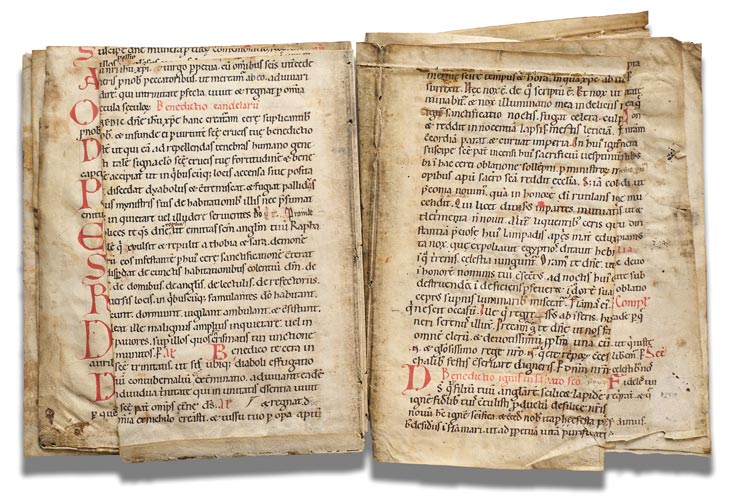
Liturgical gradual fragments
Ninth or 10th century
Location: Spencer Research Library
These two fragments are from a medieval Roman gradual, a collection of songs and chants used in Catholic Mass. The small squiggles between the lines of writing are musical notes, or “neumes,” invented at the Abbey of St. Gall in Switzerland. The fragments represent the Spencer Research Library’s earliest example of written music as well as one of its earliest Western manuscripts.
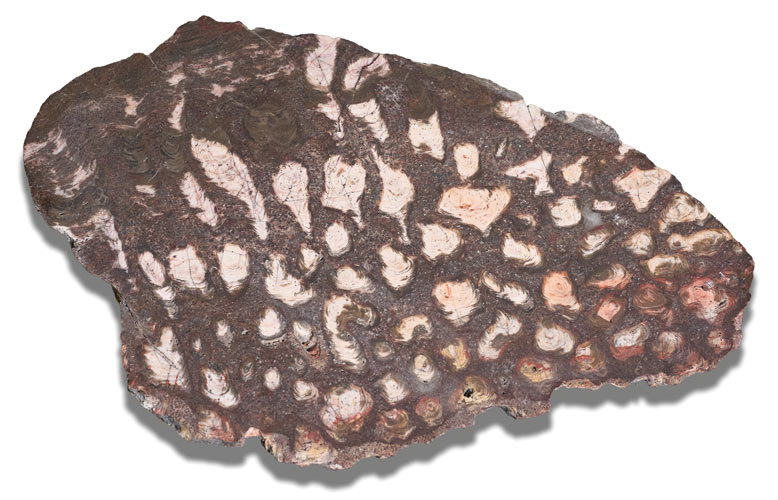
Stromatolite
2.1 billion years old
Location: KU Natural History Museum, Dyche Hall
Stromatolites are the oldest fossils on Earth, formed from one of the planet’s earliest life forms, cyanobacteria. Cyanobacteria, or blue-green algae, first evolved at least 3.5 billion years ago and were vital to life on Earth. As the first photosynthetic creatures, they added oxygen to our planet’s atmosphere, which was key for the evolution of animal life and the formation of the planet’s protective ozone layer. In ancient times, these microscopic, single-celled organisms often lived together in colonies that over time built up into the layered, mound-like structures known as stromatolites. This specimen was collected from the Biwabik Iron Formation at the Mary Ellen Mine in St. Louis County, Minnesota.
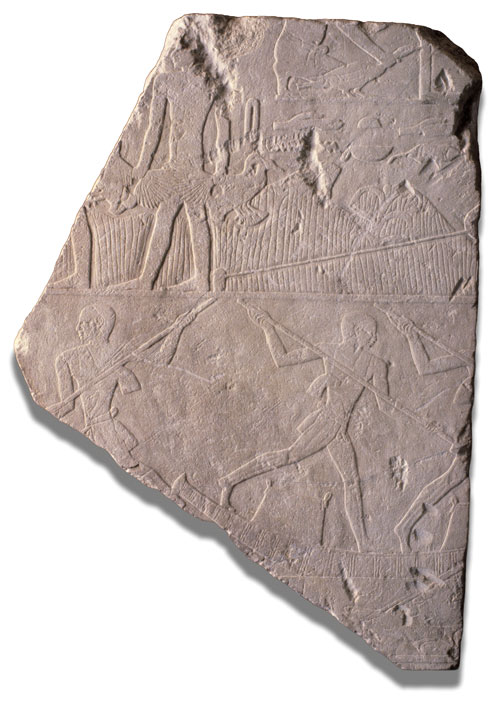
Hunting scene
Circa 2500 B.C.E.
Location: Spencer Museum of Art, Loo Gallery
This fragment of a limestone relief sculpture from Egypt depicts ancient Egyptians amid the bounty of the Nile River. In the lower section, men balance on boats, poised to spear fish, while above, hunters capture geese.
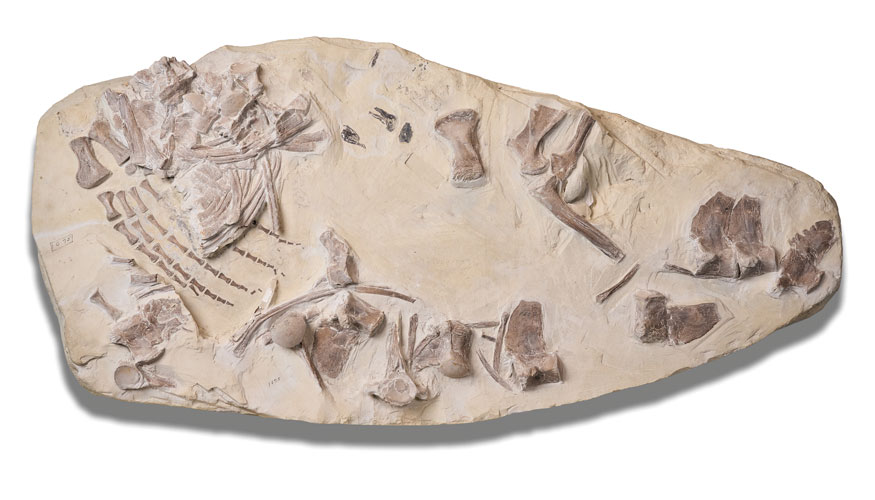
Tylosaurus proriger
87 to 80 million years old
Location: KU Natural History Museum, Dyche Hall
Tylosaurus, a large mosasaur, stalked the shallow sea that covered present-day Kansas during the Cretaceous period, earning the state the nickname “Mosasaur Capital of the World.” This specimen of the predatory marine lizard has the rare characteristic of including preserved skin impressions. It was collected in Gove County in 1878 by renowned Kansas naturalists Francis Huntington Snow, KU’s fifth chancellor, and Lewis Lindsay Dyche, c1884, c1884, g1888.
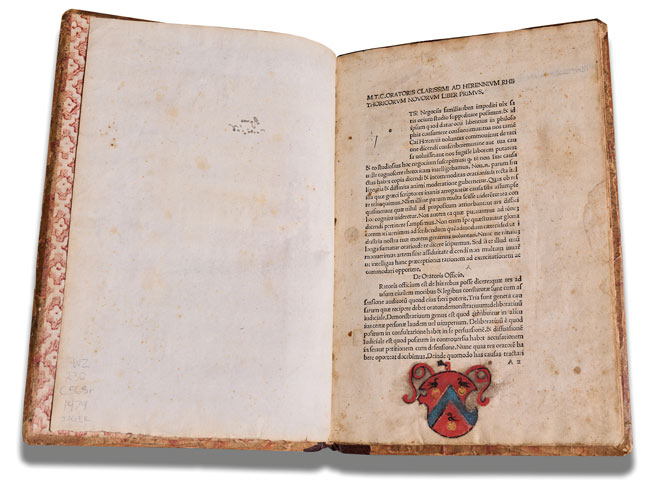
Rhetorica ad C. Herennium
1479
Location: Clendening Library & Museum, KU Medical Center
The oldest printed book in the Clendening collection, Rhetorica ad C. Herennium, or “Rhetoric for C. Herennius,” is among the library’s 22 incunables: books printed in the infancy of printing before the year 1500. This work—the original of which was written by the Roman statesman and scholar Cicero or a contemporary of his—dates to approximately 80 B.C.E. and is a foundational text on rhetoric and the oldest surviving Latin book on the subject. The most popular book on rhetoric during the Middle Ages and the Renaissance, it was translated into many different languages so that it could be easily read and taught across Europe. This volume was published by Filippo di Pietro in Venice in 1479. The covers are made from thin wooden boards overlaid in paste paper and show the outline of the bookbinder’s thumb.
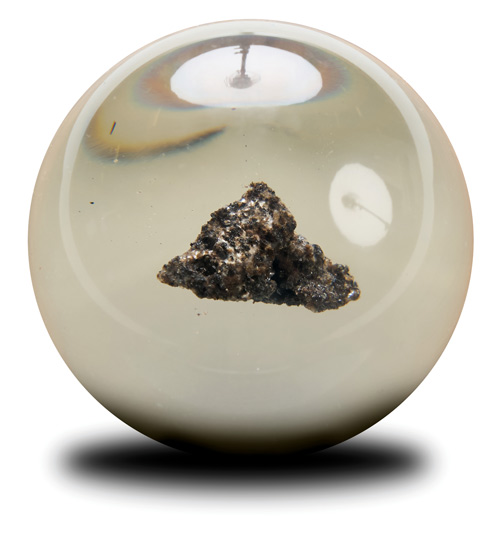
Moon rock
3.7 billion years old
Location: Spencer Research Library
NASA presented this moon rock fragment, along with a tiny Kansas flag, to “the people of Kansas” in 1972. The flag was carried along with other state flags to the moon in December 1972 as part of the Apollo 17 mission, the last time a human walked on the moon. The flag was later made into a plaque with this small lunar fragment from the mission’s landing site in the moon’s Taurus-Littrow valley.
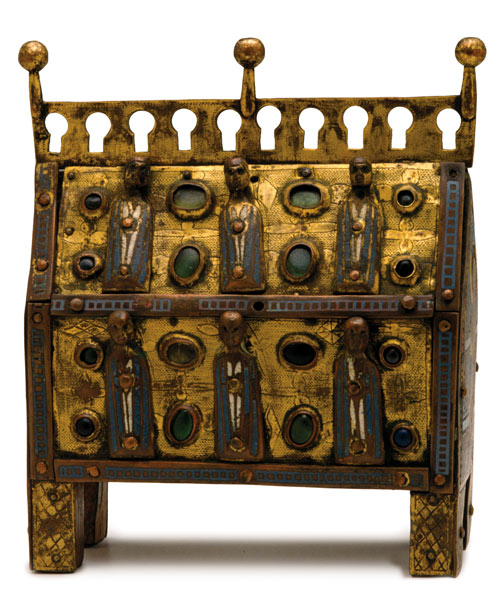
Chasse reliquary
Mid-1200s
Location: Spencer Museum of Art, Michaelis Gallery
Reliquaries contain items considered to be holy. This reliquary, from Limoges, France, is made of copper, oak, glass, champlevé enamel and gilding, and dates to the Middle Ages. It was likely designed as an affordable option for pilgrims traveling the route from France to the Cathedral of Santiago de Compostela in Spain.
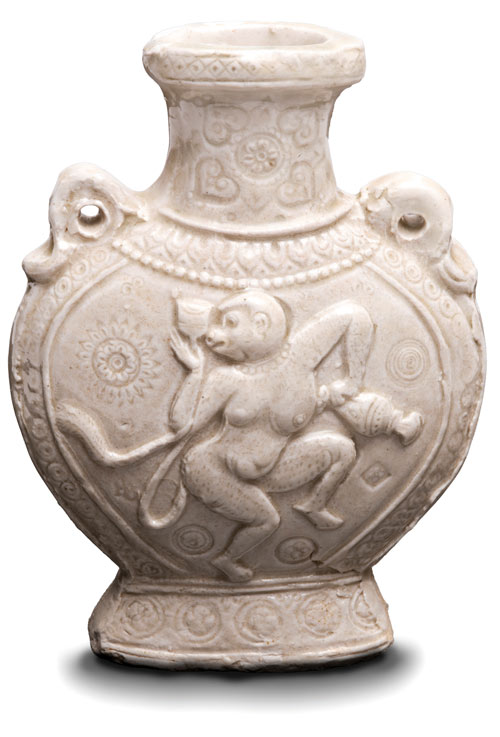
Bianhu with dancing monkey
600 to 700s
Location: Spencer Museum of Art, Loo Gallery
This molded porcelain bianhu, or pilgrimage flask, dates to China’s early Tang dynasty (618-907 C.E.) and exemplifies the transmission of art and ideas across Asia. Carrying a small flask with a devotional image began in the Mediterranean, spread to Persia (present-day Iran) and then to Central Asia, where flasks were created from metal. In China, artists translated the shapes, designs and motifs into ceramics.
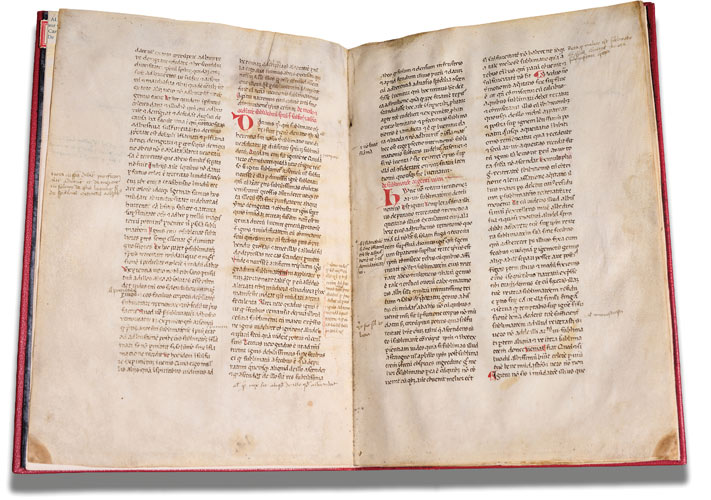
Summa Perfectionis Magisterii (Alchimie et medicine)
13th/14th century
Location: Clendening Library & Museum, KU Medical Center
This manuscript fragment is the oldest bound book in the Clendening collection. It is a fragment of Pseudo-Geber’s Summa Perfectionis Magisterii, which translates to “The Sum of Perfection by the Master” or “The Height of the Perfection of Mastery.” Pseudo-Geber refers to the author or group of authors responsible for the “Pseudo-Geber Corpus,” a body of writings on alchemy from the late 13th and early 14th centuries. Summa Perfectionis Magisterii is considered the most significant piece of writing from this body of work and was influential in the fields of alchemy and metallurgy in late medieval Europe. This fragment is 16 pages of handwritten text on vellum—parchment made from finely stretched animal skin—and contains various hand-drawn diagrams and marginalia written in several different hands. The details of the manuscript’s creation remain unknown.
Rochelle Valverde, c’08, j’15, is staff writer for Crimson & Blue.