
Radio broadcasting has come a long way since the early 1900s, and the University’s foray “into the ether” is no exception.
KU first took to the airwaves on April 8, 1916, when alumni nationwide tuned in to what the KU News Bureau dubbed “the first transcontinental alumni reunion.” Organized by KU Alumni, which leased 3,800 miles of telephone wire for the event, it was reportedly the first radio rally broadcast by any college or university.
By 1924, the University was primed for a station of its own. After building a radio tower behind Marvin Hall, KU launched its first station, KFKU, on wavelength 275.
To prepare listeners for the station’s inaugural broadcast at 8 p.m. on Dec. 15, KU Alumni posted a notice in the November issue of its Graduate Magazine, stating, “Telegrams from alumni will be read and a great exchange of greetings will be passed back and forth among old timers. It is hoped that every K.U. alumni group now organized will be together … and that they will send in messages saying whether they are able to hear the new station and how they like the program.”
The program didn’t disappoint. Alumni were treated to a moving rendition of John Philip Sousa’s “The Stars and Stripes Forever” before Chancellor Ernest H. Lindley announced, “This is KFKU, the new radio station of the University of Kansas, at Lawrence.” The broadcast continued with greetings from faculty members, performances by the KU Men’s and Women’s Glee Clubs and the University Band, and introductions of athletics coaches and team captains by KU Director of Athletics Phog Allen.
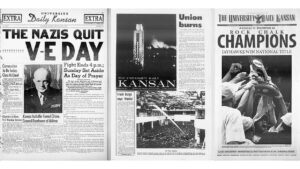
A total of 160 telegrams rolled in from alumni across the nation that evening and, as noted by The University Daily Kansan, all “expressed their delight at hearing the old rally yells and songs and greeted faculty members and speakers.” President Calvin Coolidge’s secretary of commerce, Herbert Hoover, was among those who sent a message congratulating the University on its venture into radio.
Despite its initial success, KFKU became “low in wattage and program quality” by the early ’50s, according to historian Clifford Griffin, and was overshadowed by the University’s first FM station, KANU 91.5, which launched in 1952. Now known as Kansas Public Radio, the station over 63 years has dramatically expanded its programs and reach. KPR now serves 100,000 listeners weekly in 34 Kansas and four Missouri counties. The Kansas Association of Broadcasters has named KPR Station of the Year 15 times in the past 20 years.
Another station, KUOK, run by School of Journalism students and heard only in residence halls, debuted in 1956.
As the ’70s rolled around, the University agreed to allow KUOK to become a full-fledged, publicly accessible radio station. After switching its call letters to KJHK and receiving permission to broadcast at 90.7, the station broadcast its first song on Oct. 15, 1975.
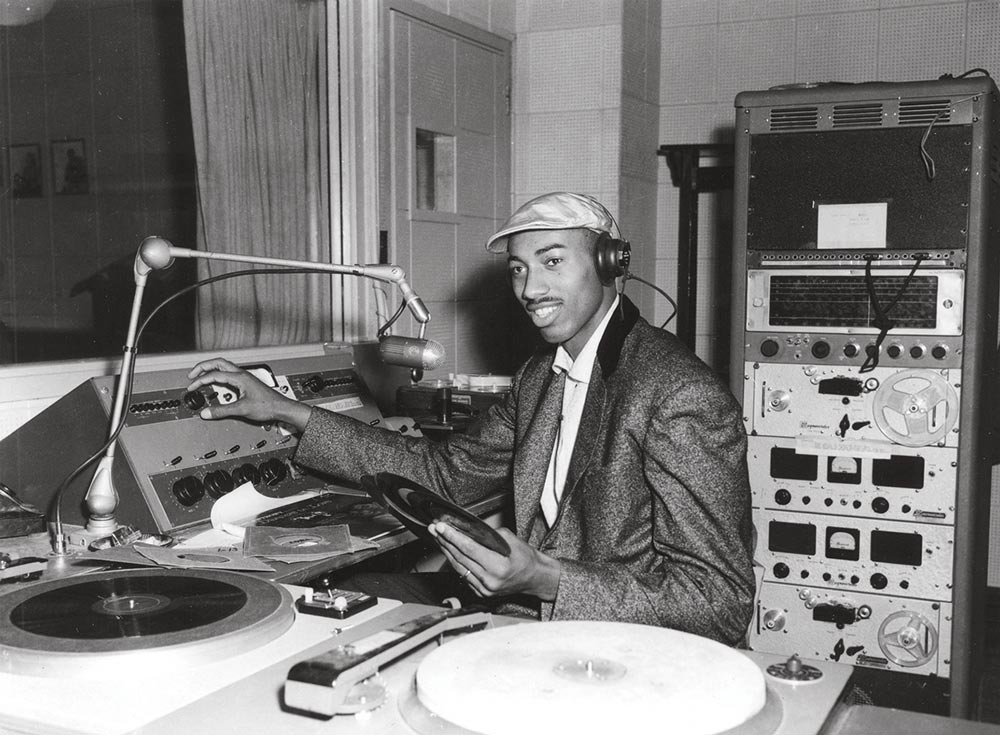
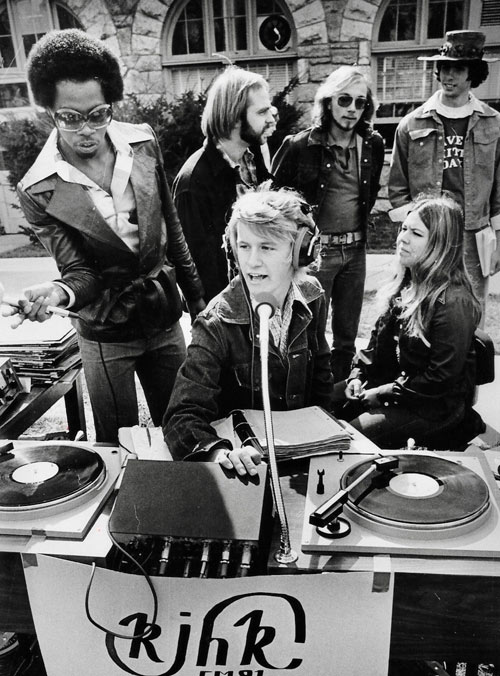
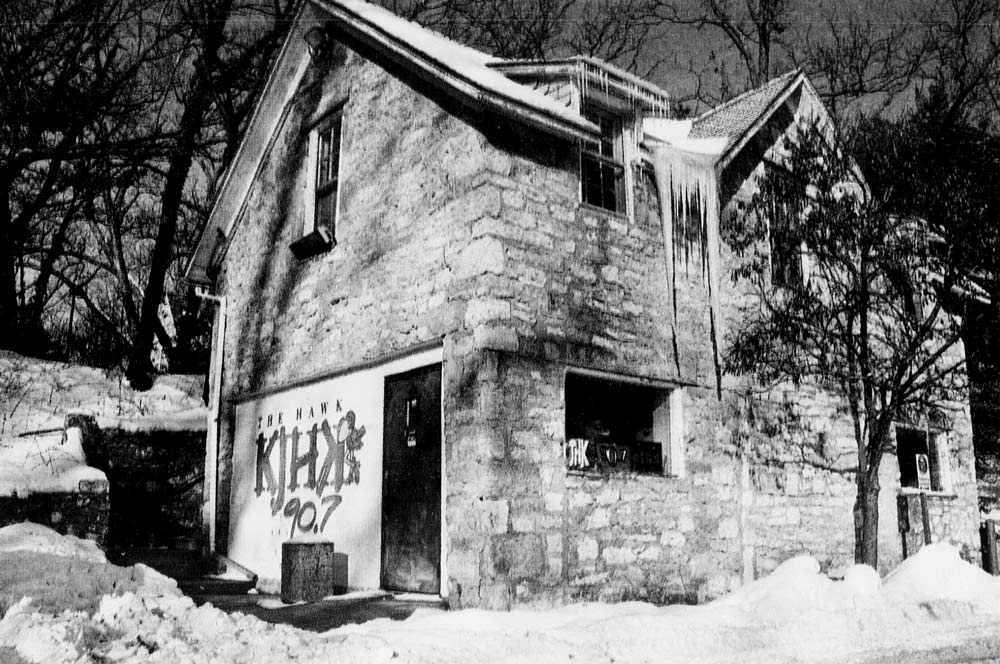
Although KJHK had its share of hard times in the beginning, including public pushback about the “progressive” music selections and several run-ins with the FCC, the self-described “Sound Alternative” found its way into the hearts of listeners and won awards in the ’80s for “developing and promoting local music.”
That trend continues today for the student-run station, which in 2010 moved out of its longtime, aptly named home, “the Shack,” and into a more professional studio in the Kansas Union. Now stocked with more than 150 student volunteers and nearly 60 DJs, the award-winning station keeps a lively mix of music on air, with crowd pleasers such as “Jazz in the Morning” and “Breakfast for Beatlovers,” as well as talk shows, sports broadcasting, live in-studio performances, and arts and culture programs.
“We have a little bit of everything,” says station manager John Dillingham, a Katy, Texas, senior majoring in architecture. “Any kind of niche program we can offer, we have.”
Heather Biele is a former editor of Kansas Alumni magazine, the predecessor of Crimson & Blue.