

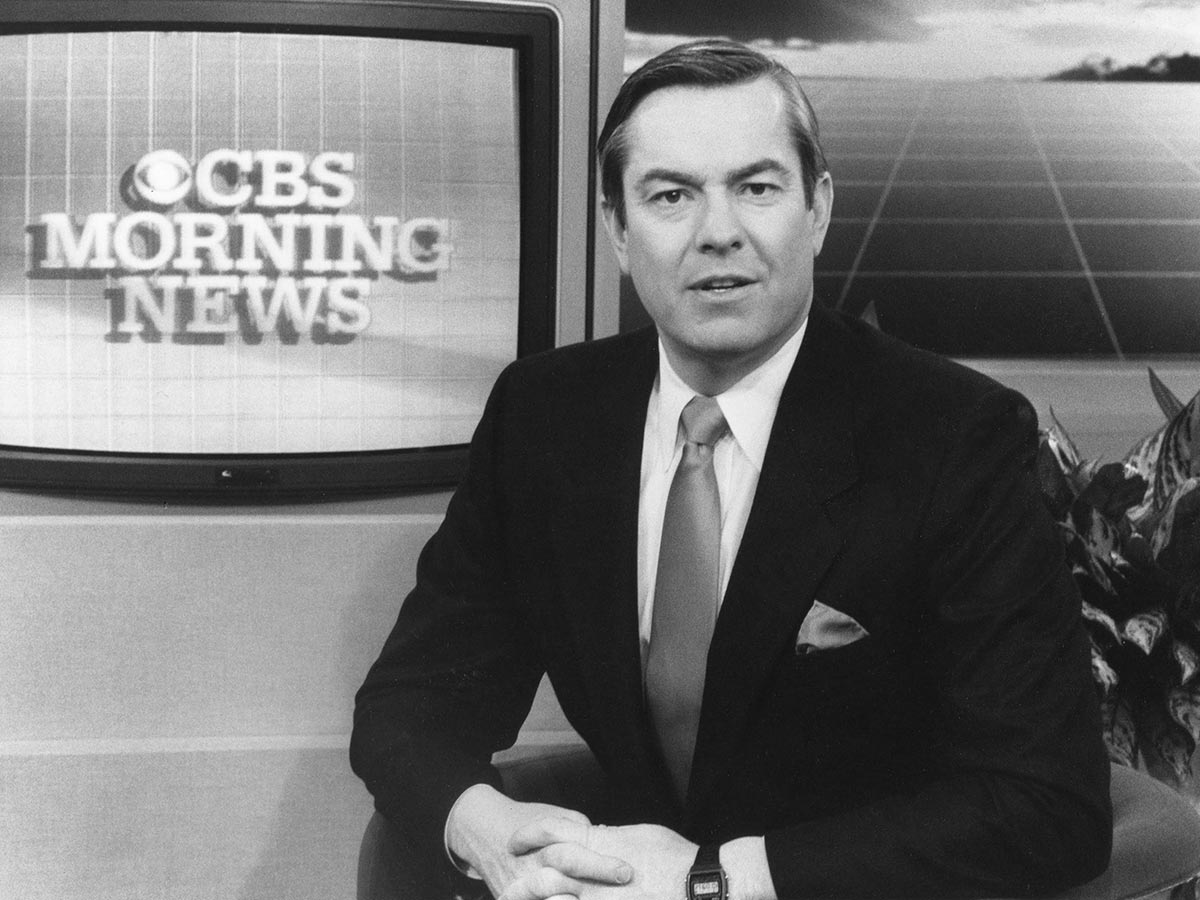
Bill Kurtis displayed a knack for finding himself in the middle of the action well before he began what would become a long, eventful and distinguished career in local and national journalism.
As Kurtis, j’62, recounts early in his memoir, Whirlwind: My Life Reporting the News, he was a high school kid on the way to meet his father when he happened upon a fatal car accident near Independence, where his family lived. The first person to arrive at the scene, he vividly recalls the tragic sight of men, women and children trapped in tangled wreckage, and the imperative to remain calm and do what he could to summon emergency responders and help render aid until they arrived.
“I didn’t know it then, but moments like this would seem to chase me through life,” Kurtis writes. “Moments of sudden, unexpected chaos and tragedy in which I was expected to keep a cool head.”
Kurtis began his broadcast journalism career full time in 1966, landing a job in local TV news at WBBM, Chicago’s CBS affiliate. By then he already had abundant on-air experience, starting with a stint at radio station KIND in Independence when he was 16, and continuing with an announcing spot at the University’s FM station KANU when he was a student in the William Allen White School of Journalism.
While earning a law degree at Washburn University, Kurtis worked as a part-time weatherman at Topeka’s WIBW, then the only television station in town. It was there, on June 8, 1966, that Kurtis—called in at the last minute to fill in for the news director, who’d decided to leave early for vacation—found himself breaking into the broadcast of a Kansas City baseball game to warn viewers that a massive tornado was bearing down on the capital city.
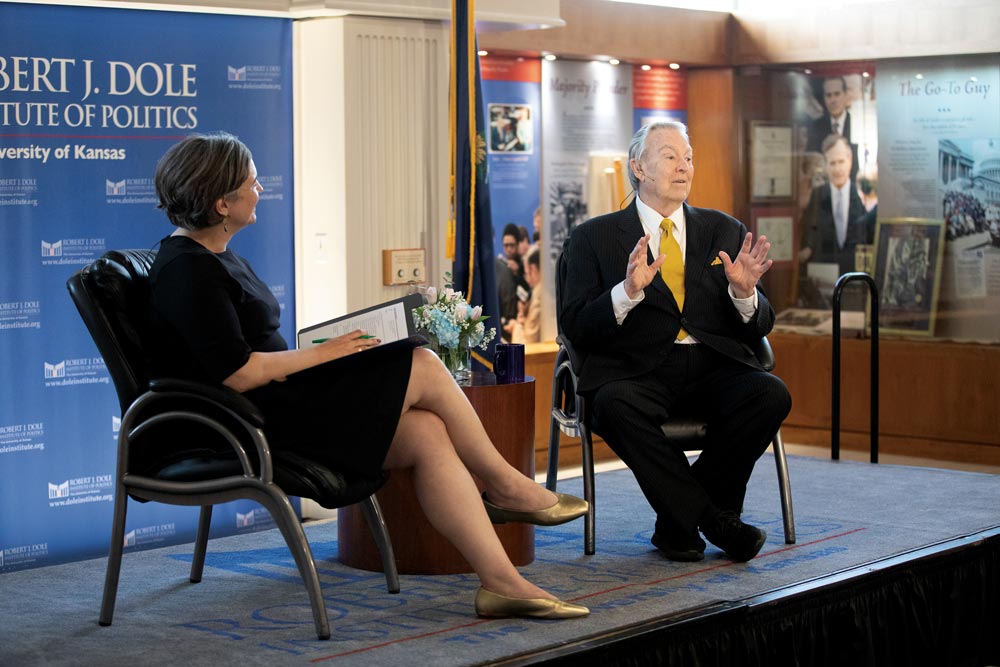
During an appearance Sept. 20 at the Kansas Book Festival at Washburn University, where he delivered the keynote address via Zoom a day before his 85th birthday, Kurtis recalled preparing himself to report the dire news that on-the-ground spotters were relaying of a storm with terrifying power: One described the massive funnel cloud as “boiling like an A-bomb mushroom.”
“I realized the next few words I would say would mean life or death,” Kurtis told the standing-room audience. “Why? I had to get them into the shelter. I knew that.”
Kurtis recalled thinking, “Should I cuss? Should I cry?” Instead, he spoke “from the gut and from the heart,” uttering five words that left no doubt about the seriousness of the situation: “For God’s sake, take cover.”
“People have told me,” he said, his voice breaking with emotion at the memory nearly 60 years later, “that’s what did it for them.”
The experience marked a turning point for Kurtis, who at the time was still torn between a career in journalism and a career in law. Discovering the potential of television news to help save lives (the tornado killed 17 people and injured more than 500, but early warnings from WIBW and other media outlets were credited with helping limit the death toll) convinced Kurtis that journalism was the path he should follow. But after starting a job at WBBM, he soon realized that his law degree—far from incidental—would key his rise through the journalism ranks. Beginning with the sensational trial of Chicago serial killer Richard Speck, Kurtis covered a notable run of high-profile courtroom dramas in quick succession: Speck (1966) and the Chicago Seven (1968), and, after becoming the Los Angeles correspondent for Walter Cronkite’s “CBS Evening News,” Charles Manson (1970) and Angela Davis (1972)—“my fourth trial of the century in six years,” Kurtis writes.
He would go on to report many other major stories, winning two Peabody Awards, several Emmys and, in 1998, the National Citation from the William Allen White Foundation. He documented the last “babylift” from Vietnam that rescued orphaned infants before the fall of Saigon, and landed an exclusive interview with Iva Toguri D’Aquino, the woman known during World War II as Tokyo Rose. After returning to Chicago from Los Angeles, Kurtis co-anchored the nightly newscast that helped transform WBBM into a national model for serious local television journalism, breaking the most consequential story of his career when he followed a tip to expose the extensive health problems affecting U.S. troops sickened by the chemical defoliant Agent Orange. His coverage helped lead to congressional hearings, further investigations by other journalists, and, eventually, compensation for 200,000 U.S. veterans of the Vietnam War.
“If you’re lucky enough to be first with a story and tell it well,” Kurtis writes, “your work will become a keystone in a wall upon which truth will grow.” That was true of his reporting on Agent Orange and his efforts to dig up the real story behind the legend of Tokyo Rose, which contributed to President Gerald Ford’s decision to pardon D’Aquino, who had been convicted of treason while living in Chicago after the war. Kurtis and D’Aquino remained close friends until her death, at age 90, in 2006.
“There’s a beautiful harmony to our life stories that only time and perspective can reveal,” Kurtis writes. With the benefit of hindsight, he skillfully traces the common threads that ran through a career that seemed anything but harmonious as he was careening from story to story while balancing the demands of single parenthood after the death of his first wife, Helen, from breast cancer at 36.
Whirlwind, which University Press of Kansas published in September, is the inaugural title from Plainspoken Books, the press’s new nonfiction trade imprint that focuses on bringing Midwestern stories to a national audience. It’s a fascinating look at life in the trenches during the golden age of network television news and a valuable primer for journalism students today, who face a far more fractured news environment in a profession that is constantly under attack.
“Through it all, I’ve tried to remain committed to the truth that is in front of me on the ground in the moment,” Kurtis writes. “That’s all any reporter really can do.”
Bill Kurtis did it well.
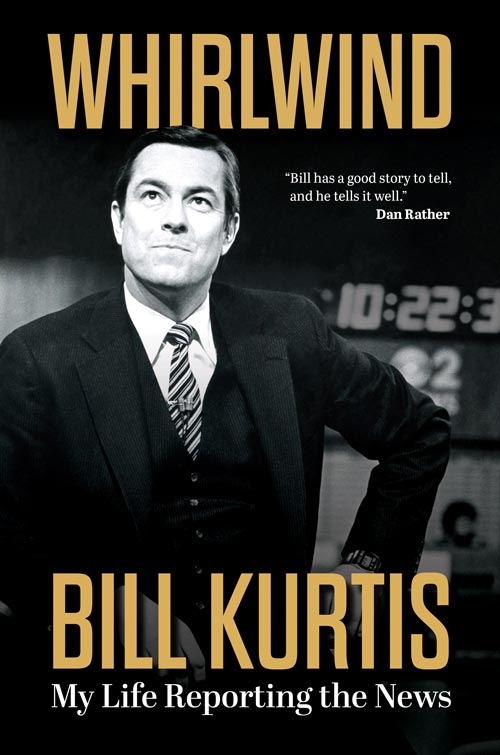
by Bill Kurtis
University Press of Kansas, $33
Steven Hill is associate editor of Crimson & Blue.