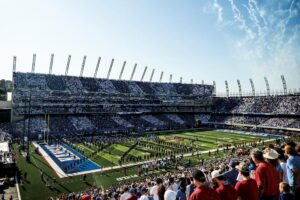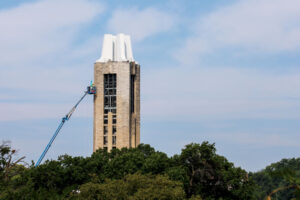

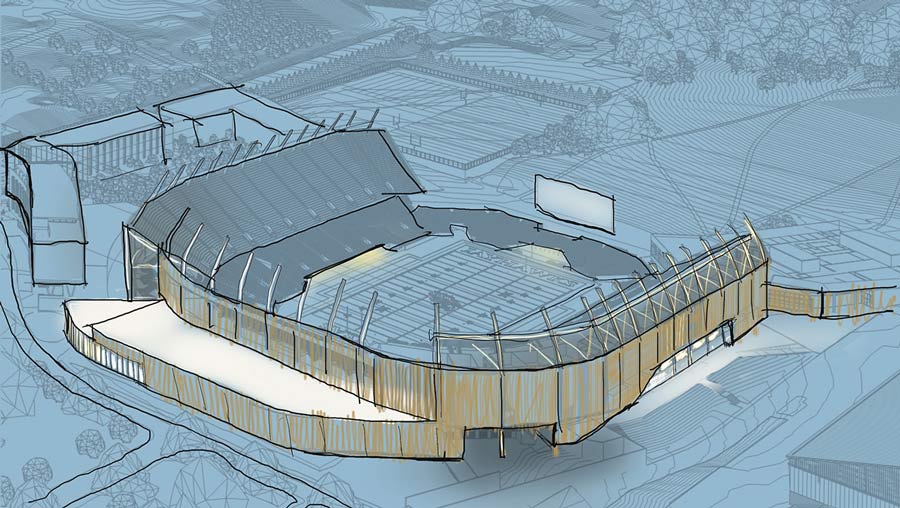
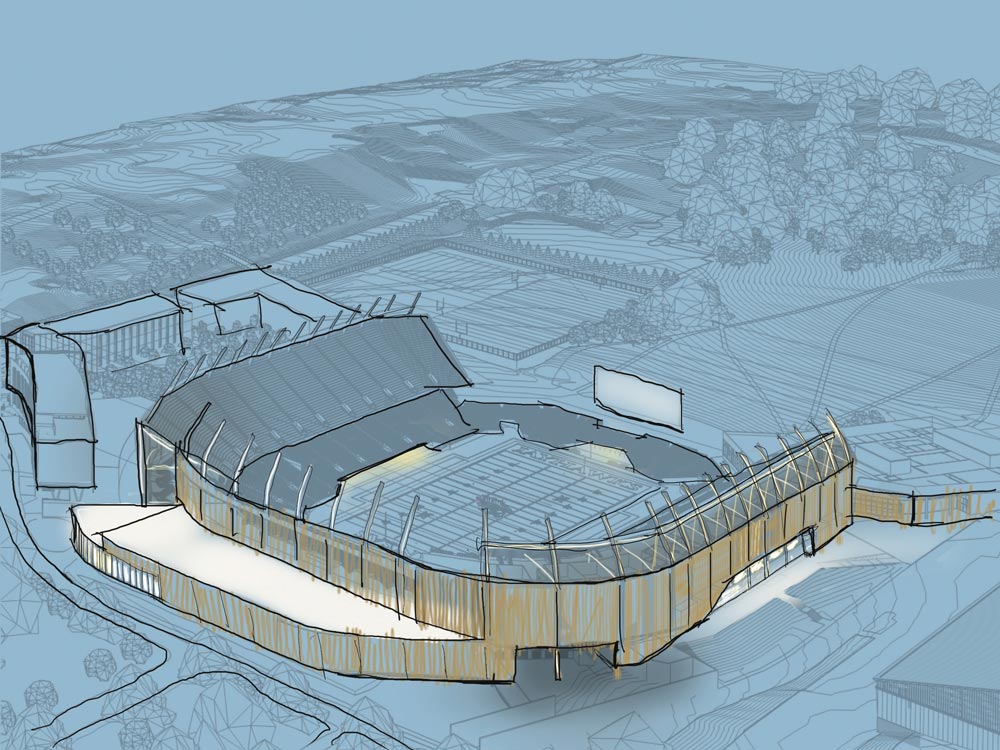
When it came time for KU and Kansas Athletics to select designers for the new Gateway District and conference center—along with major innovative upgrades for David Booth Kansas Memorial Stadium and the Anderson Family Football Complex—they turned to leaders in sports architecture. They looked for experts with world-class talent who would deliver unparalleled experiences for fans, student-athletes and the community and fuel facilities that would power the Gateway District as a year-round economic driver for Kansas.
They didn’t have to look far. They turned to KU alumni.
School of Architecture & Design graduates have helped shape the majority of NFL stadiums and helped create landmark sports and entertainment venues as varied as the Sphere in Las Vegas and soccer stadiums in Asia, Africa, Australia, Europe and South America. They have established powerhouse firms like Populous and Manica Architecture that lead the way in sports architecture, and have directed major projects at leading firms like HNTB, Gensler and HOK.
Mahbub Rashid, dean of architecture & design, credits the school’s experiential learning opportunities and long-standing partnerships with firms in the sports sector for cultivating success. The school is also unique in offering a sports and leisure program.
“Our alumni and friends in these fields have created strong partnerships with the school over the years and supported us through sponsoring studios, working with students and providing internships,” Rashid says. “Our students are able to intern with leaders in the field.”
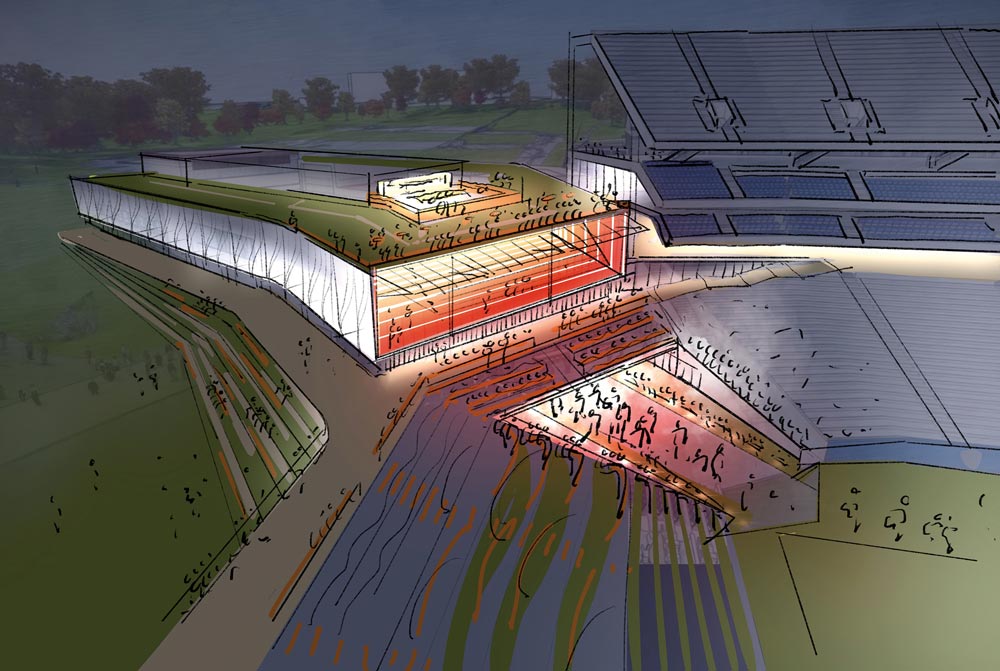
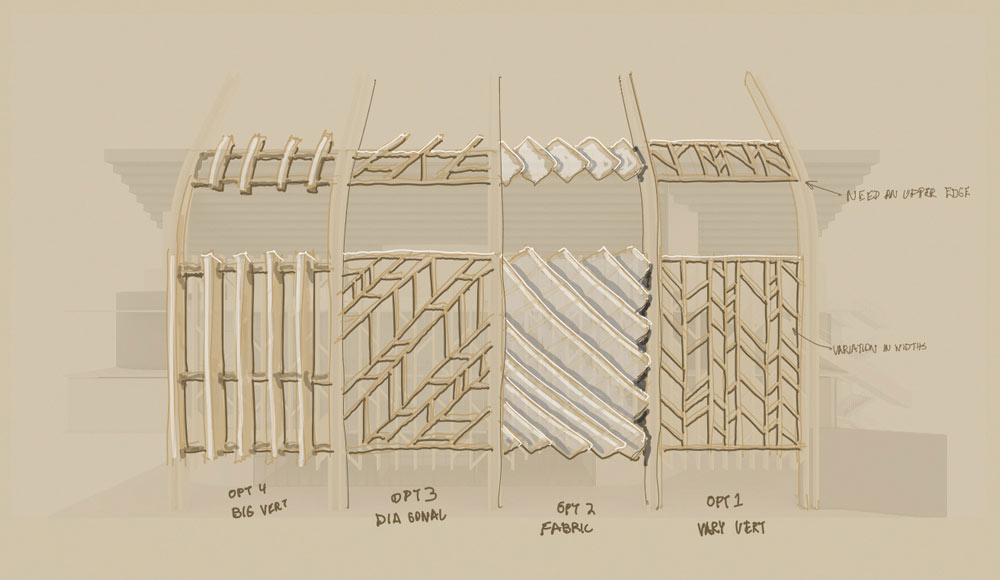
For the Gateway District project, KU selected Multistudio and HNTB, firms with deep KU ties, as co-leads for architectural design. They worked closely with Dimensional Innovations, another firm led by alumni, to generate key signage, wayfinding, donor recognition elements and engaging experiences across the stadium and complex. Initial designs were a collaborative process before each team began different aspects of the massive project.
Multistudio led the first-of-its-kind integration of the conference center and stadium, the concourse design, and work on the new World War I memorial.
HNTB worked on the stadium seating bowl and premium club areas. Numerous KU architecture & design alumni at the firms were involved, as were Jayhawks at Dimensional Innovations and at other companies involved in the build, including Turner Construction, Henderson Engineers and Legends Project Development.
For HNTB’s Robbie Powell, a’18, a senior project designer, working on the Gateway District project was a full-circle moment.
“I’ve enjoyed getting to shape the future of not only the game day experience for Kansas football fans,” Powell says, “but also our campus as a whole.”
Originally from Conway, Arkansas, Powell dreamed of working in sports architecture and chose KU for the fifth-year sports and leisure program option. He interned with HNTB and was hired upon graduation.
“It’s still very meaningful to have achieved that goal, and it’s thanks to the education and support I received throughout my time at KU,” Powell says.
The sports and leisure program, directed by Assistant Professor Gustavo Amaral, has been growing, attracting students from outside the Midwest—and international attention.
KU students recently won the International Association for Sports & Leisure Facilities’ 2025 Students & Young Professionals Award for their 2024 capstone projects. They traveled to Cologne, Germany, in October to accept the prize.
“It’s an international stage for KU,” Amaral says, “and real validation that the way we’re training people resonates beyond our region.”
John Wilkins, a’86, is managing principal at Multistudio’s Lawrence office and its lead on the Gateway District. As a student, he interned at Gould Evans, a firm founded by two KU alumni, and was hired after graduation. The firm later rebranded as Multistudio.
Wilkins has been instrumental in several KU projects, including construction of the DeBruce Center and Slawson and Ritchie halls, and renovations of Snow Hall and Allen Fieldhouse.
“The ability to give back to the university I love and impact the built environment has been the opportunity of a lifetime,” Wilkins says.
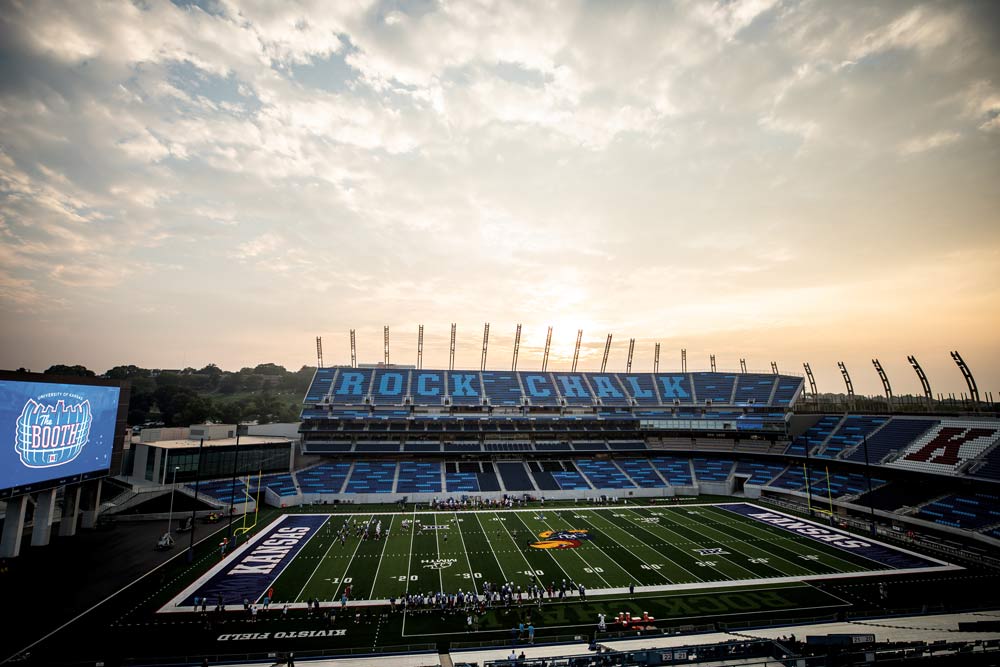
Jeff Goode, a’04, design principal at HNTB and a veteran of NFL, MLS, MLB and NCAA stadium and arena projects, designed The Booth’s seating bowl and premium seating and roughed out the initial layout for each level.
“In sports architecture, the seating bowl is the heart and soul of the stadium—and the most complex component in stadium design,” Goode says. “I draw daily on the foundations of design rigor, collaboration and iteration that I learned at KU.”
Through service and philanthropy, alumni and friends are also forging the way for the next generation of Jayhawk architects and designers who will shape communities around the world. Many serve on the school’s Professional Advisory Board, a robust group of more than 40 professionals from diverse fields who help envision the school’s future.
Board members like Tucker Trotter, f’96, CEO of Dimensional Innovations; Earl Santee, a’81, a’82, and fellow co-founders of Populous; and Gino Polizzotto, a’89, of 3RE have provided foundational support and advocated for the school’s Makers’ KUbe—a remarkable 50,000-square-foot building outlined in the school’s Design for Next plan.
“This is a once-in-a-generation project that will set up the school for the next 100 years and set us apart from any other architecture and design school in the country,” Trotter says.
Echoing the celebratory Jayhawk spirit of the Gateway District, the mass timber building will be a KU landmark for creativity and collaboration, with much-needed expanded studio and research spaces. It will connect to Marvin and Chalmers halls and unite students for collaborations across disciplines, echoing the real-world experiences that drive KU graduates’ success.
Anne Tangeman, c’88, is a senior writer at KU Endowment.