
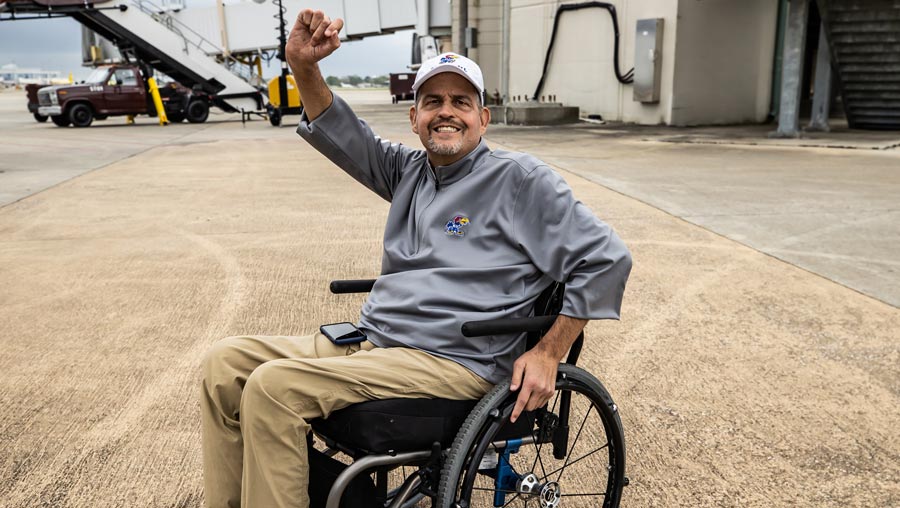
For more than three decades at KU, Scott “Scooter” Ward quietly became one of the most consequential people many Jayhawks would ever meet. He was an educator and administrator, counselor and mentor, and a trusted presence who helped varsity athletes learn to believe in themselves as deeply as he believed in them.
Ward, d’91, g’93, PhD’96, a longtime Kansas Athletics administrator and School of Education & Human Sciences faculty member who most recently served as director of peak performance and leadership with the Student-Athlete Development department, died Jan. 3 at The University of Kansas Health System, surrounded by family and friends, after struggling to recover from major surgery in mid-December. He was 59. No immediate services are planned, although Ward’s family and close friends are discussing plans for a public memorial event this spring.
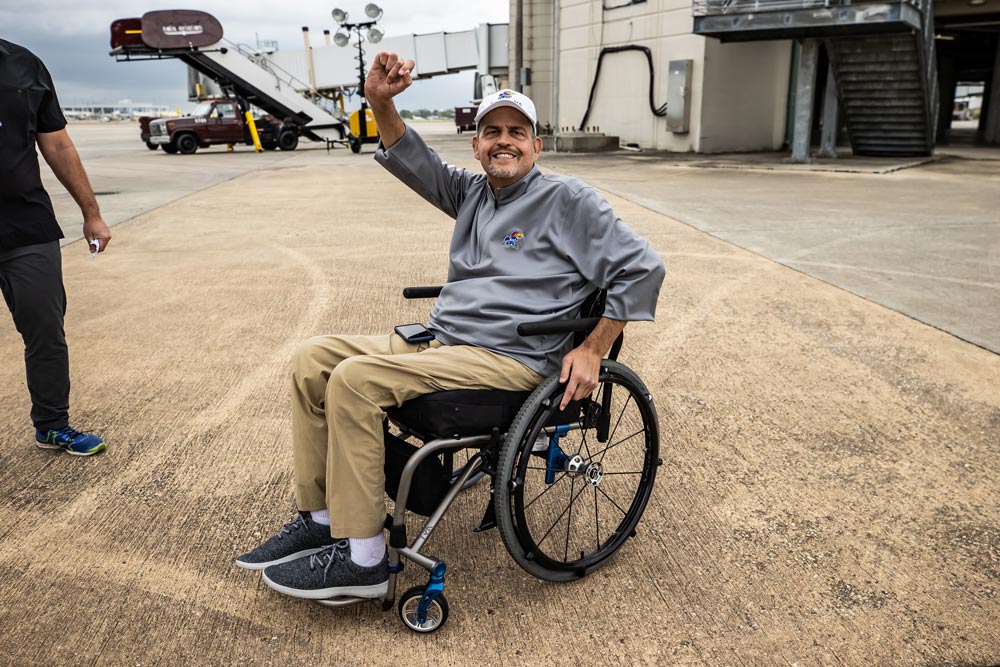
“The KU community lost a major part of its heart and soul today,” Director of Athletics Travis Goff, c’02, j’02, said. “Scooter was a deeply beloved member of our Kansas Athletics family and has touched countless lives in profound ways. While we grieve his loss, we are grateful for the many ways he has made us all better people.”
Ward’s relationship with KU was lifelong and layered. After earning a doctorate in education with an emphasis in sport and counseling psychology in 1996, he joined the faculty in the School of Education & Human Sciences before moving across the Hill in 2003 to join Kansas Athletics.
Over the next 23 years, Ward became a foundational figure in student-athlete support. He spent 14 years working in academic support—most notably with men’s basketball and volleyball—and in 2009 was promoted to associate athletics director for academic and career counseling. In his final role, Ward helped guide KU Leads, focused on life skills for personal, professional and career development, and he counseled student-athletes across all 16 varsity sports on mental performance.
What Ward built, colleagues say, was never about systems alone. It was about people.
“Rarely in life do you encounter someone who has made the impact on people’s lives like Scooter did,” longtime Kansas volleyball coach Ray Bechard said. “His influence impacted generations of Jayhawks, both the student-athletes and coaches. I was honored to call him my friend.”
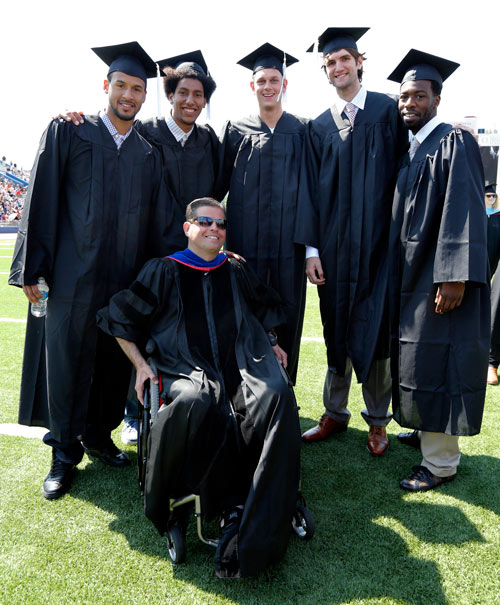
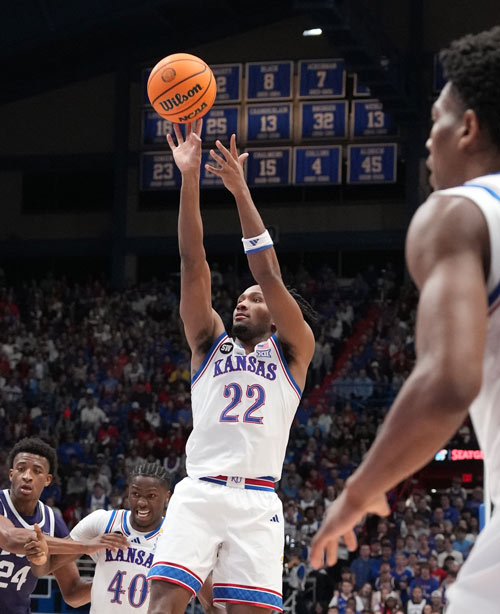
Under Ward’s stewardship, Kansas men’s basketball became a national model for academic achievement. During his tenure, KU produced 35 Academic All-Big 12 selections—more than any other conference school—including first-team Academic All-Americans Cole Aldrich, c’13, and Tyrel Reed, d’10, DPT’15. Aldrich was named the Academic All-American of the Year in 2010, and in 2015 the program received the NCAA’s Public Recognition Award after nine consecutive years of ranking in the top 10% nationally in academic performance.
Yet numbers tell only a fraction of Ward’s story.
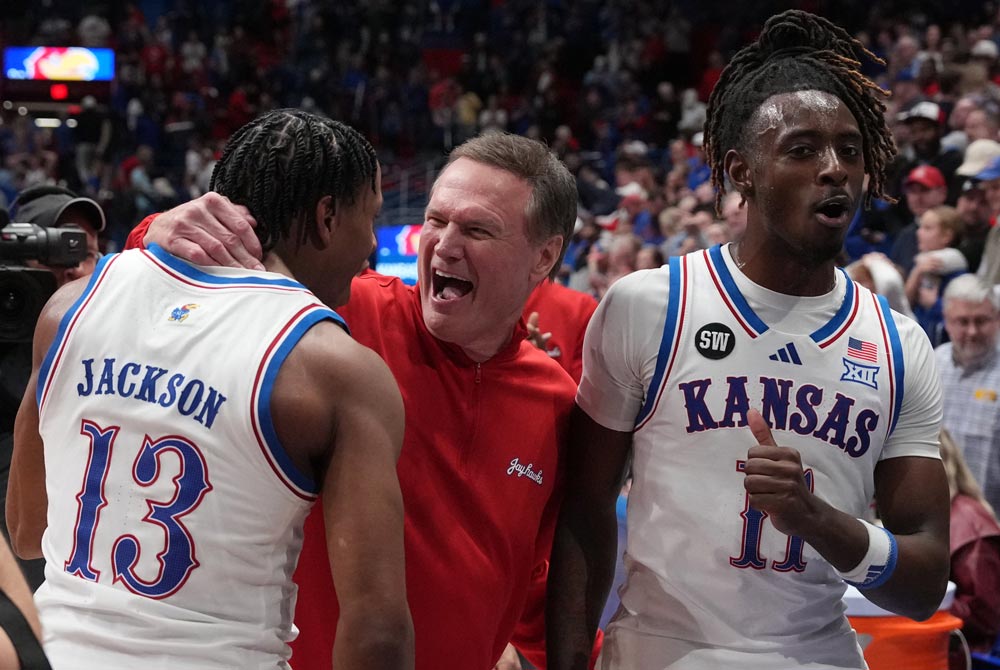
“Today we lost one of Kansas’ all-time great Jayhawks in Scott Ward,” men’s basketball coach Bill Self said. “Scooter headed our academic program and ensured that every student-athlete who ever competed here was on the path to earning his degree. But he was much more than just an academic person to our players and to our staff.”
Self instead pointed to Ward’s character—his kindness, strength and joy—as his true legacy.
“Being around him and seeing him operate makes you want to be more like him,” Self said. “And I think that’s about as big a compliment as you can give a man.”
Ward’s daily example was all the more powerful given the physical challenges he shouldered without complaint. Paralyzed and using a wheelchair since a diving accident while a freshman at Hutchinson Community College, Ward also endured significant medical crises later in life, including two torn aortas. Ward never allowed those challenges to define him—or to slow his commitment to others.
“How many people you know who got up at 5 or 5:30 in the morning to be at work by 8?” Self said. “He did this every day and never complained. He was a pillar of strength to everyone who knew him.”
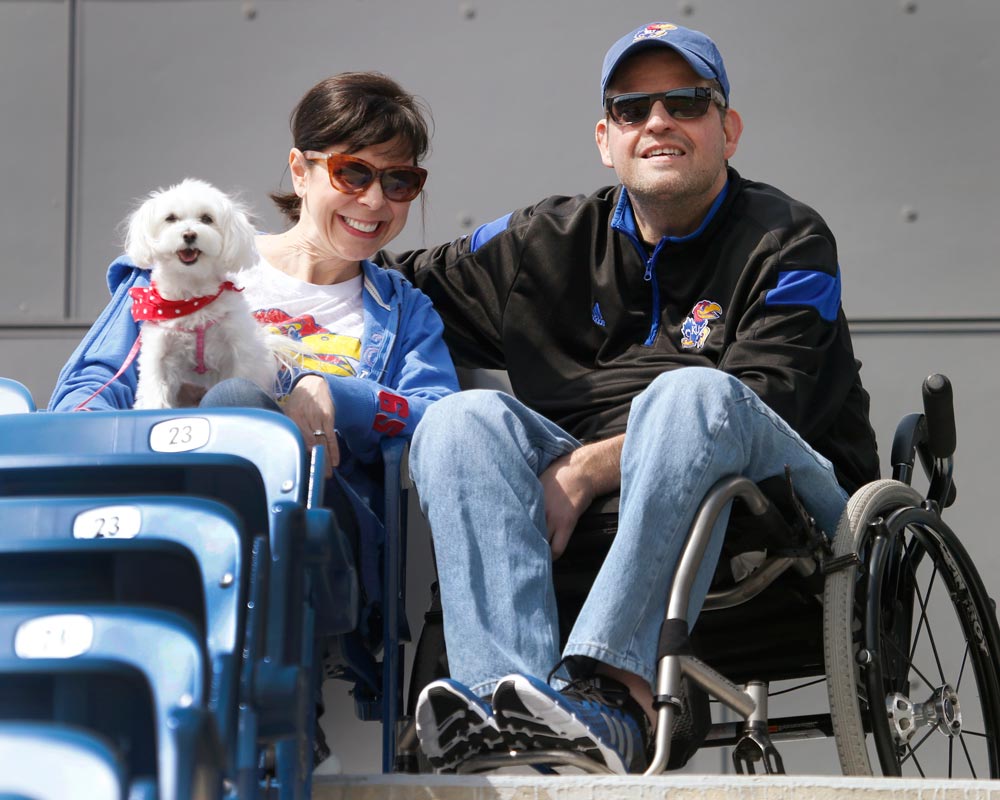
Those who worked alongside Ward describe a man with a rare emotional intelligence—someone who made connection feel effortless.
“Scooter was just fun to be around,” said Howard Graham, g’08, PhD’19, KU Alumni’s senior director of career and professional development and a former academic counselor for Kansas Athletics. “He had a great sense of humor. He had a gift to connect with people. Certain people just have a gravitational pull.”
That authenticity, Graham observed, made Ward especially effective as an educator. “What he brought to the table matched who he was and what he believed in,” he said. “He was genuine. He was authentic.”
Former KU offensive lineman David Ochoa, j’06, g’07, area executive director for Mid-America and Missouri at St. Jude Children’s Research Hospital, described Ward as “this human being who embodied the idea of relentless optimism. It didn’t matter where you came from or what your background was; if you were there to put on a jersey for the University of Kansas or you worked to support somebody who did—or even if you were simply somebody who just loved the team—you were part of the family and you were part of the team.
“Scooter lived a life that mattered because he invested in people. He didn’t invest in a team, a win-loss record. He invested in people.”
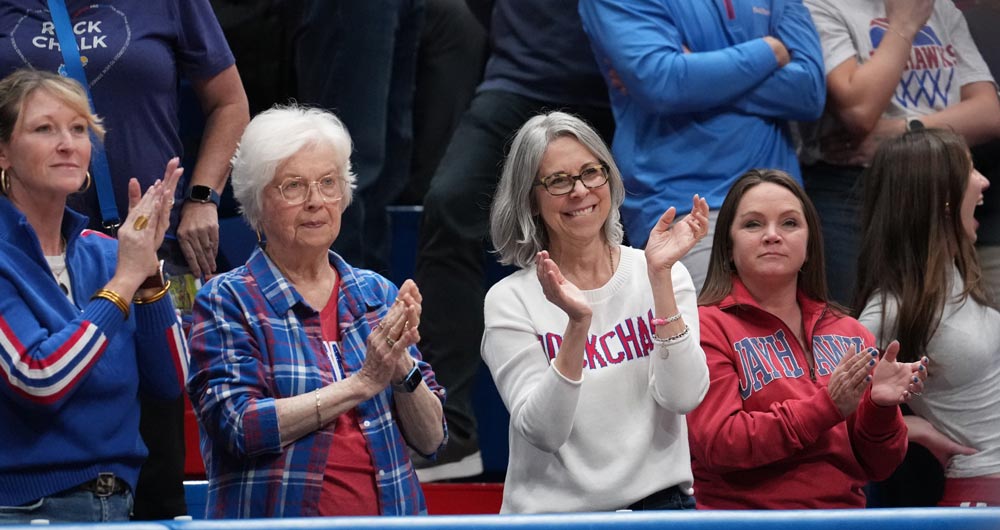
Ward’s office door was famously open. His conversations were unhurried. He remembered names, asked questions, and followed up. He made people feel seen—something that former administrators say places him in a lineage of legendary Kansas Athletics figures whose influence was felt far beyond competition.
“It’s like the Maya Angelou quote: You remember how they made you feel, and it wasn’t tied to your performance in competition,” reflected Ochoa. “Scooter was somebody who was genuinely excited to see you. That’s such a rare thing. We have so many distractions keeping us from truly investing in human relationships; he did that unlike anybody I’ve ever met.”
Ward is survived by his wife, Robin Harnden Ward, g’02. Together they were fixtures at KU events and constant supporters of Jayhawk student-athletes.
“We will celebrate his amazing life and work every day to honor his legacy,” Goff said. “And we know he will smile down upon us in the days ahead.”
For a man who dedicated his life to helping others bask in success and attention, that may be the most fitting tribute of all: a legacy carried forward quietly, daily, in the lives of the people he lifted.
Update, Jan. 13, 2026: Ward’s funeral Mass will be held Thursday, Feb. 12, at 3 p.m. at Corpus Christi Catholic Church, 6001 Bob Billings Parkway, Lawrence. Memorial celebration will be held from 5 to 7 p.m. (with program at 6 p.m.) at the University of Kansas Conference Center at David Booth Kansas Memorial Stadium. An additional memorial celebration will be held at The Hangar, 126 N. Main St., Kingman, Kansas, on Saturday, Feb. 28, from 1 to 3 p.m.
Chris Lazzarino, j’86, is associate editor of Crimson & Blue.