
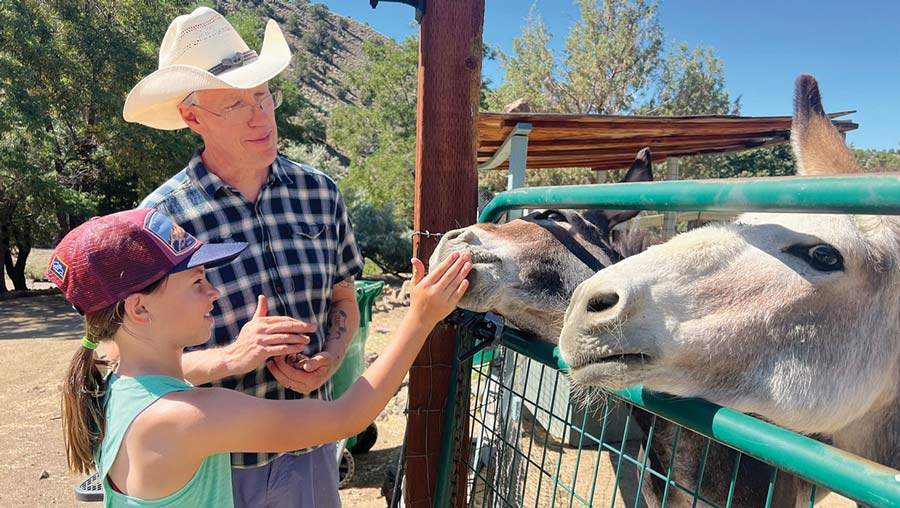
In an isolated canyon about an hour north of Reno, Nevada, Mark Robison, j’88, and his wife, Dianne, have for 17 years run CockadoodleMoo Farm Animal Sanctuary, an all-volunteer facility dedicated to providing a lifetime home for abused and rescued farm animals.
CockadoodleMoo’s mission emerged from a gap in the animal rescue landscape: farm animals overlooked or discarded because of profit-driven motives. Farm animals seized in abuse cases or found abandoned and sent to auction often attract zero bids, resulting in euthanasia. CockadoodleMoo is a last refuge for these animals no one else will take. “We saw this niche, these animals that would just be put down, so we decided we’ll take in as many as we can,” Robison says.
The plan didn’t begin with dozens of animals in mind, but was instead sparked by just one: the couple’s dog, whose barking habit prompted them to move to where the sanctuary stands today. “We didn’t know she was constantly barking at first because she didn’t do it while we were home,” says Robison. “After we got animal control called on us a few times by the neighbors, we looked into ways to keep her from barking, and they were generally all horrific. So rather than stop her from barking, we decided to move to a place where she could bark as much as she wanted.”
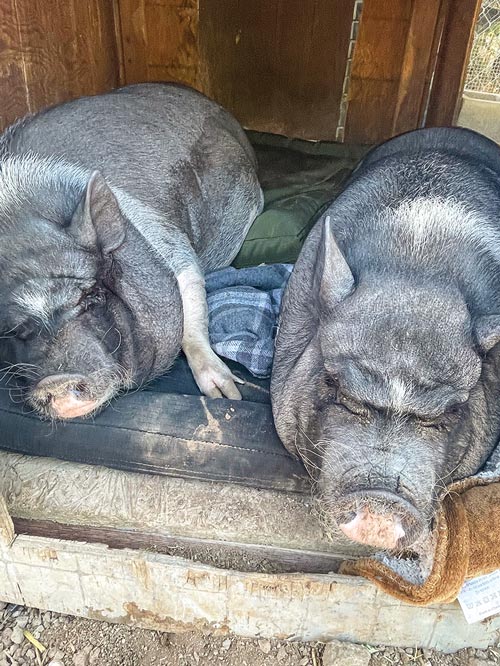
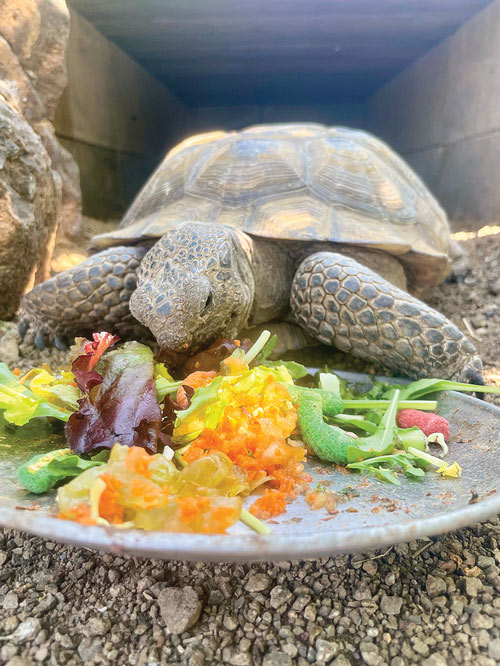
Once settled in the remote location, the couple realized they had ample land to aid animals in need. CockadoodleMoo now hosts over 50 critters at a time, with chickens, turkeys, rabbits, goats, pigs, donkeys and tortoises all calling the sanctuary home.
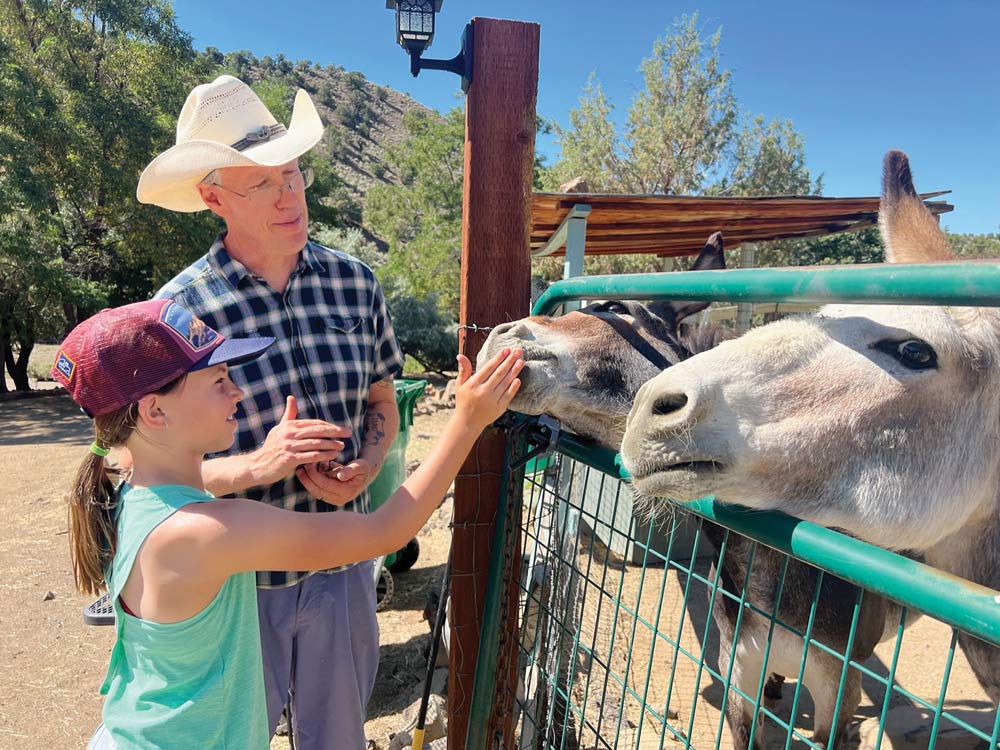
The challenges are as diverse as the animals themselves. Roosters fight, pigs of different breeds need separate pens, and injured creatures demand special care. The presence of predators such as bobcats and coyotes necessitates fully enclosed shelters. Adaptability is essential. A chicken suddenly unable to walk meant the Robisons had a new housemate until they could make a separate safe space. Two pigs who arrived from an Arizona sanctuary had a tough time with summer’s extreme heat.
Supporting so many animals may sound like full-time work, but both Mark and Dianne manage the sanctuary while working elsewhere. Mark is the local government reporter and community engagement director at the Reno Gazette-Journal, and Dianne works part time.
“You don’t get to take vacations when you run an animal sanctuary,” Robison says. “It’s not like you can have somebody come dog-sit for you, because everyone has medications, special needs, and some of them are dangerous. So you need to know what you’re getting into if you’re going to start an animal sanctuary. But you know, we wouldn’t do anything else. It’s something we absolutely love doing.”
Volunteers are welcome at CockadoodleMoo, though the pandemic drastically reduced their numbers. Less help means some projects take longer, but current residents’ welfare is never compromised. Robison says one of their guiding principles from the beginning was never to take in more animals than just the two of them can care for. “We have to say no sometimes, because the animals in our care get top priority, and we won’t diminish anybody’s quality of life because we’ve taken in more than we can handle.”

In the 17 years of running CockadoodleMoo, Robison has seen both the sanctuary and himself evolve. He is no longer squeamish about the harsh realities of animal care. “Anything to do with poop, injured or dead animals, things that people might shrink from, have become second nature,” he says. “Instead of turning away from pain and suffering, I can turn toward it because I realized that I can help.”
Robison finds gratification in the process and in the transformations he’s able to witness. “Seeing the animals from when they were in a difficult situation, scared and cowering in a corner, to blossoming and becoming the individual that you know they always were—it’s great to see,” Robison says. “The reward is they’re able to have a good life. The reward is really just helping when help is needed and letting that be the reward in and of itself.”
When asked how individuals might incorporate the mission of CockadoodleMoo into their own lives, Robison pauses. “I would say, think about the animals in your life and what they need to be happy, and try to provide that for them,” he says. “Rather than thinking how to fit them into your life, look at it from the other direction of how you can give them the fullest life they can have with the most freedom and enrichment in their lives.”
Ryan Camenzind, j’17, is director of digital strategy at KU Alumni.