

Jayhawks hold leadership positions across diverse industries and professions, and many connect with KU students and fellow alumni through the Jayhawk Career Network. In “Copy the Leader,” KU Alumni, in partnership with SumnerOne, spotlights Jayhawk leaders who are models for others in their fields.
Ethan Clapsaddle, g’17, g’23, is director of organizational development on the Native services team at Boys & Girls Clubs of America. The team works with more than 250 Boys & Girls Clubs across the U.S. that serve more than 100,000 Native youth representing nearly 175 tribal communities. Based in Lawrence, Clapsaddle is also pursuing a doctorate in higher education leadership at KU. He recently chatted with KU Alumni about the role models and experiences that shaped his own professional growth and his advice for others endeavoring to make an impact through leadership and service.
What do you do in your work, and how do you practice leadership in your role?
Clapsaddle: I currently serve as director of organizational development for the Boys & Girls Clubs of America on the Native services team. In my role, I provide consulting services to club CEOs, boards of directors and tribal governments on a wide variety of topics related to their respective Boys & Girls Club operations, governance and community impact. I support clubs by conducting strategic planning efforts focused on areas such as board development, sustainable funding strategies, youth program implementation, safety enhancement and community engagement.
I have the honor of serving Indigenous communities and their clubs that represent 16 tribal nations across nine states. I strive to practice leadership through providing my clubs with culturally responsive support that considers the unique needs and cultures of each organization and community I serve.
I believe true leaders must be able to adapt and respond in different ways to different challenges, and each organization I support requires respect and intentional effort to address its unique needs. I truly feel that a leader’s purpose is to serve others.
How did your KU education and involvement shape you as a leader?
My KU education and experience have opened so many doors for me, introduced me to so many amazing people, and truly blessed my family through the opportunity to be a Jayhawk.
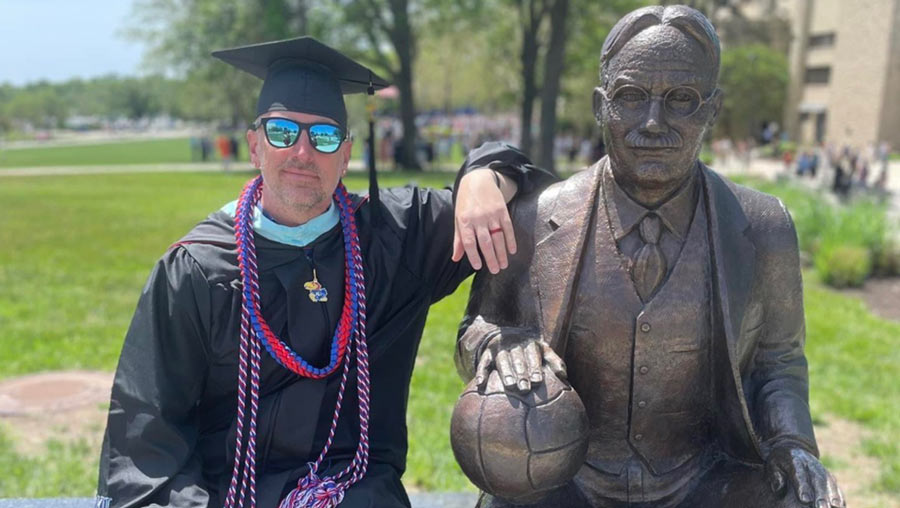
I have earned two master’s degrees from KU, the first in Indigenous studies in 2017, and the second in education and cultural policy studies in 2023. I am currently finishing up my dissertation for my doctoral program in higher education leadership at KU. I have also had the privilege of working at KU for the McNair Scholars Program and as the Haskell Indian Nations University/KU program coordinator with the Hawk Link office.
Being a Jayhawk means so much to me. I think the Jayhawk brand evokes pride and, for me, a responsibility to lift others up through the opportunities that this amazing institution has provided for me and my family. I have met people from all over the world here and learned to view things through a variety of different lenses, which has helped me be more understanding and more open to others in ways I may not have otherwise.

KU, to me, also represents opportunity, and as leaders, it’s our job to help others see the opportunities that are in front of them despite the hurdles they might face. One of the most rewarding aspects of my time as a Jayhawk and as a leader has been watching the students I’ve been honored to serve—whether it be our McNair Scholars or our Haskell students who are participating in the Haskell/KU exchange program—grow and thrive in the KU environment. Seeing them realize their goals and that they can be great in this sometimes-intimidating world—and knowing I was maybe a small part of helping that become a reality for them—gives me so much joy. It really has been one of the great honors of my life being able to serve in these capacities.
What qualities do you most admire in the leaders you have worked with?
I have had some amazing leaders throughout my professional life whom I admire so much. At KU, these have included Dr. Ngondi Kamatuka, who oversees the Center for Educational Opportunity Programs; Dr. Melissa Peterson, who serves as the associate vice chancellor in KU’s Office of Sovereign Partnerships & Indigenous Initiatives; Dr. Alex Redcorn, who serves as the acting president of Haskell Indian Nations University; and Misty Chandler, former assistant vice provost of academic success at KU. These leaders all display true empathy and support as well as tireless dedication to the missions they serve and the teams they lead. They each have their own approach, but each leads with genuine character and a sense of service for others.
I’ve also seen leaders in my nonprofit work demonstrate admirable qualities. Tonya Carroll, director of the Ray Kinsland Leadership Institute in Cherokee, North Carolina, had an unwavering dedication to culture and community. She operated in a way that grounded all the work that our team did with a responsibility to the community, but she sought to get feedback and buy-in from the entire team in fulfilling that responsibility. This shared leadership approach from Tonya always stood out to me and is one I’ll always remember in my leadership roles.
I was also inspired by Monica Dittmer, who served as CEO of the Lawrence Boys & Girls Club, where I worked as director of teen services. Her energy and love for serving young people—especially those who needed it most—were unmatched.
I’ve also had the honor of serving in the U.S. Army as a commissioned officer, and by that path have been able to serve with some amazing leaders as well, including Col. David Acker, Command Sgt. Maj. Harold McVicker, 1st Sgt. Chad Pipkin and Capt. Eric Santiago. These fellow leaders were always mission-driven, organized and resilient. They were the perfect balance of tough when they needed to be while understanding that they were there to serve and not to be served, which to me is true leadership.
How has leadership contributed to the success of teams you’ve been a part of?
On the most successful teams I’ve been a part of, I would say the common contribution of leadership is the ability to rally the team around a shared mission and vision. The best leaders can take a team of individuals with unique skills and leverage those strengths to contribute collectively to the overall mission. This also increases buy-in from the entire team, which is critical to team success.
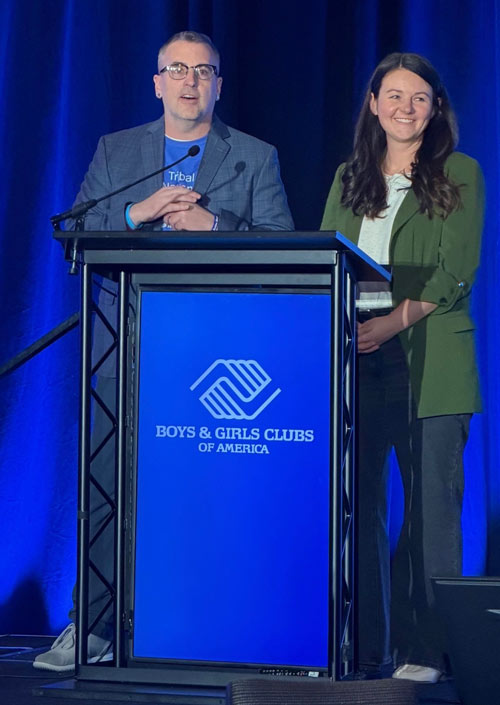
At Boys & Girls Clubs of America, we have an extremely large team across the organization that brings together a wide array of talents and expertise. Knowing that you have such a bevy of experts and seasoned leaders—it makes achieving the great mission we have in front of us possible.
Tell us about a leadership challenge you faced (as a student or a professional) and what you learned.
I think the most challenging leadership opportunity I’ve ever had was serving as an officer in the U.S. Army. I was often put in intense situations where mission success depended, in part, on the decisions or support I could provide. The pressure and weight of responsibility I might have felt in those situations was nothing compared with what my soldiers and their families were feeling at the same time, though, so I tried to keep that in mind and work to share the load of that responsibility collectively.
A leadership challenge I’m currently facing isn’t as a professional or as a student, but as a dad. I have two sons, with the youngest preparing to head off to college. While I certainly haven’t been perfect, I’ve strived to be a leader to my boys as a good dad, and part of that has meant seeking to build them up and give them the skills they need to go off into the world to bigger and better opportunities without me. I think this is indicative of the role of good leadership and the challenge that comes with it—you’ve built up your people and seen them grow, and the ultimate goal is for them to grow in a way that they can move on and advance to other opportunities.
What can students or young professionals do to develop leadership competencies within your industry?
I would say the best thing for young people to do in any industry is to learn as much as you can about as much as you can. Don’t be afraid to ask questions, or to reach out to people in your career or educational field and ask questions about their journey and any guidance they might give. You never know what opportunities will come out of that.
I would also say it’s OK to be scared, but have the courage to try things anyway. We have all been scared, but if you can summon up the courage for 10 seconds to make the initial ask that you’re nervous about, submit the application you’re doubting yourself on, or volunteer for something that seems too much in the moment, you might just surprise yourself with how much you will grow with taking on the challenges, opportunities and lessons that come your way.
And the last thing I would say to young people: Be courageously authentic in all you do. You are never going to please everyone. And honestly, if you find out you are pleasing everyone, then you probably aren’t being true to yourself. Be humble. Be empathetic. Be supportive. Be constructive. Be a contributor when the time calls for it, and lead when called upon. Be a good listener, and don’t be afraid to speak up when needed, especially if you can see something from a different angle.