


Jayhawks hold leadership positions across diverse industries and professions, and many connect with KU students and fellow alumni through the Jayhawk Career Network. In “Copy the Leader,” KU Alumni, in partnership with SumnerOne, spotlights Jayhawk leaders who are models for others in their fields.
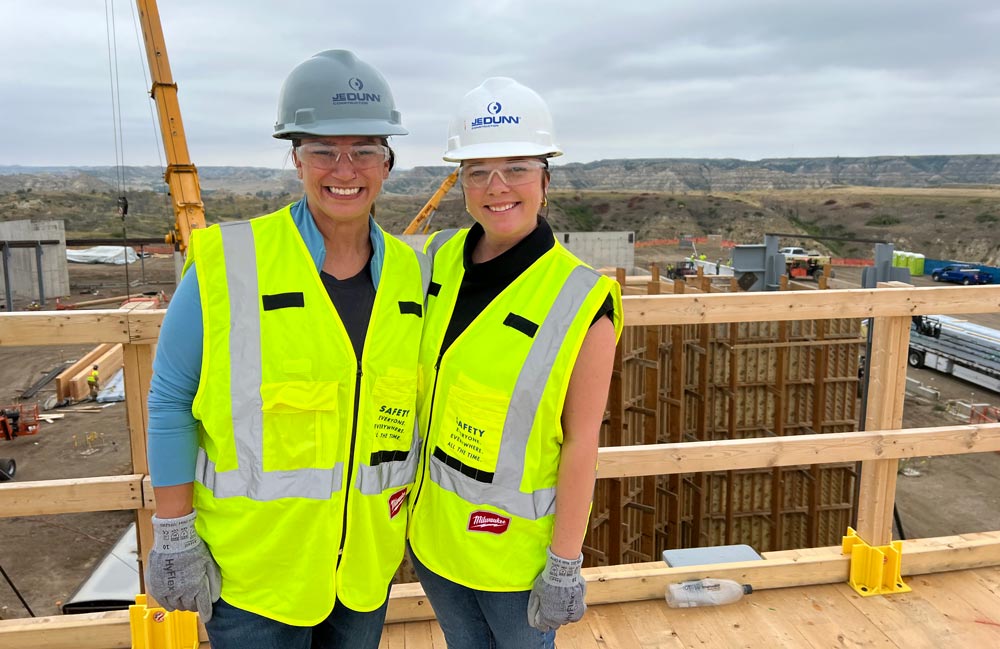
Traci Clatterbuck, j’10, is a marketing and pursuit strategy leader in the architecture, engineering and construction industry and has worked at Kansas City-based JE Dunn Construction for more than 11 years. She recently answered KU Alumni’s leadership questionnaire, highlighting her approach to helming big projects and the teams that power them.

What do you do in your work, and how do you practice leadership in your role?
Clatterbuck: I was recently promoted to vice president and director of pursuit marketing at JE Dunn Construction, where I oversee marketing teams across multiple business units and a new strategic pursuit management group focused on helping our teams pursue and win priority projects. My work sits at the intersection of strategy, communication, business development and team leadership.
For me, leadership is less about directing people and more about creating conditions for success. I focus on building alignment, removing obstacles, developing talent and helping individuals connect their contributions to a larger purpose. The best leaders don’t need to have all the answers—they foster environments where ideas and people can thrive.
How did your KU education and involvement shape you as a leader?
Through involvement in my sorority, Alpha Delta Pi, I built strong relationships, worked through challenges with others, and was able to contribute to something larger than myself. Those experiences reinforced the value of teamwork, service, and leading through influence rather than authority.
My capstone project in the School of Journalism—completed for my strategic campaigns course—was also formative. Our client was The Merc Co+op in Lawrence, and I served as account executive for our winning campaign. That was one of my first experiences working on a team to address a complex, real-world problem under real-world expectations and deadlines. It emphasized the importance of effective communication, collaboration and accountability, and these are skills that remain central to my work today.
What qualities do you most admire in the leaders you’ve worked with?
The leaders I respect most are the ones who combine humility with confidence. They set a clear vision and make decisions when needed while also listening, seeking input and valuing the people around them.
I also admire leaders who are authentic and consistent. People want to know what you stand for and what they can expect from you. The best leaders I’ve worked with build trust through transparency, empathy and accountability.
How has leadership contributed to the success of teams you’ve been a part of?
On every successful team I’ve been a part of, leadership created clarity and alignment. When people understand the goal and their role, and they feel supported, success follows.
I’ve seen how leadership can transform a group of talented individuals into a high-performing team. Success rarely comes from one person; it comes from a culture where people collaborate, challenge each other respectfully and stay focused on a shared outcome.
Tell us about a leadership challenge you faced (as a student or a professional) and what you learned.
One of the most significant leadership challenges I’ve faced professionally was helping launch a strategic pursuit management group that brings together expertise from multiple teams across JE Dunn Construction. The experience taught me that successful large-scale change doesn’t happen because of a great plan alone. It happens when people understand the purpose and feel included in the process. Communication, transparency and listening are just as important as strategy.
What can students or young professionals do to develop leadership competencies within your industry?
First, focus on becoming excellent at your craft. Leadership starts with credibility, and credibility comes from preparation, continuous learning and consistently delivering results.
Second, seek opportunities to collaborate beyond your immediate role and responsibilities. In the architecture, engineering and construction industry, success depends on cross-functional teams working toward a common goal. The earlier you learn how to communicate, build relationships and understand other perspectives, the more effective you’ll be in such an environment.