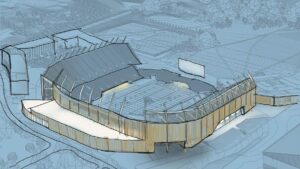


The Kansas City Chiefs in December announced their intention to move from their current home at Arrowhead Stadium, in Kansas City, Missouri, to the Kansas side of the state line. In April, chairman and CEO Clark Hunt announced that two of Kansas City’s renowned sports architecture firms, MANICA and Populous, were engaged in a design competition for a covered stadium and mixed-use development in Wyandotte County, near NASCAR’s Kansas Speedway, SC Kansas City’s Sporting Park and Legends Field.
On July 22, Hunt revealed the competition’s winner: MANICA Architecture, based in Kansas City, Kansas. No Chiefs fan was more overjoyed than the firm’s president and owner, David Manica, a 1994 graduate of KU’s School of Architecture & Design.
“This project means everything to me,” Manica told KSHB 41. “I was born in KC, went to KC schools, I went to KU, I came back and started my company here. I have the good fortune to work all around the world. I’ve done multiple projects in multiple continents and all around our country, and to do this one at home is a really, really special day for me.”
Manica’s firm designed the new home of the NFL’s Tennessee Titans, scheduled to open in 2027, and it is currently leading early designs for a proposed $5 billion suburban stadium for the Chicago Bears. MANICA Architecture also designed the Las Vegas Raiders’ Allegiant Stadium, San Francisco’s Chase Center for the NBA’s Golden State Warriors, a sports complex in Moscow called VTB Arena Park, and a $750 million renovation of FC Barcelona’s Camp Nou.
“We are incredibly fortunate that Kansas City is home to world-class sports and entertainment design talent, and that has been on full display throughout this process,” Chiefs president Mark Donovan said in a news release. “David and the MANICA team stood out throughout a rigorous months-long process, honoring and embracing our history while presenting a bold and dynamic vision for the future.”
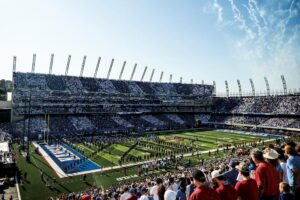
Manica and Keith Robinson, MANICA principal and creative director and a 2013 master’s graduate of KU’s School of Architecture & Design, both hailed the classic lines and rowdy environment of the Chiefs’ iconic current home, Arrowhead Stadium, which opened at Jackson County’s Truman Sports Complex in 1972 and this summer hosted six FIFA World Cup matches.
“The inspiration comes from the existing stadium,” Manica told KSHB 41. Robinson added, “We spent a lot of time talking about how Arrowhead made you feel. That was what stuck with everybody.”
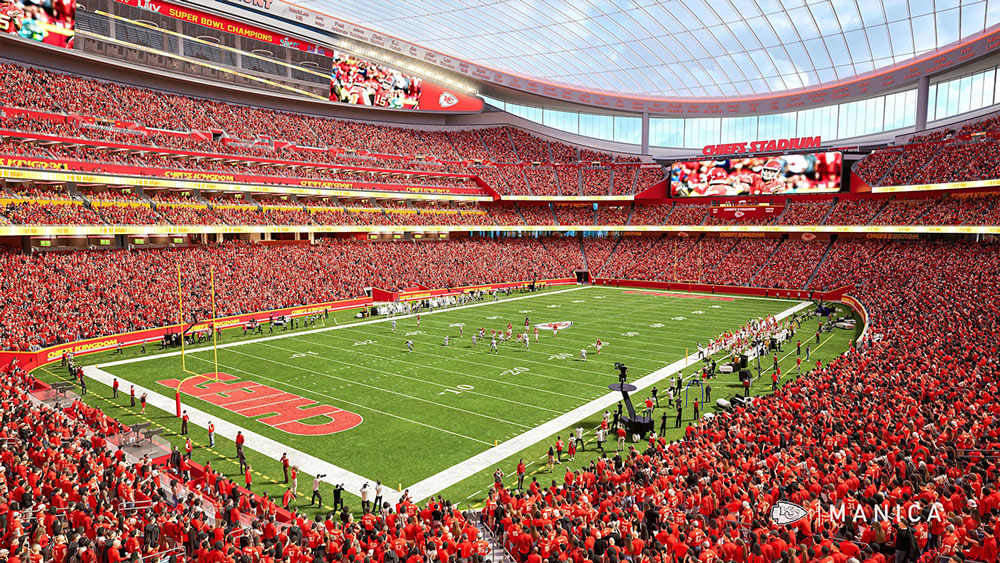
As Manica sees it, the new stadium—as yet, the Chiefs have made no reference to carrying on the Arrowhead name—will be topped by a translucent cover, maintaining sightlines for pregame flyovers and allowing in plenty of natural light. Notably, the 70,000-seat stadium’s venue will also include 20,000 parking spots, with the layout specifically engineered to encourage and enhance one of the team’s beloved traditions: pregame tailgating.
“It’s going to be well considered, from the width of the stall to the tailgating footprint of each car,” Robinson told KSHB, with “well-organized pedestrian access points and promenades.”

As noted in a Fall 2025 Crimson & Blue article by Anne Tangeman, c’88, senior writer at KU Endowment, Kansas City has long established itself as the preeminent global hub for sports-venue design and architecture, a mutual benefit for the firms, KU students and new architecture alumni. For its Gateway District, including David Booth Kansas Memorial Stadium and conference center—KU turned to Multistudio, HNTB and Dimensional Innovations, local firms with deep KU ties.
“Our alumni and friends in these fields have created strong partnerships with the school over the years and supported us through sponsoring studios, working with students and providing internships,” Mahbub Rashid, dean of architecture & design, told Tangeman. “Our students are able to intern with leaders in the field.”
Along with MANICA Architecture chosen as lead designer, the Chiefs also announced that HNTB would be architect of record on the $3 billion stadium project, made possible with $1.8 billion in Kansas Sales Tax and Revenue (STAR) bonds, state gaming revenues and the Attracting Professional Sports to Kansas Fund. Still to come are details on the team’s plans for a $300 million practice facility and team headquarters in Olathe, in the heart of Johnson County’s fast-growing western suburbs, and pair of ancillary mixed-use real estate development projects.
The as-yet-named new stadium, the heart of the Chiefs’ leap across the state line, is scheduled to open for the 2031 NFL season.
“My entire team is committed to creating a stadium that honors the legacy, tradition and unmatched energy of Arrowhead while boldly reimagining its future,” Manica said in a Chiefs’ news release. “This stadium is being designed not just for today’s fans, but for the generations of Chiefs Kingdom to come—a place that reflects the passion, pride and enduring strength of one of the greatest fan bases in all of sports.”
Chris Lazzarino, j’86, is associate editor of Crimson & Blue.