
Jayhawks hold leadership positions across diverse industries and professions, and many connect with KU students and fellow alumni through the Jayhawk Career Network. In “Copy the Leader,” KU Alumni, in partnership with SumnerOne, spotlights Jayhawk leaders who are models for others in their fields.
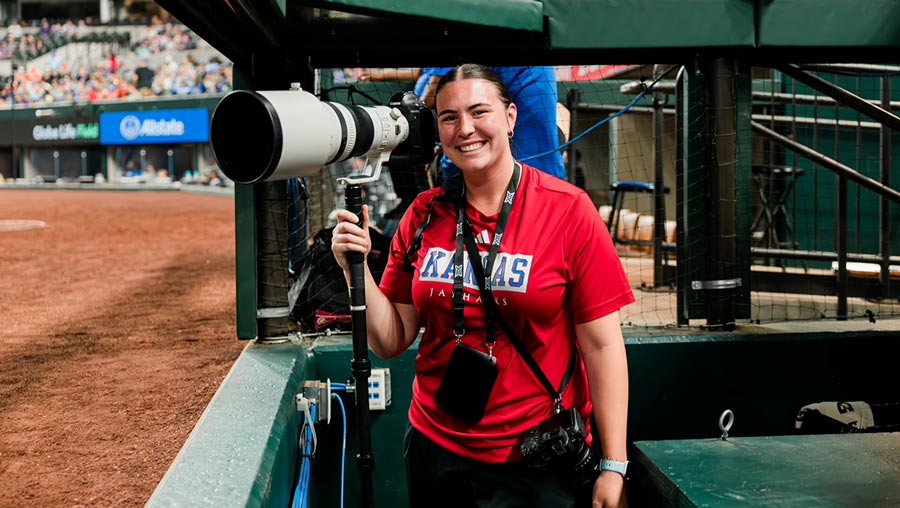
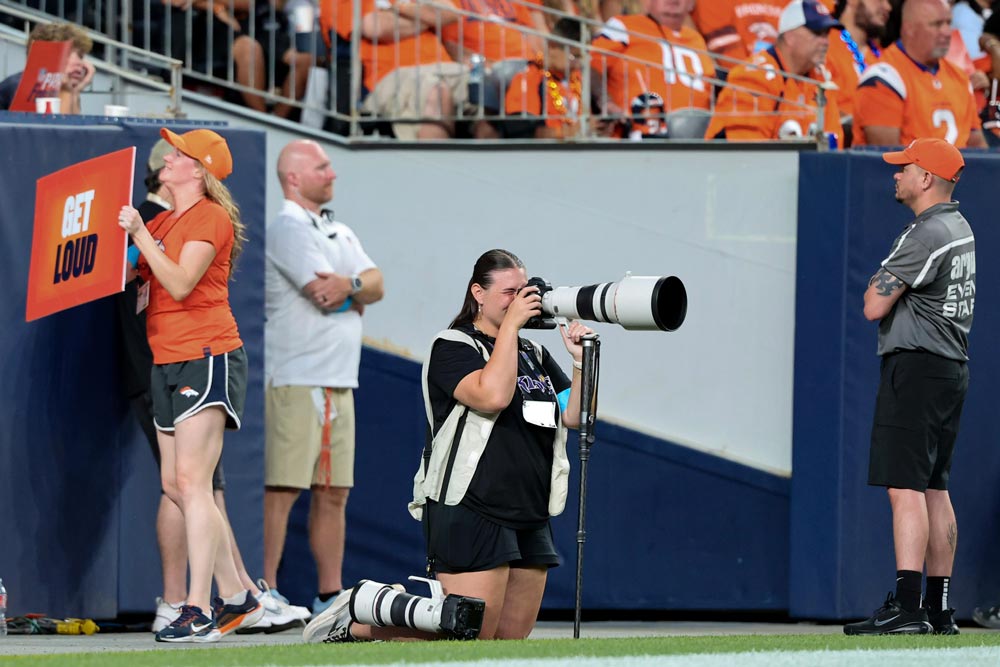
Emma Crouch, j’25, is the photo editor and digital asset manager for the NFL’s Minnesota Vikings. The role is a one-year associate program she stepped into after building her portfolio as a sports photography intern with KU Athletics and earning her master’s degree in sport management at Southern Methodist University in May. Crouch, who is based in Minneapolis, Minnesota, recently chatted with KU Alumni about the mentors, lessons and network that have shaped her professional journey.

Outside of your coursework, what activities were you involved in at KU?
Crouch: I was a part of the sorority Delta Gamma all four years in college. I had a couple of leadership roles my freshman and sophomore year, and then junior year I started working for KU Athletics as a photography intern. I stepped back from sorority responsibilities then and focused more on my passion for photography, which was really pivotal.
My internship with KU Athletics was honestly the highlight of my college career. I don’t think I would be where I am today without that internship and everything it taught me and all the experiences it gave me.
I started with KU Athletics my junior year, so a little bit later than when many students typically get involved. Most start as a freshman and get four years at it, but I didn’t realize that I wanted to fully pursue sports photography until my sophomore year. So, in trying to get the most out of the internship in two years, I really just dove straight in, and every opportunity that I was able to take, I took it.
My junior year, I was primarily focused on shooting KU softball, baseball and tennis, and my senior year, I got to shoot football and home basketball games. I honestly think I shot every sport at KU at one point!
Who were your mentors at KU?
Photography-wise, my boss at KU Athletics, Missy Minear, who was the director of photography at the time, as well as Aiden Droge. Aiden is currently the manager of photography for KU Athletics, and he was in the same year of school that I was, so getting to learn from someone who was in the same shoes as me, as a student, but very knowledgeable in everything he does, was really transformative.
Being in the School of Journalism, there’s such a wide range of people who are knowledgeable in so many different areas. Eric Thomas, specifically—I loved one of his photojournalism classes. That opened my eyes to a new side of photography and finding new ways to tell people’s stories through photos.
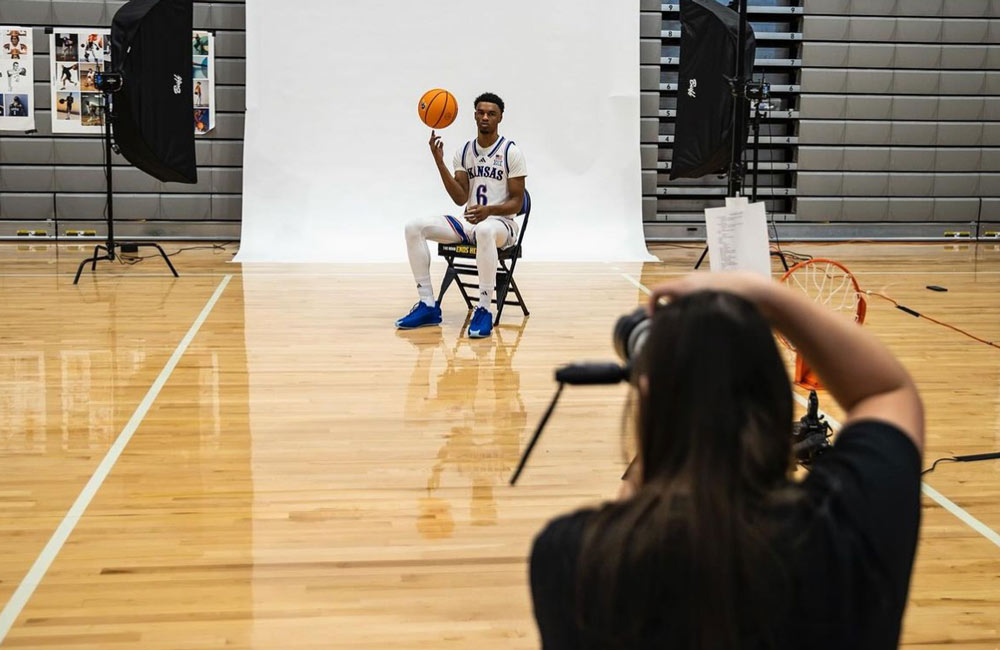
Also, Max Wagner, who was a photography professor during my time at KU and taught me a lot about studio photography. I really needed everything he taught me, and I was able to put it into practice after graduation, which was really awesome.
Was there a challenge or lesson early on that shaped you?
I feel like the biggest challenge in my college career—not necessarily a mistake, because it led me to where I am today—was that I wish I had started doing sports photography sooner. I started at KU as an education major, and I really enjoyed my classes, but I always had this passion for photography.
Leaning into my passions—I was getting my photo minor at the time—helped me realize that this is something I wanted to try to make a career out of, and I can always go back to education down the line if I want to. Just being brave enough to take the risk and go after the career you want to have is the biggest lesson I learned through that.
How would you define leadership?
I think leadership can be a lot of different things. In my time at KU, my senior year, I was able to grow into more of a leadership role at KU Athletics, because I was able to mentor the younger students. That helped me grow and get ready for my position at SMU, and then my position now.
I always thought, growing up, that a leader is someone who’s outspoken—kind of just this one picture of what a leader looks like, and I’m kind of the opposite of that. I tend to be a little bit more reserved when meeting people for the first time. However, I feel like leading is honestly done through your actions.
This past year at SMU, I had the opportunity to oversee a bunch of photo interns, and that was my first time directly in a leadership role. The biggest lesson I learned through that was that every single student is at a different place in their journey, so you have to meet them where they’re at and see how their brain works. Everyone takes feedback in different ways—some people don’t like certain types of feedback, whereas other people might want it on the spot so that they can change immediately.
What qualities do you think student leaders should focus on developing?
I would say communication is probably the biggest thing. You can never over-communicate, especially when you’re working in sports, where there are a lot of moving pieces and a lot of different people involved. Good communication can take you a long way.
If you are looking to be in the creative field, one takeaway is that there are so many different ideas out there, and to never be afraid to share your perspective, share your ideas and think outside the box. At the beginning of my career, I thought that I needed to be one way and shoot photos one way, do everything one way, when really the industry is constantly evolving because there are people who are pushing the boundaries and trying new things. Everyone is constantly learning and growing. This career path is not stagnant in any way. So I feel like it’s about having a growth mindset and wanting to continue to learn and grow.
What’s your advice for building a strong network?
Almost all of my relationships either came from my classmates or through internships that I did during my time in college. For example, Chad Cushing—who is currently working for the Houston Astros—was in some of my journalism courses, and we worked together for the Kansas City Monarchs. You really never know who you’re sitting next to or where they’re going to end up. I recommend just trying to build authentic relationships with the people around you, including your professors, and staying connected.
How has the KU network shaped your career?
I would not be where I am today without my network. I wouldn’t have had the last job I had at SMU without knowing someone who had a connection there. So your network is more than you even realize until you’re out in the field.
It’s really cool, too, because there are Jayhawks everywhere. There are multiple people in the Vikings organization that have KU pennants that I see when I walk through the office, and you never know how far that connection might get you. Just having the University of Kansas on your résumé and having that diploma in your hand is a big thing.
What should current students who want to work in your industry be preparing for?
I would say technology and being able to adapt to it—that’s a big thing that’s changing in this career. Always try to be innovative, but also keep the essence of what was. AI is changing technology, which is changing certain aspects of my career and the careers of anyone in the digital space. Try to remain creative and remain original, but in your own way, without over-relying on AI.